
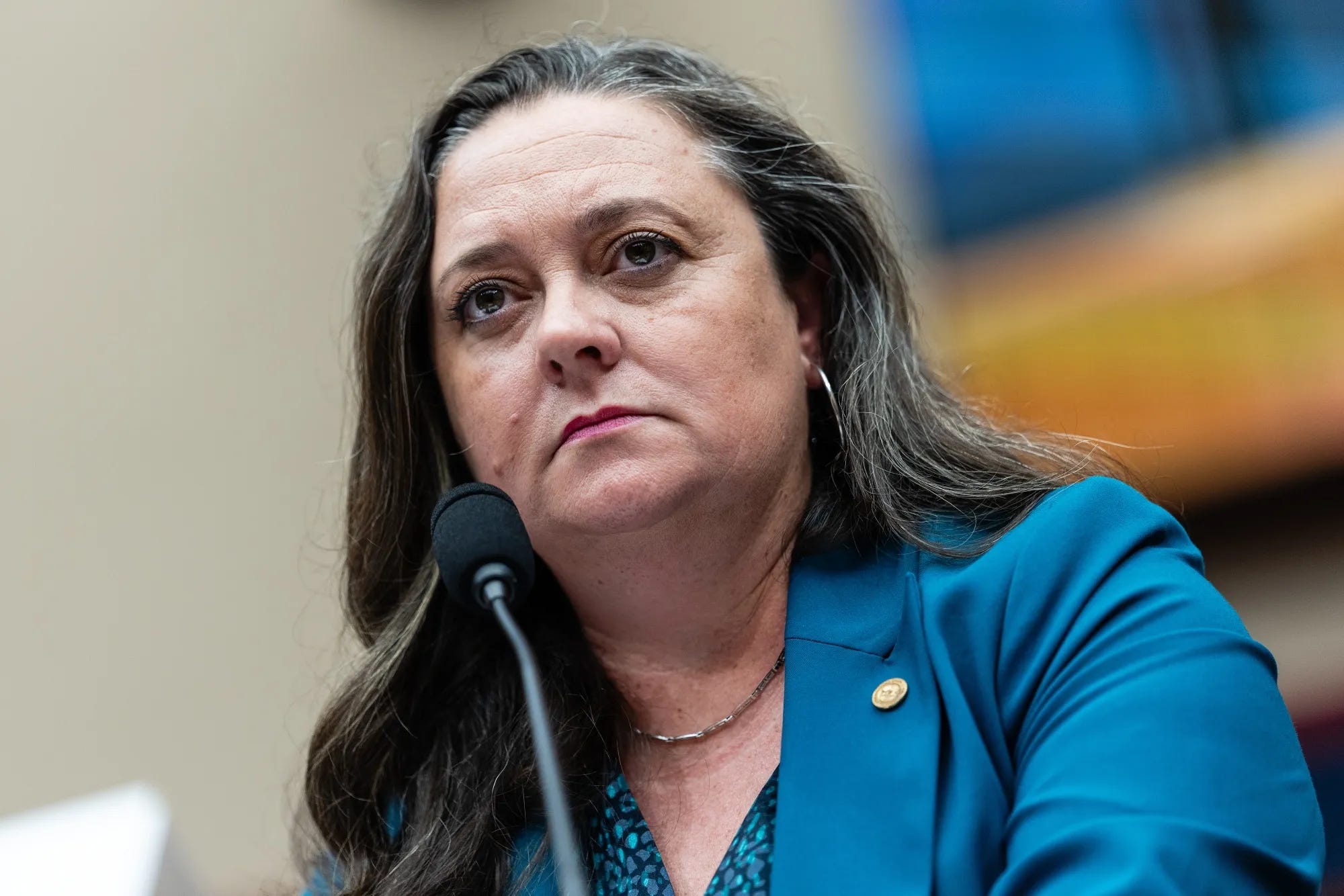
Two days ago General Counsel Crystal Carey released a memo titled “Further Guidance Regarding General Counsel Priorities” (GC 26-04). In it, she details the efforts she has taken to reduce the agency’s unfair labor practice backlog:
Rather than prioritizing overturning precedent at the expense of case processing, my top priority is two-fold:
Prioritizing processing of aged cases to reduce the historic backlog burdening the Agency.
Implementing sustainable, prudent case handling practices to prevent a repetitive backlog of this scale.
I am excited to see that this approach is working. Since taking office, the dedicated public servants at the Agency have successfully completed the investigation of 9,247 cases pending as of January 7, 2026, which amounts to more than a 50 percent reduction in cases awaiting determination in regional offices when I arrived.
The memo does not provide any further detail about these numbers. So I attempted to recreate them using my comprehensive database of NLRB dockets, which I maintain as part of my related NLRB Research project.
Using my database, the specification that comes the closest to the 9,247 number works as follows:
Start with all of the unfair labor practice cases (C cases) that were open on January 7, 2026.
Exclude from (1) all cases where a complaint had already been issued by January 7, 2026.
After doing (2), add up all of the cases that went from open to closed and all of the cases that went from open without a complaint to open with a complaint.
This method identifies 9,248 cases, which is just one off from the 9,247 number in Carey’s memo.
Is this a large number of cases to have finished investigating? Historically, the answer is yes. In 2019, for instance, the same number across the same time frame was 4,918 cases. In 2024, it was 6,203 cases.
But, this number does not really differ from last year. In 2025, across the same time frame, the number of cases that were determined was 9,104, which is just 144 shy of what Carey achieved.
What exactly happened to these cases that caused them to be closed or determined? To answer this, we can break the determined cases into three categories:
Cases where a complaint was issued.
Cases that were closed in a way that indicates some kind of adjustment or remedy was achieved. This includes adjusted withdrawals, adjusted dismissals, informal settlement, and compliance with a Board order.
Cases that were closed in a way that indicates no adjustment or remedy was achieved. This includes non-adjusted dismissals and non-adjusted withdrawals.
Relative to 2025, Carey issued fewer complaints (314, down from 555). She also had fewer cases that were closed in an adjusted or remedial way (2,285, down from 3,054). This means that Carey achieved her large number by closing a lot more cases without adjustments or remedies (6,648, up from 5,494).
As I noted in a prior post on this subject, this is consistent with a policy of reallocating staff away from investigating cases with merit and towards closing cases without merit. This sort of strategy could close more cases (though it doesn’t seem to have relative to 2025), but not in a way that helps victims get remedies. If the point of clearing the backlog is to help victims get their cases processed rather than sit in a long queue, reallocating agency labor away from cases that have merit does not achieve that purpose.
Carey’s memo also implies that this approach is helping to reduce the backlog. But the backlog has actually grown slightly during her tenure as the number of new unfair labor practice charges being filed exceeds the number of cases that have been closed or determined. Carey’s efforts may have reduced the backlog relative to the counterfactual. But the actual backlog remains the same for reasons that are largely outside of her control.
What I think this all shows is that defeating the NLRB backlog is ultimately a budgetary question. I think some people in this world are under the impression that the backlog could be cleared with different leadership, especially hard-nosed leadership that is less willing to entertain certain kinds of cases and more focused on efficiently allocating agency resources towards disposing of cases. Carey’s own memo hints at this theory by suggesting that other GCs run up backlogs because they spend too many agency resources on trying to change the law and not enough on trying to process cases under current law. But if even Carey cannot get the backlog down, it seems like the only reasonable conclusion is that the NLRB is underfunded and understaffed relative to the sort of demand generated by the current version of the NLRA.
Your three-way split does something the memo's single number can't: it shows that "determined" counts the agency's movement, not the charging party's. A complaint moves the case forward for the worker. An adjusted closure moves it to a remedy. A non-adjusted dismissal closes the file on one side of the ledger and leaves the other side where it stood the day the charge was filed. All three land in the same 9,247.
That's why your line carries the piece — reallocating labor away from cases with merit "does not achieve that purpose." The purpose lives in the second ledger, and the memo only reports the first.
I learned this from the other side of a closure. I carried a written safety report through eight venues; one opened a case number and later closed it. The closure letter is accurate. It records that the office finished. It doesn't record that anything else did.
The distinction I'd offer: responded is not disposed. Your database already holds both columns. The 6,648 is what it looks like when only one of them gets published.
Understaffing is an obvious factor, but the backlog is largely due to decisions by Abruzzo including, most egregiously, ending internal deadlines for ULP investigations