
General Counsel Crystal Carey has been asking the Board to overturn its precedents, and saying which ones she will challenge next. I searched every General Counsel filing in the NLRB dockets from January through mid-November 2026 and checked the results against her own list in GC Memorandum 26-04. The result is 16 precedents. For each one, this post gives the decision, what she wants in its place, the filings where she said so, and a short explanation.
At a glance
Asked of the Board directly
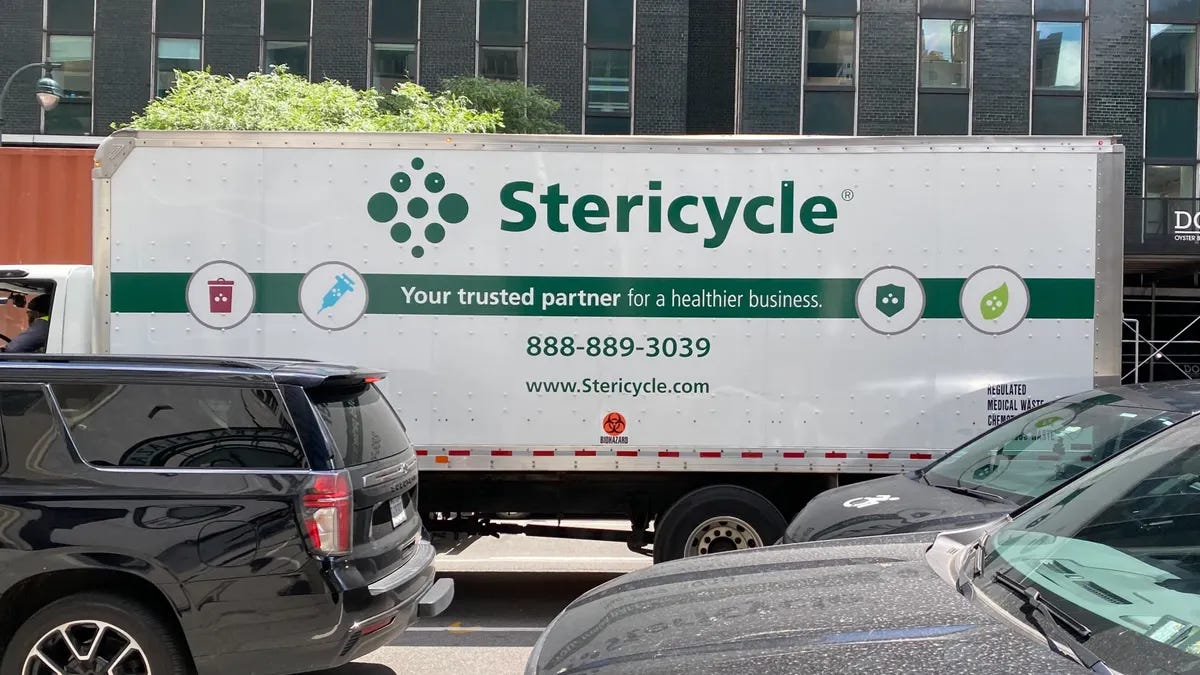
Work rules: Stericycle (2023), to be replaced by a balancing test based on Boeing (2017)
Severance agreements: McLaren Macomb (2023), to be replaced by an explicit-waiver test or Baylor and IGT (2020)
Bargaining orders: Cemex (2023), to be replaced by Gissel (1969) and Linden Lumber (1974)
Dress codes and union insignia: Tesla (2022), to be replaced by Wal-Mart Stores (2019)
Captive audience meetings: Amazon.com Services (2024), to be replaced by Babcock & Wilcox (1948)
Predictions about unionization: Siren Retail (2024), to be replaced by Tri-Cast (1985)
Abusive conduct during protected activity: Lion Elastomers (2023), to be replaced by General Motors (2020)
Consent orders: Hospital Metropolitano (2024), to be replaced by UPMC (2017)
Raised with judges or flagged for a later case
Past practice and unilateral changes: Wendt (2023) and Tecnocap (2023), to be replaced by Raytheon (2017)
Contract waiver of bargaining: Endurance Environmental Solutions (2024), to be replaced by MV Transportation (2019)
Make-whole remedies: Thryv (2022)
Political and social insignia: Home Depot (2024)
Concerted activity: Miller Plastic Products (2023)
Announced in GC 26-04 but not yet found in a filing
Dues checkoff after contract expiration: Valley Hospital Medical Center (2022), to be replaced by Bethlehem Steel (1962)
Notice to dues objectors: UFCW Local 700 (Kroger) (2014)
Requests made to the Board
Work rules: Stericycle
Precedent to overturn: Stericycle, Inc. (2023)
Replacement sought: A test built on the reasonable-employee and balancing elements of Boeing (2017) and LA Specialty Produce (2019), but without Boeing's fixed categories of rules. For rules requiring confidentiality during workplace investigations, a return to Apogee Retail (2019).
Where the GC said it, to the Board: Honeywell (June 1), Starbucks (June 17), AAA (July 16), Resorts World Las Vegas (July 17), University Hospitals (July 24), U.S. Postal Service (August 31), The Purple Eagle (September 9), Atlassian (September 11), Apex Fintech (October 5)
Where the GC said it, to judges: Apex Fintech (July 8), O'Neill Asset Management (August 27), Gotham (September 4), Premier Private Physicians (October 8), Concentrix (October 29)
Explanation: Stericycle treats a workplace rule as presumptively unlawful if an employee could reasonably read it to restrict protected activity, and puts the burden on the employer to justify it. The General Counsel says this reads handbook rules in a vacuum and wants the employer's business reasons weighed against the rule's actual effect on employees. This is the most frequent request on the list. In Resorts World and University Hospitals she went back into cases that were already fully briefed and withdrew her office's earlier arguments defending Stericycle. She has not stopped prosecuting rules cases. Several of these briefs argue that the rule at issue is unlawful under any test. Her February 27 memo separately tells regions to settle cases that challenge only the maintenance of a rule.
Severance agreements: McLaren Macomb
Precedent to overturn: McLaren Macomb (2023), along with parts of Metro Networks and Shamrock Foods
Replacement sought: A new test under which a severance agreement is unlawful only if it contains an explicit waiver of NLRA rights that is not narrowly tailored. If the Board will not adopt that test, a return to Baylor University Medical Center (2020) and IGT (2020).
Where the GC said it, to the Board: Valley Radiology (May 5), Honeywell (June 1), Atlassian (September 11)
Where the GC said it, to a judge: Snohetta (September 25)
Explanation: McLaren Macomb makes it unlawful for an employer even to offer a severance agreement with broad confidentiality or non-disparagement terms. The General Counsel argues that ordinary severance clauses should be lawful unless they expressly bar things like helping coworkers with Board charges or filing future charges. Her proposed test is not simply the old law. Under it she still argues that a clause barring assistance to other employees is unlawful, which is why she asks the Board to find a violation in Valley Radiology even while asking it to overrule the case the judge relied on. Her briefs note that Chairman Murphy and Member Mayer have said they are open to overruling McLaren Macomb once there is a three-member majority to do so.
Bargaining orders: Cemex
Precedent to overturn: Cemex Construction Materials Pacific (2023)
Replacement sought: The framework of NLRB v. Gissel Packing (1969) and Linden Lumber (1974), including reinstatement of the Board's own Linden Lumber decision (1971), applied retroactively
Where the GC said it, to the Board: Amazon, 20-CA-353378, answering brief (September 1) and reply brief (September 16)
Explanation: Under Cemex, an employer presented with a union's claim of majority support must either recognize the union or promptly file its own election petition. If the employer then commits unfair labor practices that require setting the election aside, the Board orders bargaining without a rerun. The General Counsel wants the earlier rule back, under which an employer could decline recognition and leave it to the union to petition for an election, with bargaining orders reserved for the serious misconduct described in Gissel. GC 26-04 listed this as an anticipated position. Six days later it was briefed in full, by the Division of Advice, in a case where the judge had found that Amazon violated the Act under Cemex. The General Counsel agrees with Amazon and asks the Board to dismiss her own complaint.
Dress codes and union insignia: Tesla
Precedent to overturn: Tesla, Inc. (2022)
Replacement sought: Wal-Mart Stores (2019)
Where the GC said it, to the Board: Starbucks, 13-CA-322871 (June 17)
Explanation: Tesla holds that any dress code that limits the display of union insignia is presumptively unlawful unless the employer proves special circumstances, even when the policy is neutral and evenly applied. The General Counsel wants neutral dress codes that reasonably regulate the size and placement of insignia to be lawful without that showing. The posture here is unusual. The judge had already dismissed the dress code allegation, finding that Starbucks showed special circumstances. The General Counsel filed exceptions anyway, not to revive the allegation, but to ask the Board to dismiss it on the ground that Tesla is wrong.
Captive audience meetings: Amazon.com Services
Precedent to overturn: Amazon.com Services (2024)
Replacement sought: Babcock & Wilcox (1948)
Where the GC said it, to the Board: UPS Supply Chain Solutions (May 13)
Explanation: Amazon made it unlawful for an employer to require employees to attend meetings where it expresses its views on unionization. Babcock & Wilcox had allowed such meetings for more than 70 years. The request appears in a footnote to a motion withdrawing exceptions that the prior General Counsel had filed. No full brief on the issue has turned up yet, but GC 26-04 lists this as a position she has already taken.
Predictions about unionization: Siren Retail
Precedent to overturn: Siren Retail Corp. d/b/a Starbucks (2024)
Replacement sought: Tri-Cast (1985)
Where the GC said it, to the Board: UPS Supply Chain Solutions (May 13)
Explanation: Under Tri-Cast, an employer could lawfully tell employees that unionizing would end their ability to deal with management directly. Siren Retail overruled that and said such statements are judged case by case as possible threats. The General Counsel asks the Board to go back to Tri-Cast. As with captive audience meetings, the request is a footnote in the UPS motion.
Abusive conduct during protected activity: Lion Elastomers
Precedent to overturn: Lion Elastomers (2023)
Replacement sought: General Motors (2020)
Where the GC said it, to the Board: U.S. Postal Service (August 31, in a footnote), Atlassian (September 11, argued in full)
Explanation: Lion Elastomers restored a set of setting-specific tests, such as Atlantic Steel, that can protect an employee's profane or abusive outburst when it happens in the course of protected activity. General Motors had replaced those tests with the ordinary Wright Line motive analysis. On September 23, in Lion Elastomers III, a Board majority held, over a dissent, that the 2023 change in law did not survive the Fifth Circuit's decision vacating it. The General Counsel's later brief in Apex Fintech treats General Motors as current law and faults a judge for applying the older tests.
Consent orders: Hospital Metropolitano
Precedent to overturn: Metro Health, Inc. d/b/a Hospital Metropolitano Rio Piedras (2024)
Replacement sought: UPMC (2017)
Where the GC said it, to the Board: Amazon, 31-CA-317349 (June 3)
Explanation: A consent order lets a judge end a case on terms the employer offers even though the General Counsel and the charging party both object. UPMC allowed that when the terms were reasonable. Hospital Metropolitano ended the practice. The request came up sideways. The General Counsel had settled with Amazon over the objection of the Teamsters, the judge approved the settlement, and the Teamsters asked the Board for permission to appeal. In opposing that appeal, the General Counsel added a section asking the Board to restore UPMC.
Raised with judges or flagged for a later case
Past practice and unilateral changes: Wendt and Tecnocap
Precedents to overturn: Wendt Corporation (2023) and Tecnocap (2023)
Replacement sought: Raytheon Network Centric Systems (2017) and Mike-Sell's Potato Chip (2019)
Where the GC said it, to judges: AAA Northern California (September 2, in a footnote), Starbucks, 12-CA-358230 (October 1)
Explanation: An employer that changes working conditions without bargaining can defend itself by showing it was only continuing a past practice. Wendt narrowed that defense when the practice involved discretion or arose before the union arrived. Tecnocap held that a practice built under a management-rights clause does not carry over after the contract expires. The General Counsel wants the broader Raytheon defense back. In both cases so far she says the employer loses either way, and in Starbucks she asks for the change only if the case is found to be a suitable vehicle. She says a challenge to Tecnocap will come in a future case.
Contract waiver of bargaining: Endurance Environmental Solutions
Precedent to overturn: Endurance Environmental Solutions (2024)
Replacement sought: MV Transportation (2019)
Where the GC said it: HPC Industrial (June 15, to a judge), Medic Ambulance (July 31, to a judge), Hearst (San Francisco Chronicle) (October 28, to the Board)
Explanation: When an employer says the contract allowed a change it made without bargaining, Endurance asks whether the union clearly and unmistakably waived its right to bargain over that subject. MV Transportation asked the easier question of whether the change falls within the plain terms of the contract. The General Counsel has announced that she will ask for MV Transportation back, but so far only in footnotes. She has not yet briefed it and argues the employers in these cases lose under either test.
Make-whole remedies: Thryv
Precedent to reconsider: Thryv, Inc. (2022)
Replacement sought: Not stated
Where the GC said it: Inland Waters (September 4), Atlassian (September 11), Apex Fintech supporting brief (October 5) and answering brief (October 19), The Book Rescuers (November 12), Vermont Information Processing (November 16)
Explanation: Thryv added compensation for the direct and foreseeable financial harms of an unlawful act, such as medical bills or credit card interest, to the standard make-whole remedy. A stock footnote now appears in General Counsel briefs saying she disagrees with Thryv and will ask the Board to reconsider it in a future case. Until then her briefs continue to defend the remedies judges have ordered, and in Inland Waters she opposed an employer's attempt to reopen a Thryv remedy.
Political and social insignia: Home Depot
Precedent to overturn: Home Depot USA (2024)
Replacement sought: Not stated
Where the GC said it, to the Board: Starbucks, 13-CA-322871 (June 17)
Explanation: Home Depot found that a ban on "BLM" markings on work aprons was unlawful because the employer had not shown special circumstances. In her Starbucks dress code exceptions, the General Counsel says she disagrees with the decision and will ask the Board to overturn it in an appropriate case. The Eighth Circuit has already refused to enforce it. This one does not appear in GC 26-04.
Concerted activity: Miller Plastic Products
Precedent to revisit: Miller Plastic Products (2023)
Replacement sought: Not stated. Miller Plastic overruled Alstate Maintenance (2019).
Where the GC said it, to the Board: Miller Plastic (April 10)
Explanation: Miller Plastic returned to a broader, fact-specific view of when one employee's complaint, often voiced in a group meeting, counts as concerted activity. In a position statement on remand from the Third Circuit, the General Counsel said she is interested in addressing that question in a future case. GC 26-04 later confirmed that she intends to ask the Board to revisit the decision.
Announced but not yet found in a filing
GC 26-04 names two more precedents. I did not find a docket filing that raises either one yet.
Dues checkoff after contract expiration: Valley Hospital Medical Center (2022) requires an employer to keep deducting union dues after the contract expires. The General Counsel says she will ask the Board to return to Bethlehem Steel (1962), under which the obligation ended with the contract.
Notice to dues objectors: UFCW Local 700 (Kroger) (2014) dealt with what a union must tell nonmembers about the reduced fee they would pay if they object to funding non-representational activity. The General Counsel says she will ask the Board to overturn it as inconsistent with California Saw & Knife Works (1995).