
Last week, I wrote a piece about Starbucks Workers United winning its 700th union election at Starbucks. This is a momentous achievement for the union, but, as I wrote at the New York Times a couple of years ago, the legal footprint of the campaign also demonstrates how impossibly broken our labor law system is.
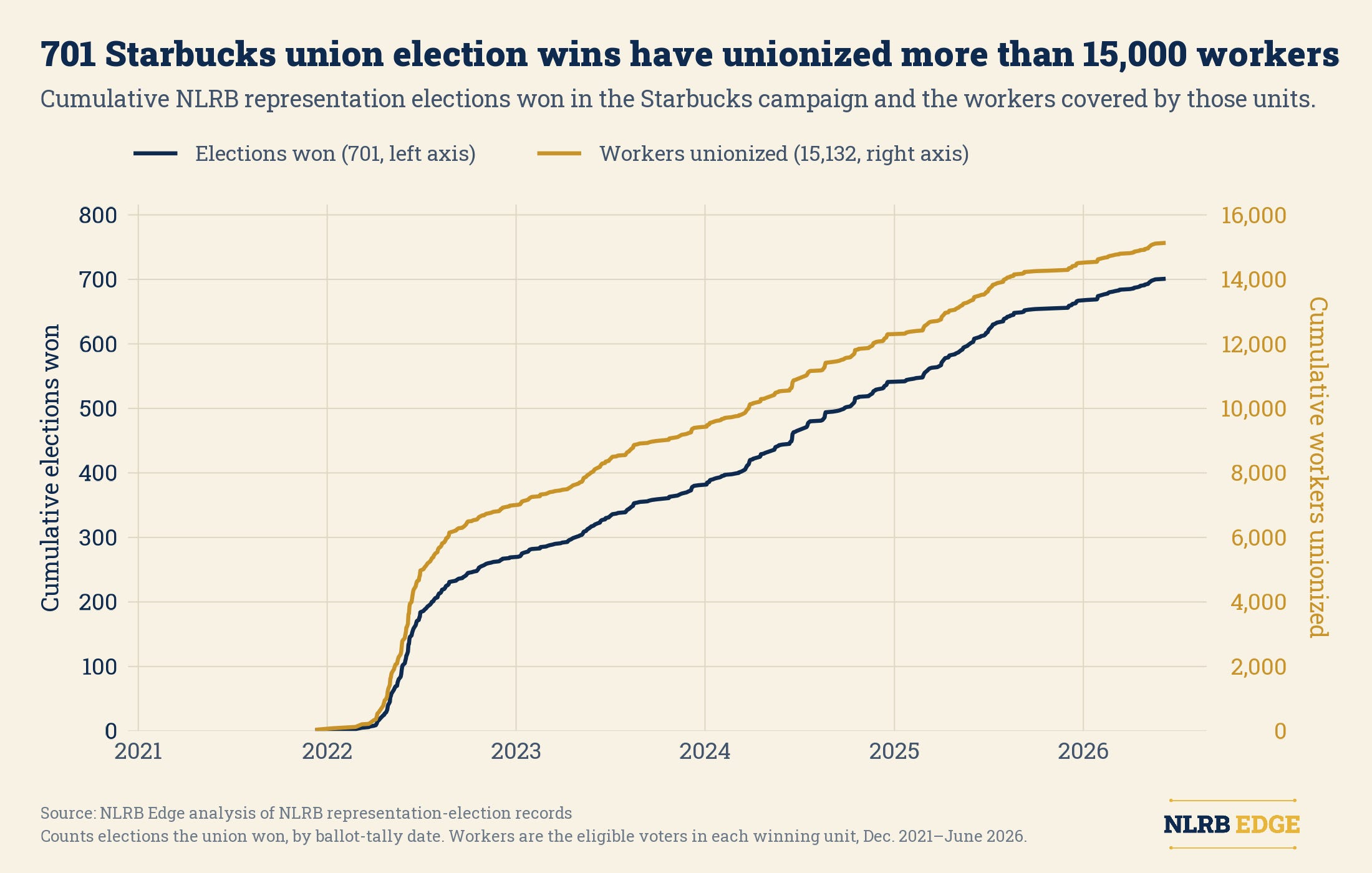
As of today, the Starbucks union has won 701 elections covering 15,132 workers, according to NLRB data.
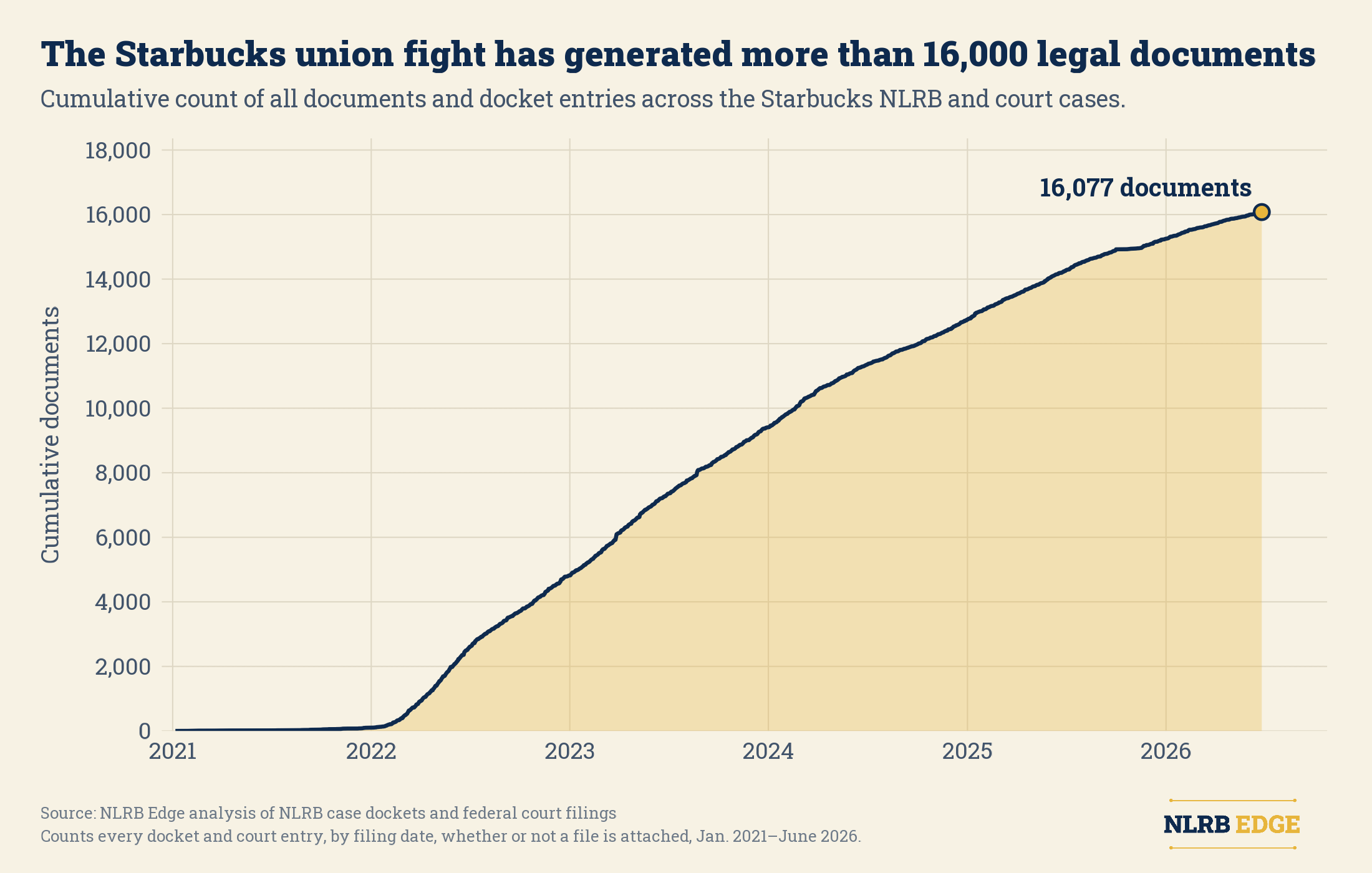
One way to see just how much legal activity this organizing has generated is to count up all of the unique documents across all of the Starbucks-related NLRB dockets. In my NLRB Research database, I count 16,077 such documents, which is more than one document per organized worker. These documents include petitions, charges, motions, decisions, and any other document that might show up on a legal docket. This count includes representation cases, unfair labor practice cases, and other cases that get sucked into my database each day.
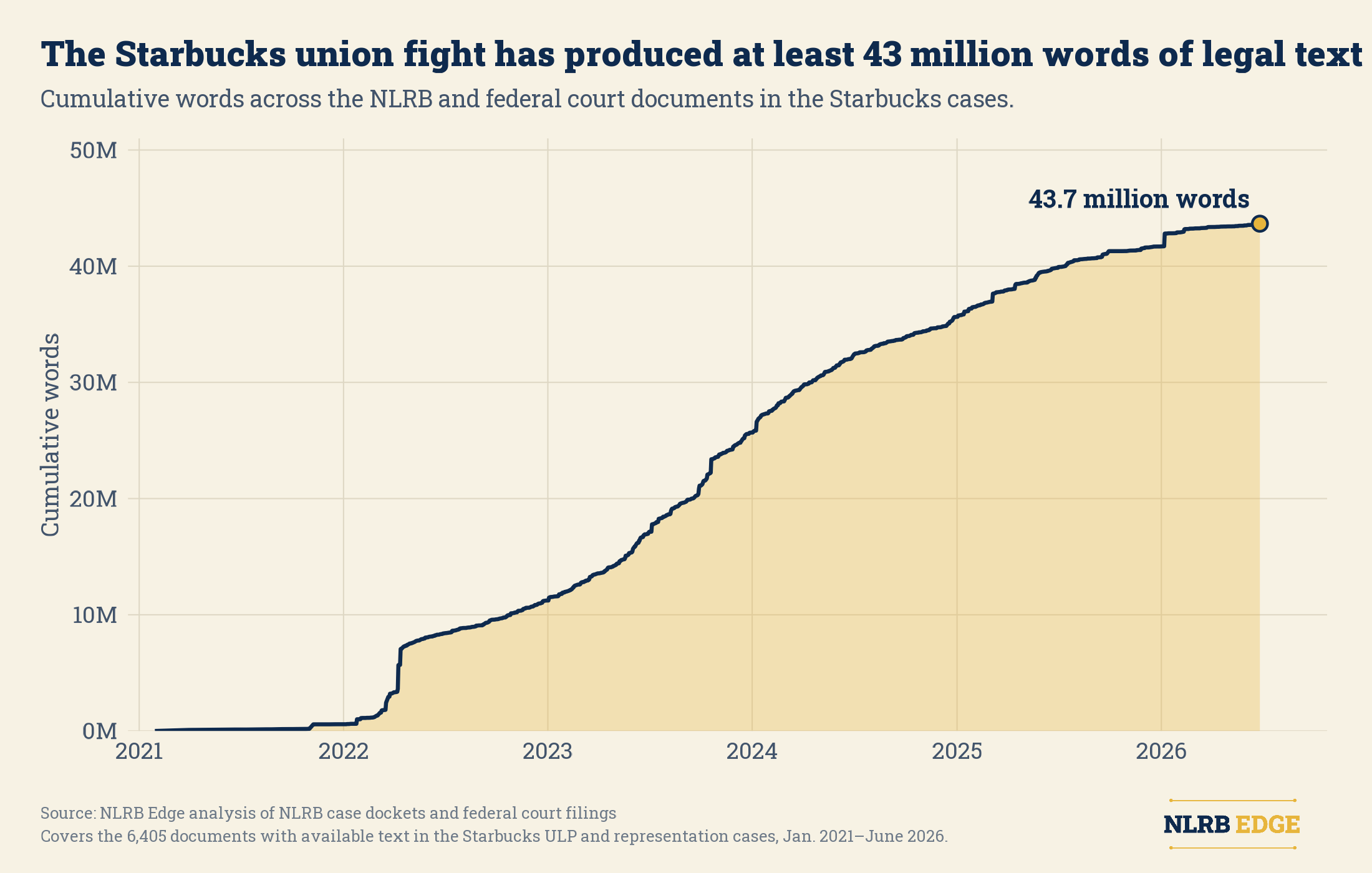
Most of these documents never get posted to the web. There is an entry in the docket indicating they exist, but the only way to access them is to submit a Freedom of Information Act (FOIA) request with the NLRB. Some of the documents do get posted publicly. My database currently has 6,405 such documents. Collectively these documents contain 43.7 million words.
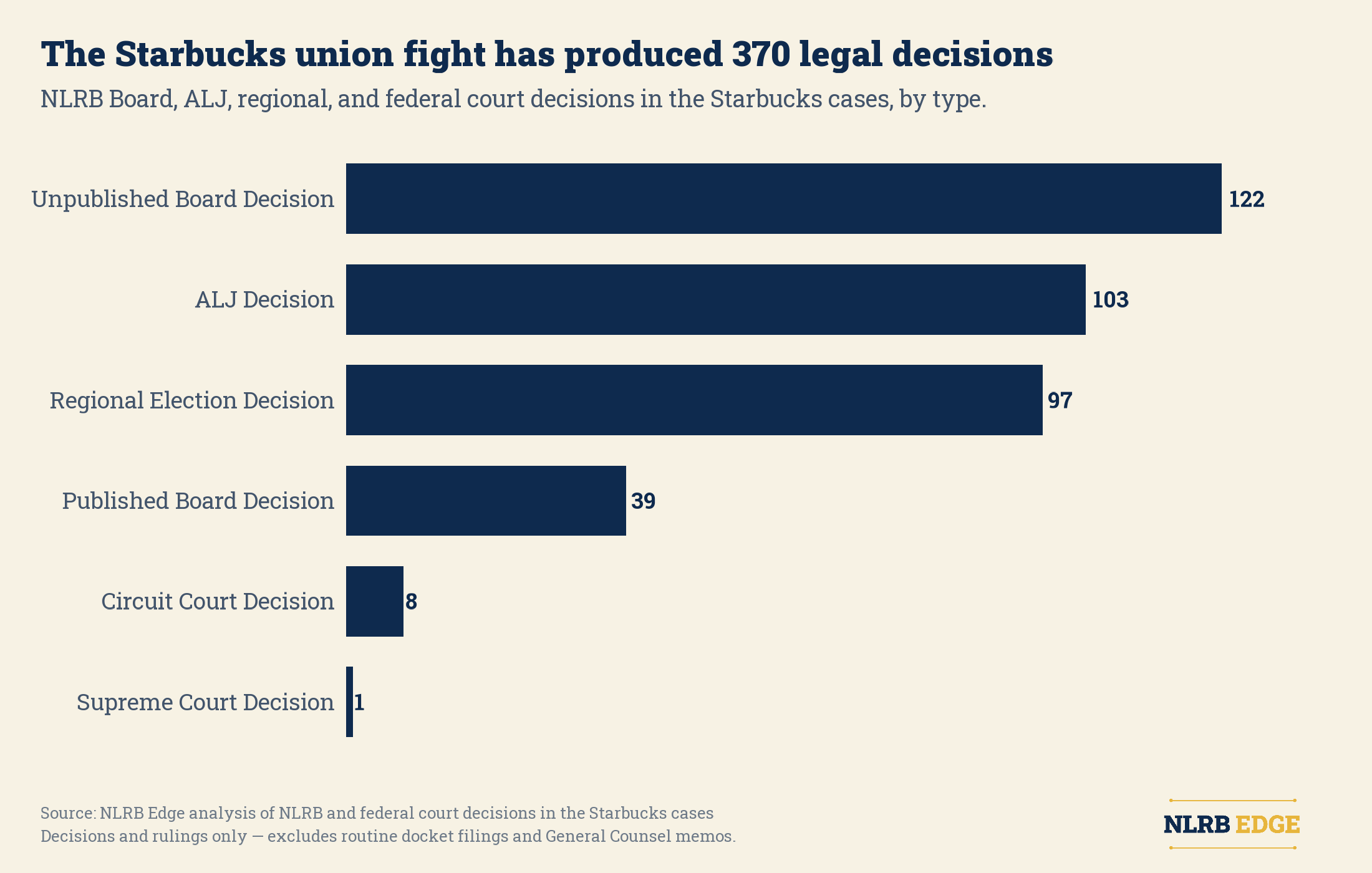
Among these documents are 370 legal decisions, including one from the Supreme Court. This is one legal decision for every 41 unionized workers.
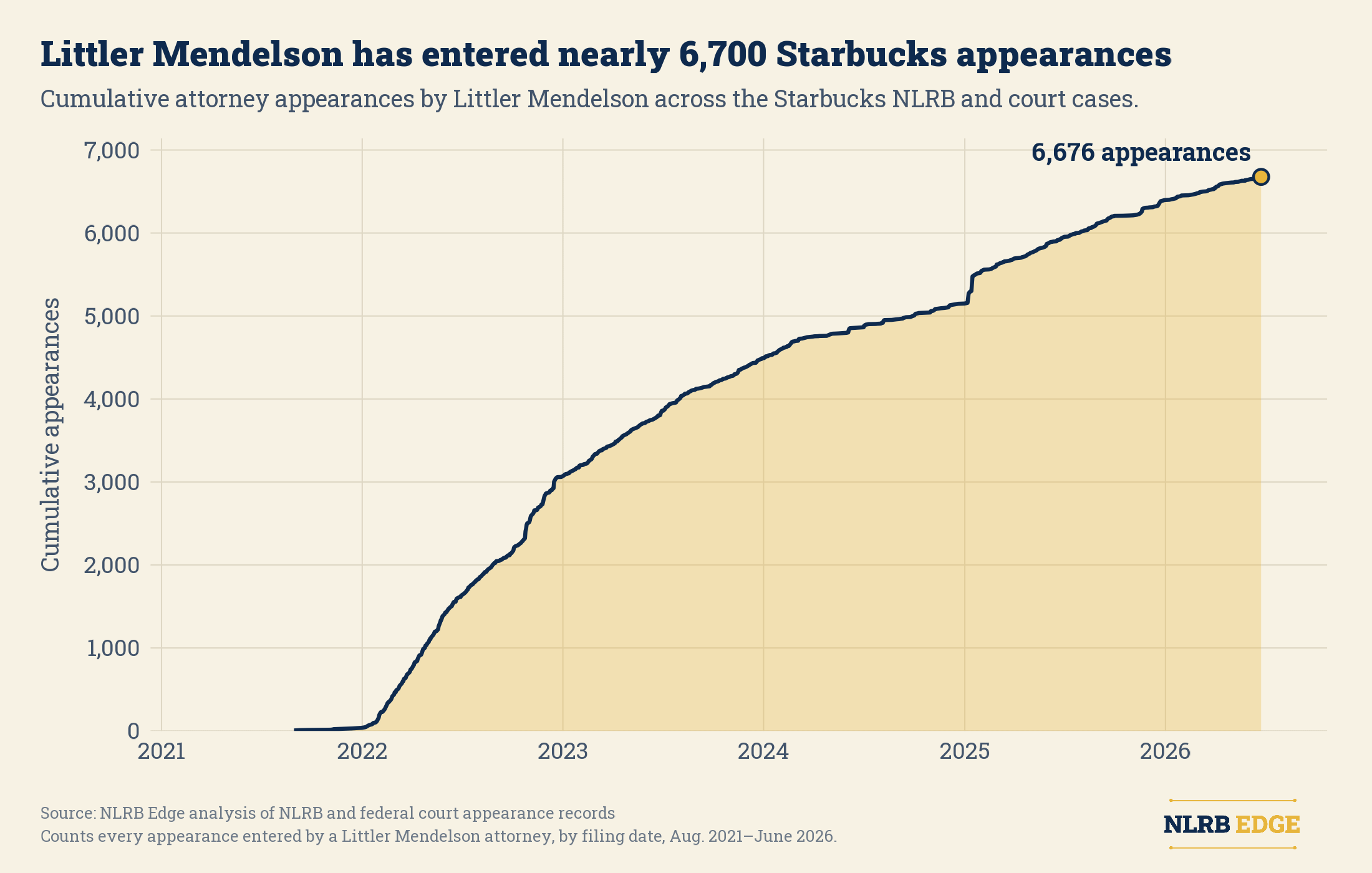
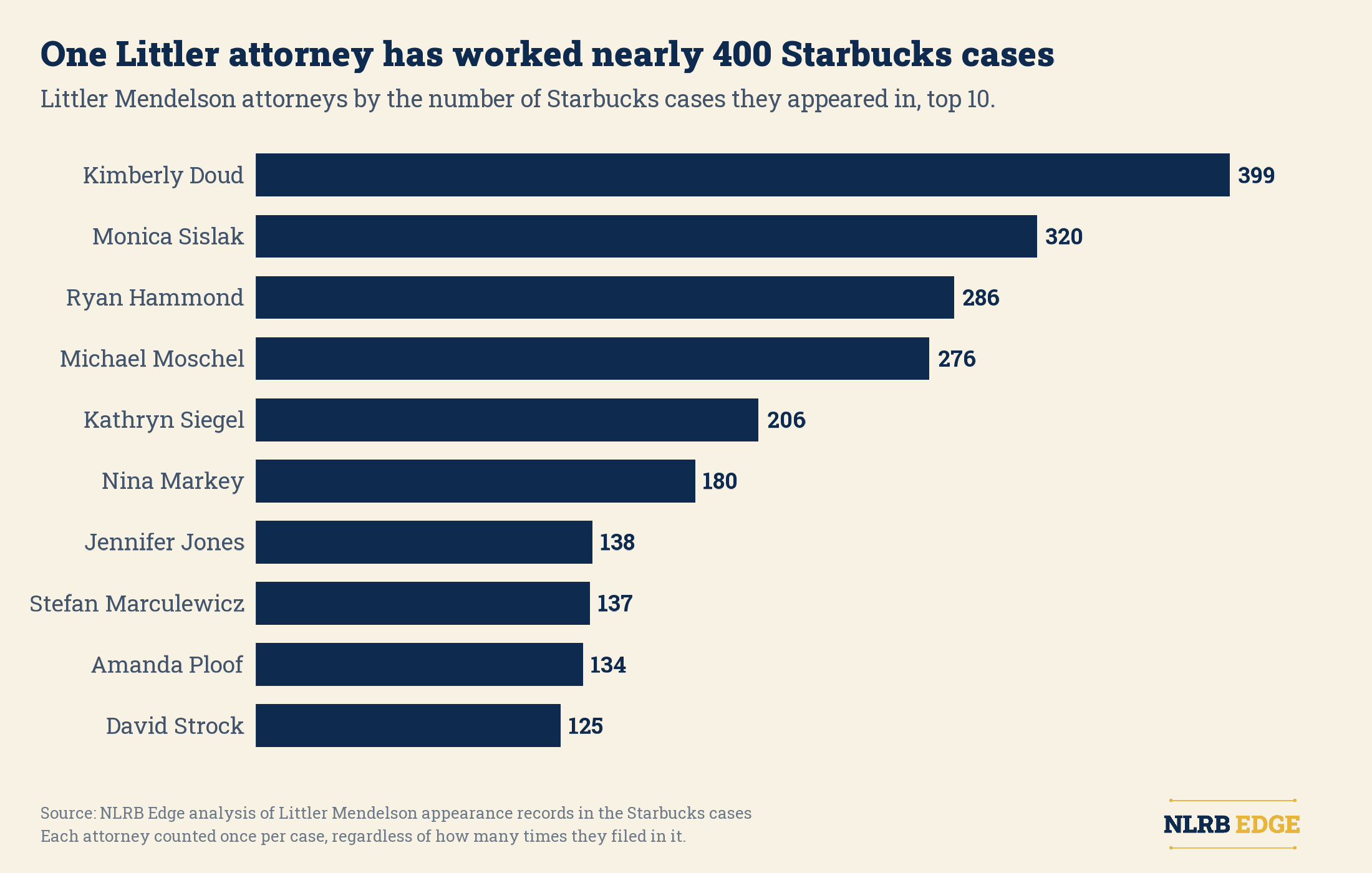
Within my database, it is also possible to identify all of the lawyers who have been hired to do all of this work. On the Starbucks side of things, almost all of the work has been done by lawyers from the law firm Littler Mendelson. Together, Littler lawyers have filed nearly 6,700 appearances in Starbucks cases.
Like everything, law is subject to material constraints. Lawyers are finite. Judges are finite. NLRB attorneys, regional directors, ALJs, and Board members are finite. Animating these various actors costs money and is subject to various bottlenecks that can clog.
Unions have money that they can use to engage in legal battles, which is one of the reasons employers fear them: the pooling of dues allows unions to fight battles that individual workers never could. But union finances are not bottomless and unit legal costs can make marginal union organizing economically impossible.
People who oppose unions will obviously not be bothered by this. If you can’t ban them, then creating an impossible legal environment is perhaps the next best thing. But formally at least, it remains the policy of the United States to encourage “the practice and procedure of collective bargaining” and to protect “the exercise by workers of full freedom of association, self-organization, and designation of representatives of their own choosing, for the purpose of negotiating the terms and conditions of their employment or other mutual aid or protection.”
When a union can win this many elections at this rate and by these margins, but has to put up with this without securing any collective bargaining agreements, then the system we have is clearly at odds with its stated purpose.