
I recently undertook a project to standardize various data points that are found on NLRB dockets. This includes using regular expressions and large language models to normalize the hundreds of spellings of the various law firms, unions, and employers that show up on NLRB dockets. The goal of this little project was to permit certain kinds of NLRB statistical analysis that previously was not possible.
One thing I have determined with this newly-cleaned data is that the United States Postal Service (USPS) accounts for a hugely disproportionate share of the NLRB caseload.
This is not because there are a bunch of union elections at the Postal Service. The National Association of Letter Carriers (NALC), American Postal Workers Union (APWU), National Rural Letter Carriers’ Association (NRLCA), and the National Postal Mail Handlers Union (NPMHU) already represent almost all USPS workers. These workers are not just unionized, but also have collective-bargaining agreements.
Instead, virtually all of the USPS activity at the NLRB is unfair labor practice (ULP) charges.
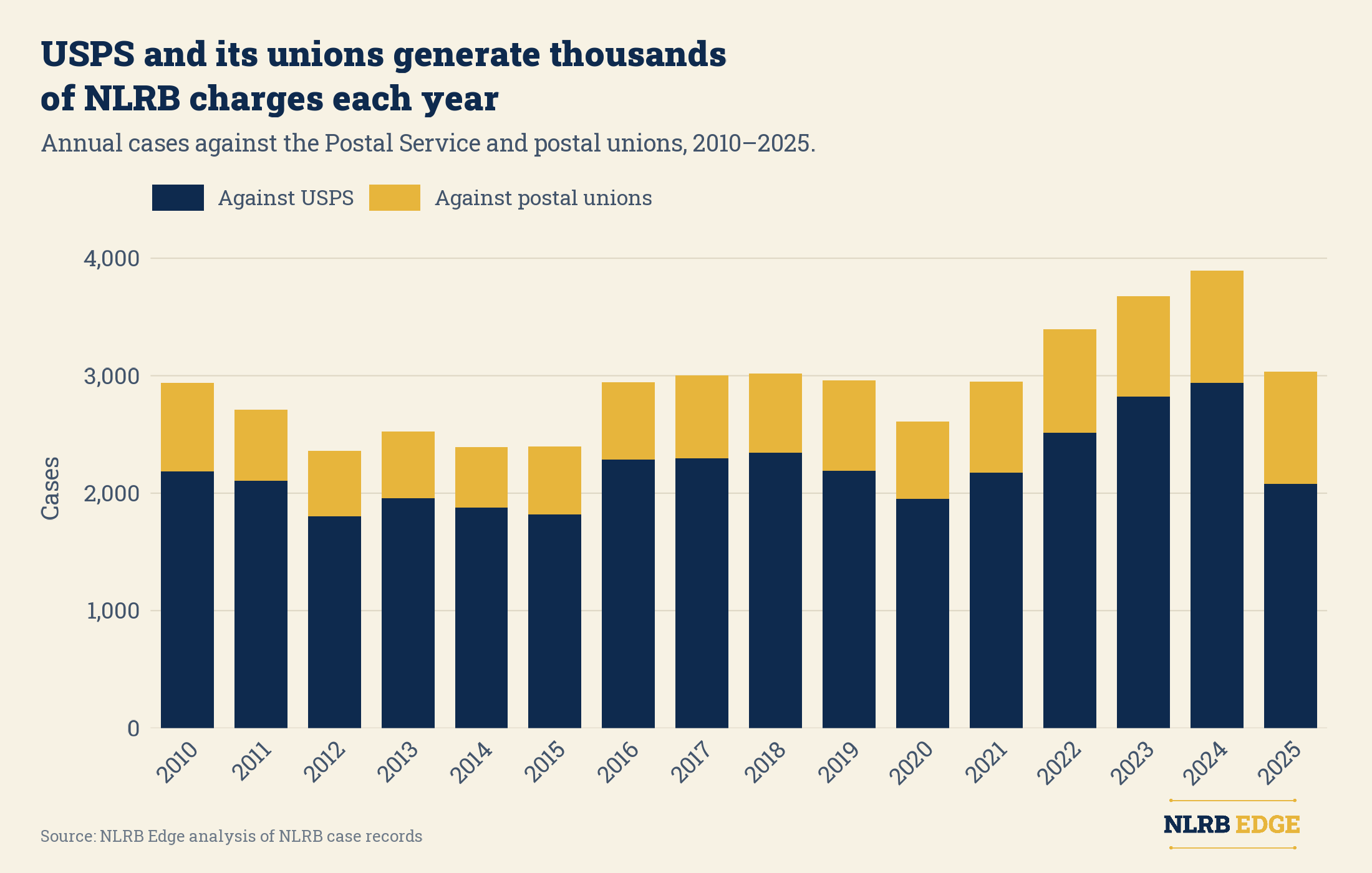
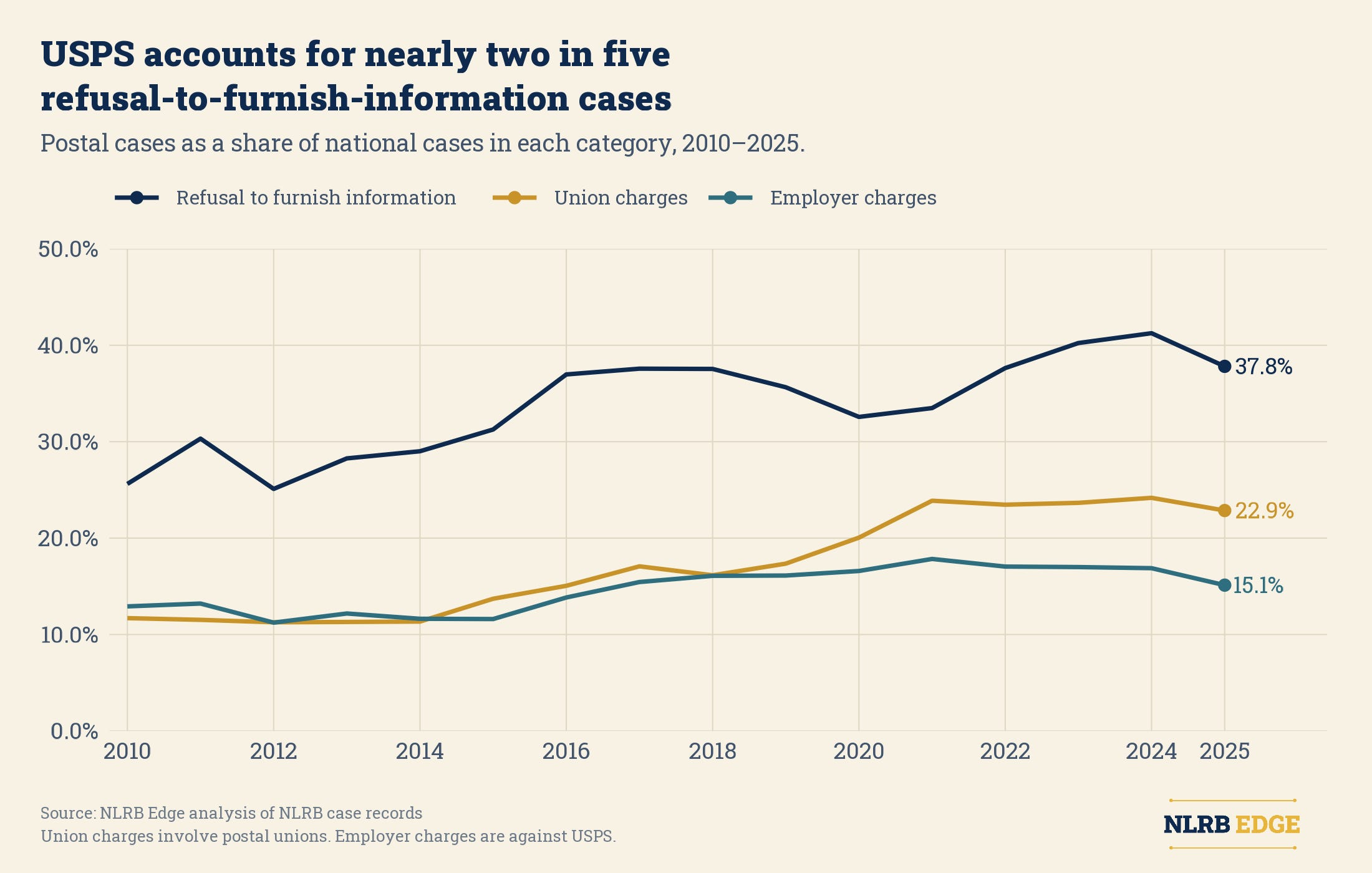
Around 15 percent of all ULP charges brought against employers are brought against the USPS. Around 23 percent of all ULP charges brought against unions are brought against the postal unions.
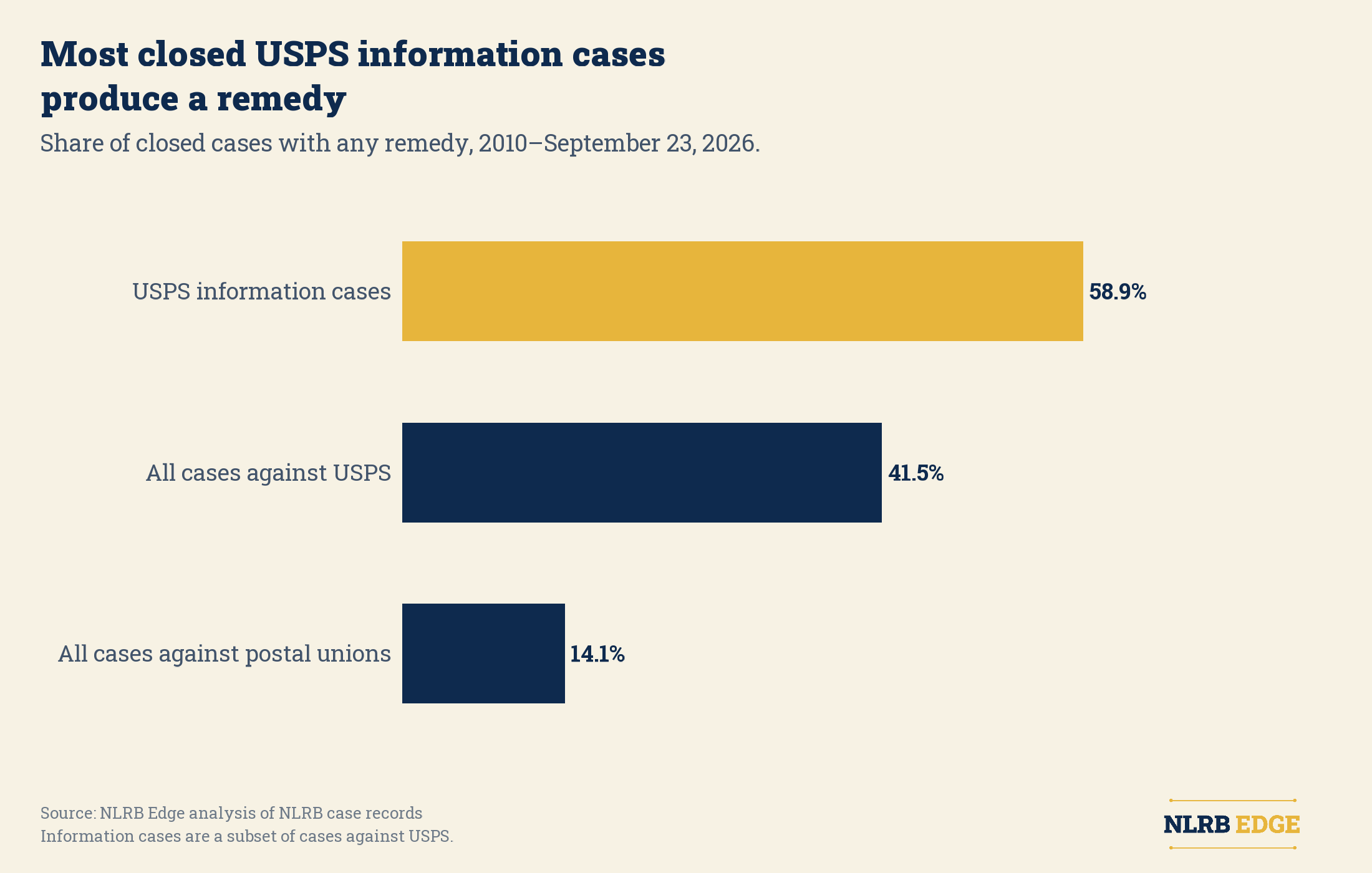
The charges brought against the postal unions are generally individuals alleging that their union violated the duty of fair representation (DFR). Most of these charges appear to be without merit, as less than 15 percent of them result in some kind of remedy, whether a formal remedy from the Board or an adjusted dismissal/withdrawal. This is pretty typical of DFR charges across the country. What usually happens is an individual worker tries to pursue a grievance, the union decides the grievance is no good and opts not to pursue it, and the individual worker files a meritless DFR charge against the union.
The charges brought against the USPS are mostly refusal-to-furnish-information (RFI) charges. Indeed, the graph below probably understates the degree to which RFI charges are driving this activity as “refusal to bargain / bad-faith bargaining” is a general term that includes RFIs.
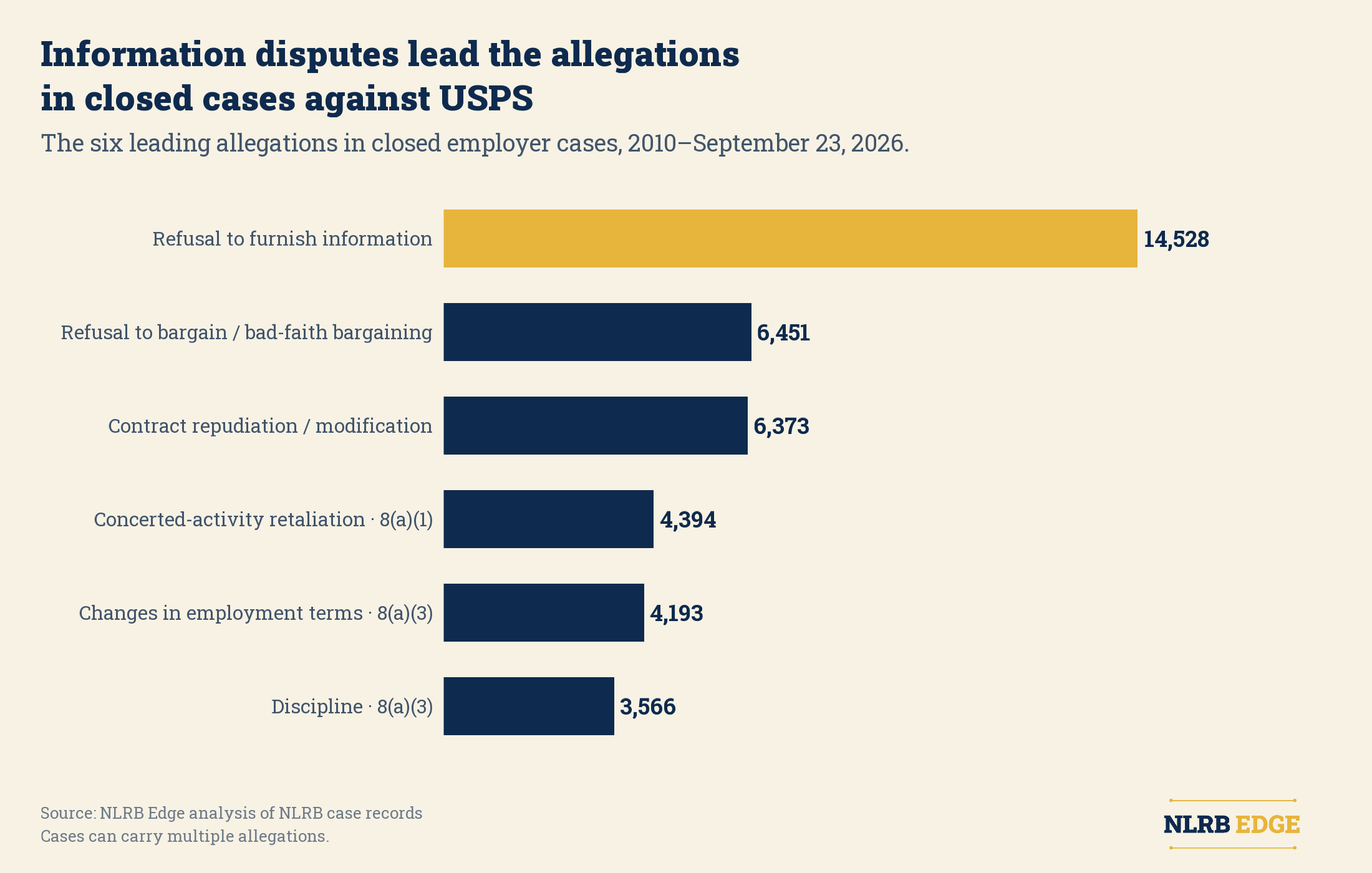
Unlike the (mostly DFR) charges brought against the postal unions, the (mostly RFI) charges brought against the USPS appear to typically have merit. Around 59 percent of all such cases result in a remedy.
There is probably not much that can be done about the flood of DFR charges being brought against the postal unions. By statute, the hundreds of thousands of USPS workers each have an individual right to pursue these sorts of charges, even though they appear to generally lack merit.
But it seems to me like we ought to be able to do something about the flood of RFI charges being brought against the USPS. What is likely happening in most of those cases is one of the four postal unions submits an RFI to try to get information for a specific grievance, the USPS stonewalls that request, and so the union files charges at the NLRB, most of which appear to be meritorious.
Within this RFI process, there are only five or six actors:
The four postal unions.
The USPS management, currently led by Postmaster Steiner.
The USPS NLRB Unit, which is the internal law firm at the USPS that deals with these charges.
The USPS is fully owned by the US government. This means that the President or Congress ought to be able to get to the bottom of why the unions and the USPS have this endless RFI feud, e.g. through Congressional hearings, and then broker some kind of lasting solution to this problem by, among other things, getting the USPS to stop stonewalling valid information requests.
The NLRB is currently sitting on a 23,000 case backlog.
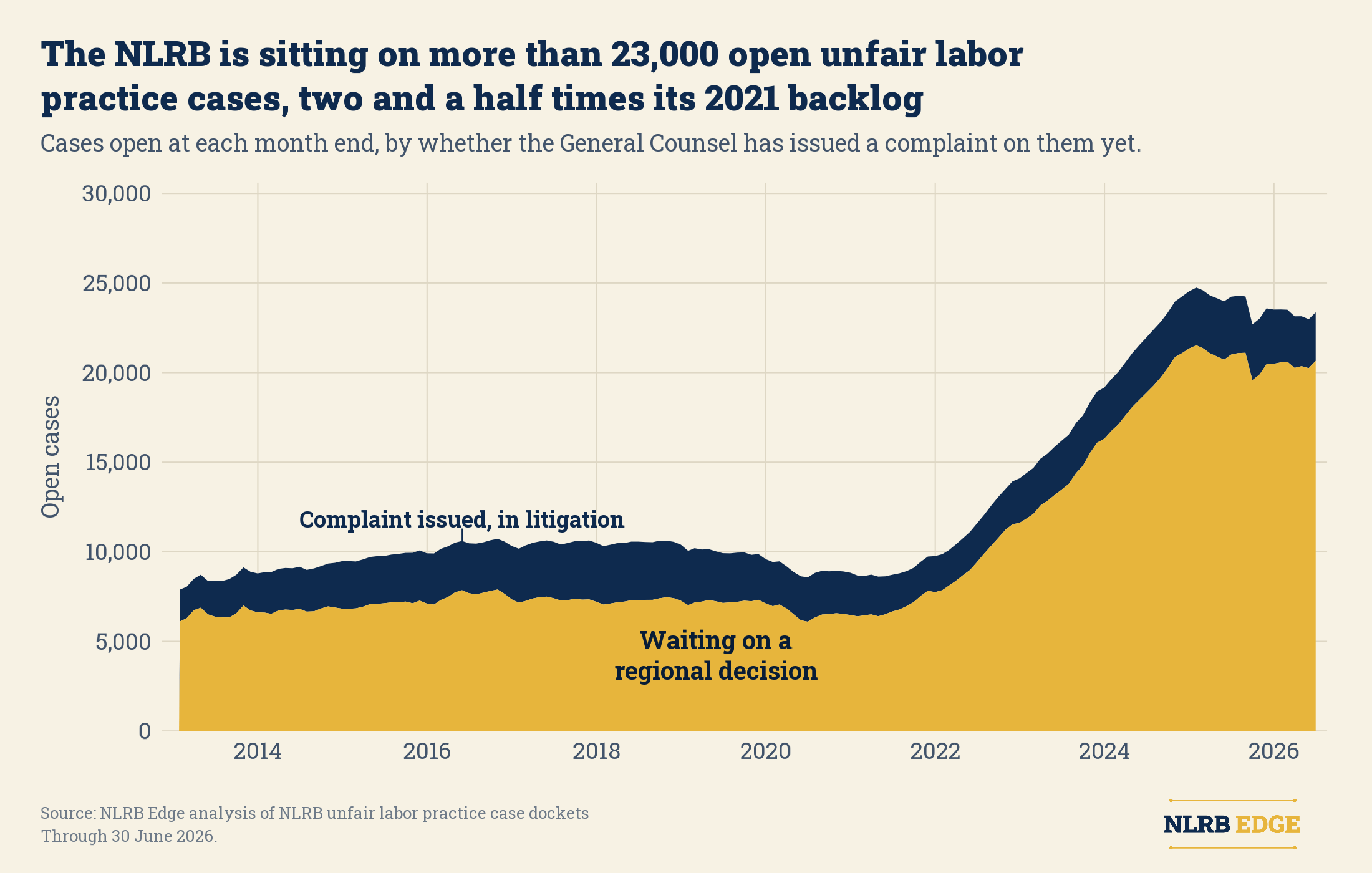
Obviously, the USPS is not solely to blame for this, but there have been over 35,000 charges against USPS since 2010, and it would be interesting to see how much lower the backlog might be if the agency resources spent resolving those charges had been spent elsewhere.
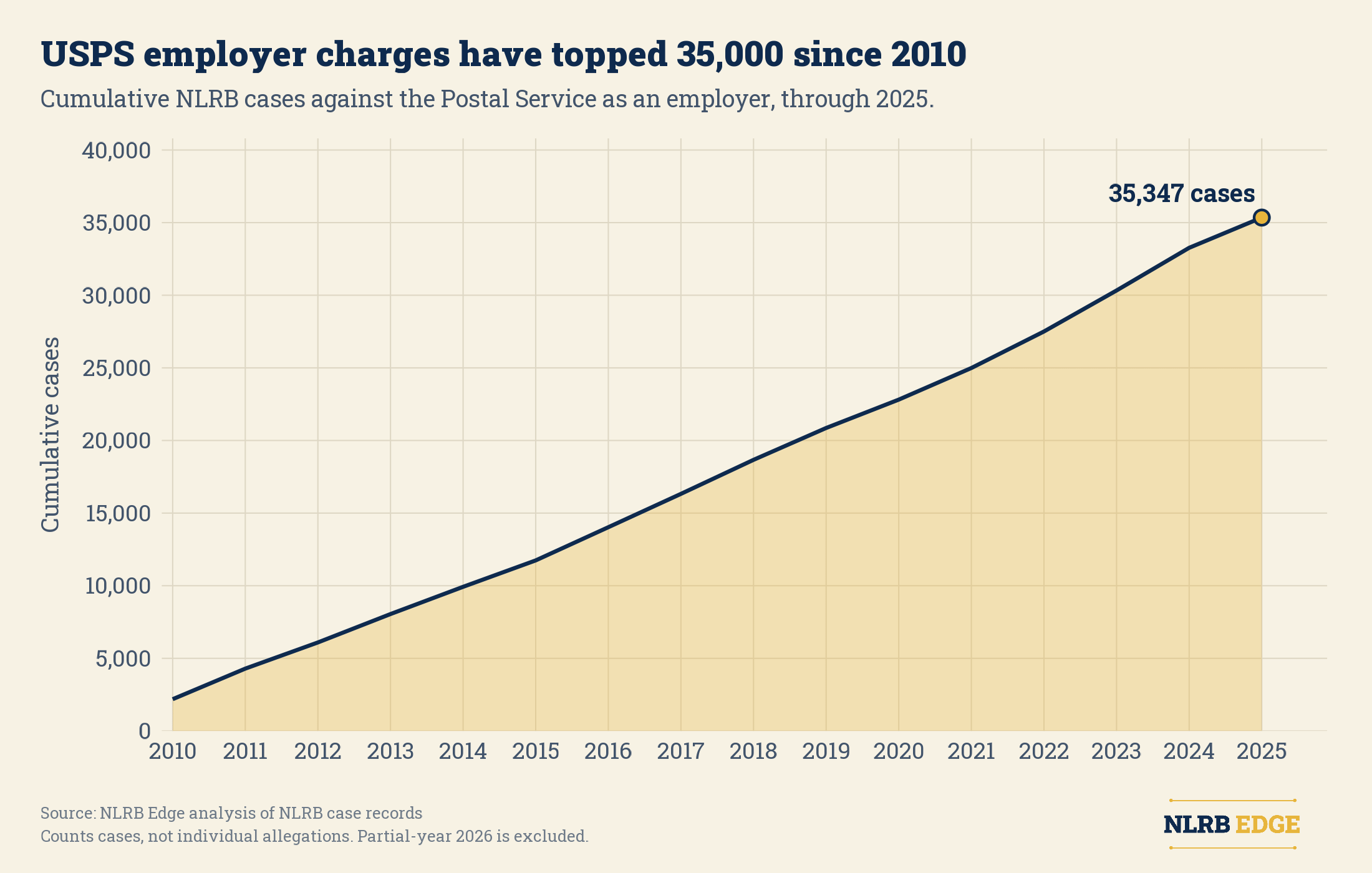
Ultimately, the flooding of the NLRB with USPS charges is a bit absurd. The NLRB primarily exists to resolve labor disputes within the private sector. The USPS, which is a public sector employer, was put under NLRB jurisdiction as part of the 1970 Postal Reorganization Act. Now the USPS is consuming a massively disproportionate share of NLRB resources over mostly fairly tedious grievance administration issues during a time that the agency is completely overwhelmed. Thus, the federal government, acting through the USPS, is significantly thwarting the ability of the federal government, acting through the NLRB, to enforce the law. This should not be how it is.
The PMG is now Steiner, not Dejoy