
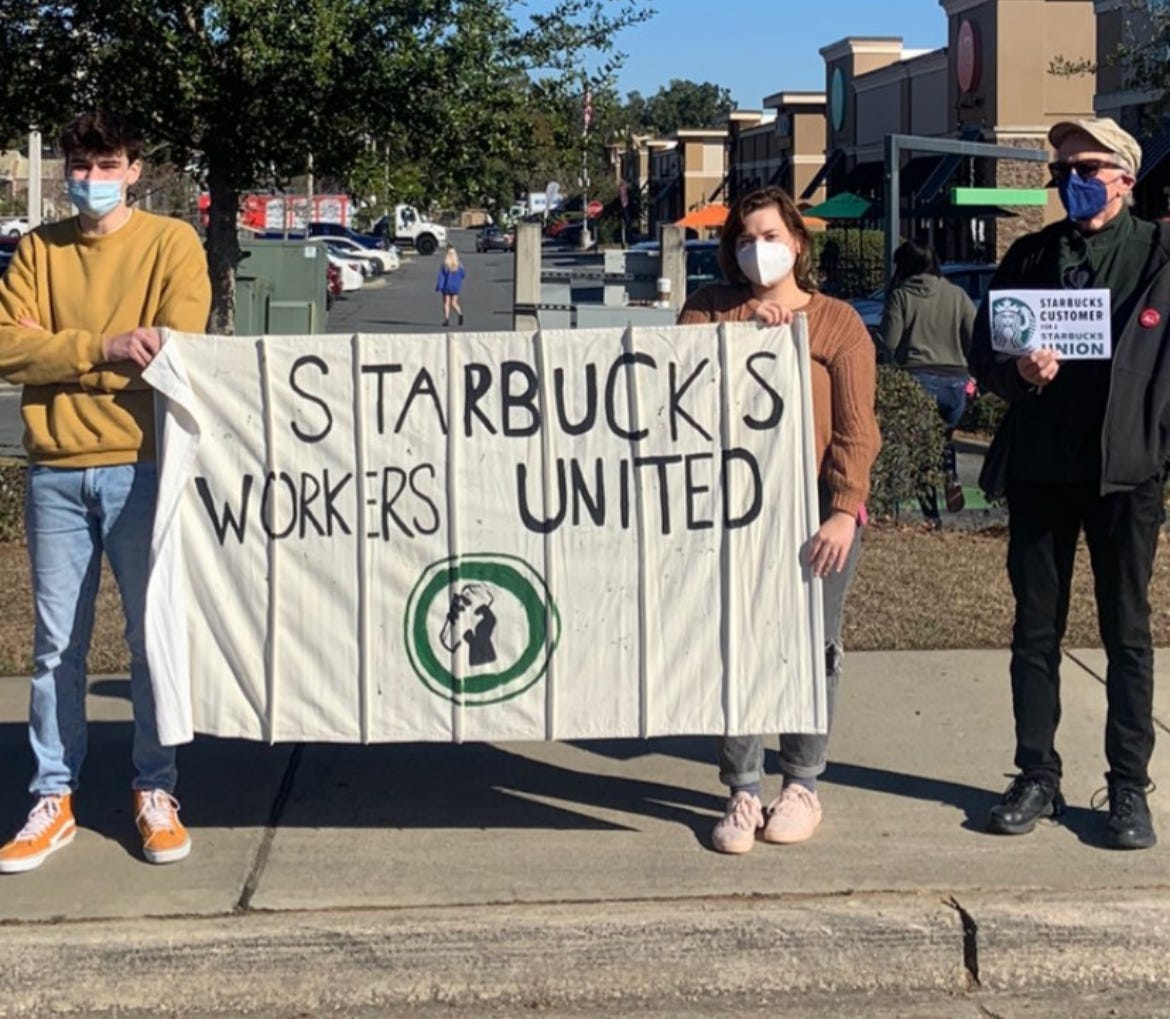
The roundup has two Administrative Law Judge decisions today, one involving an employment agreement that contained many illegal rules and one involving alleged retaliatory and unilateral attendance policy changes at Starbucks that were not violations.
Mobile Phlebotomy of Central Michigan LLC, JD-93-25, 07-CA-330791 (ALJ Decision)
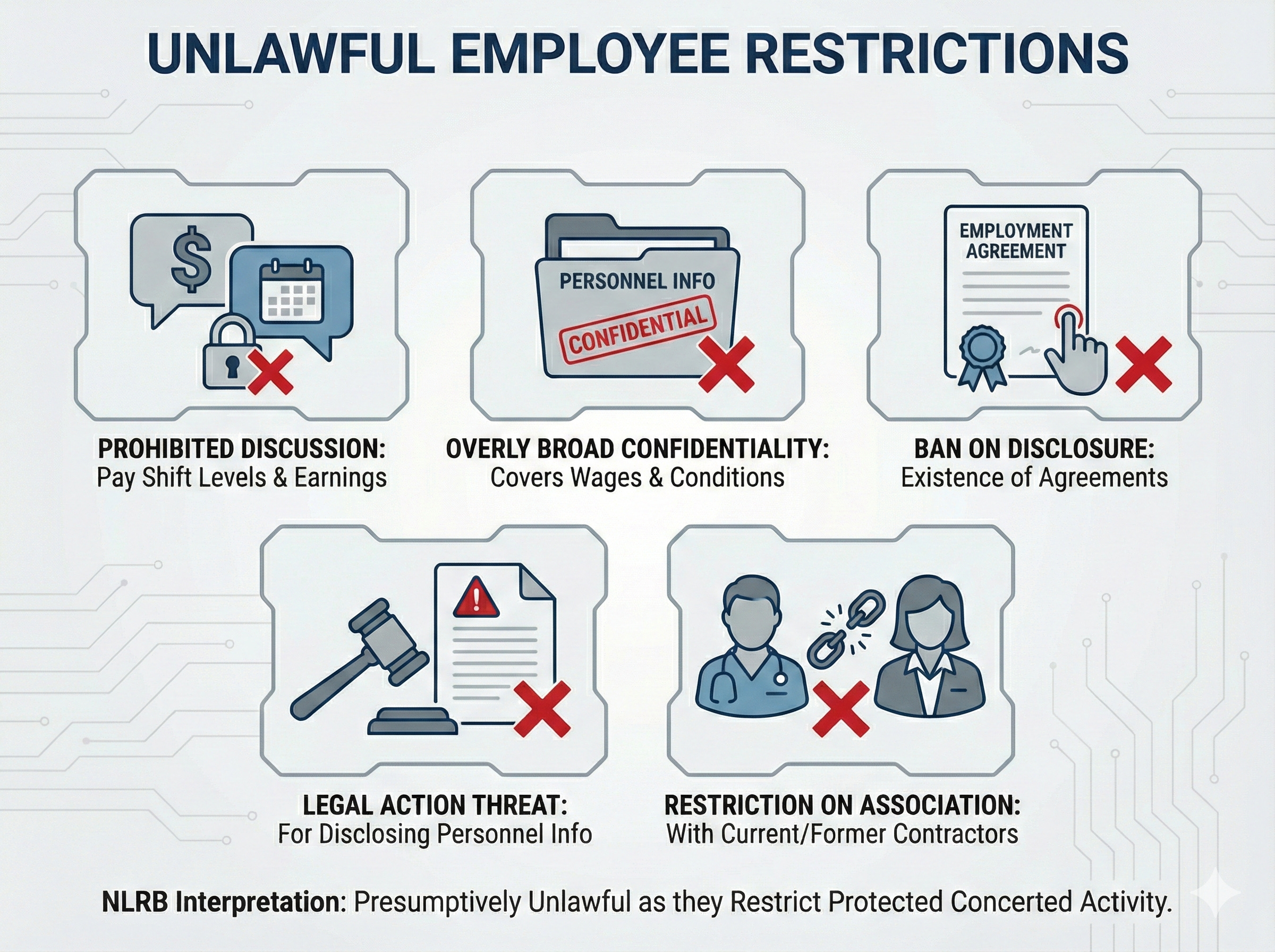
An Administrative Law Judge (ALJ) has found that Mobile Phlebotomy of Central Michigan, LLC violated the National Labor Relations Act by maintaining overly broad provisions in employment agreements that restricted workers’ rights to discuss wages and other employment terms.
The case centered on phlebotomists working for MPCM Services, which contracted with healthcare facilities including Covenant Healthcare and McLaren Medical Center. The company required all phlebotomists to sign three agreements designating them as independent contractors: an Independent Contractor Staffing Agreement, a Non-Compete Agreement, and a Non-Disclosure Agreement.
Key Legal Finding: Employee Status
After analyzing common-law agency factors under The Atlanta Opera framework, ALJ Renée McKinney determined the phlebotomists were employees, not independent contractors. The judge found that MPCM exercised significant control over the workers by unilaterally setting all employment terms, assigning shifts, managing schedules, promulgating work rules, and directly compensating workers on an hourly basis. The phlebotomists wore MPCM uniforms and badges, worked under both client and MPCM supervision, and performed work integral to MPCM’s core business of providing phlebotomy staffing services.
Unlawful Contract Provisions
The ALJ found several agreement provisions violated Section 8(a)(1) by explicitly restricting employees’ Section 7 rights to discuss wages and employment conditions:
Provisions prohibiting discussion of “pay shift levels or the amount earned to anyone” for five years
Confidentiality clauses covering “personnel” information that employees could reasonably interpret as prohibiting discussion of wages and working conditions
A ban on disclosing the existence of the employment agreements themselves
Provisions subjecting employees to legal action for disclosing personnel information
Restrictions on associating with current or former MPCM contractors
Under Stericycle and Lutheran Heritage Village-Livonia, the Board interprets work rules from the perspective of a reasonable employee who is economically dependent on the employer. Because employees could reasonably construe these provisions as prohibiting protected concerted activity, they were presumptively unlawful.
Claims Dismissed
The ALJ dismissed several allegations, including:
That the misclassification itself was an independent violation (though it established employee status for other violations)
That a May 2023 email prohibiting pay discussions violated the Act (untimely under Section 10(b)’s six-month limitations period)
That MPCM’s Michigan state court lawsuit against former workers was preempted by federal labor law or had an illegal objective, finding it sought only to enforce non-compete provisions not challenged in the NLRB case
That charging party Kayleigh Sobanski was unlawfully discharged, finding she resigned rather than being terminated
Ordered Remedies
The company must rescind the unlawful provisions and notify employees in writing of the changes, either through inserts, revised agreements, or written notification. MPCM must also post notices informing employees of their rights and the company’s violations.
Significant Cases Cited
The Atlanta Opera, Inc., 372 NLRB No. 95 (2023): Established the current framework for determining independent contractor status under common-law agency principles, considering all relationship factors with no single factor decisive, and evaluating actual entrepreneurial opportunity.
Stericycle, Inc., 372 NLRB No. 113 (2023): Set forth the standard for evaluating facially neutral work rules, requiring interpretation from the perspective of a reasonable employee who is economically dependent on the employer and contemplating protected activity.
Lutheran Heritage Village-Livonia, 343 NLRB 646 (2004): Established that work rules explicitly restricting Section 7 rights are unlawful, and rules that don’t explicitly restrict such rights are unlawful if employees would reasonably construe them to prohibit protected activity.
Lafayette Park Hotel, 326 NLRB 824 (1998): Held that employers violate Section 8(a)(1) by maintaining work rules that would reasonably tend to chill employees in exercising Section 7 rights, regardless of whether the rules are ever applied.
Bill Johnson’s Restaurants v. NLRB, 461 U.S. 731 (1983): Established that filing a civil lawsuit violates the Act if it has an illegal objective, is preempted by the Act, or lacks reasonable basis and was filed to retaliate against Section 7 activity.
Starbucks Corporation, JD-92-25, 15-CA-304674 (ALJ Decision)
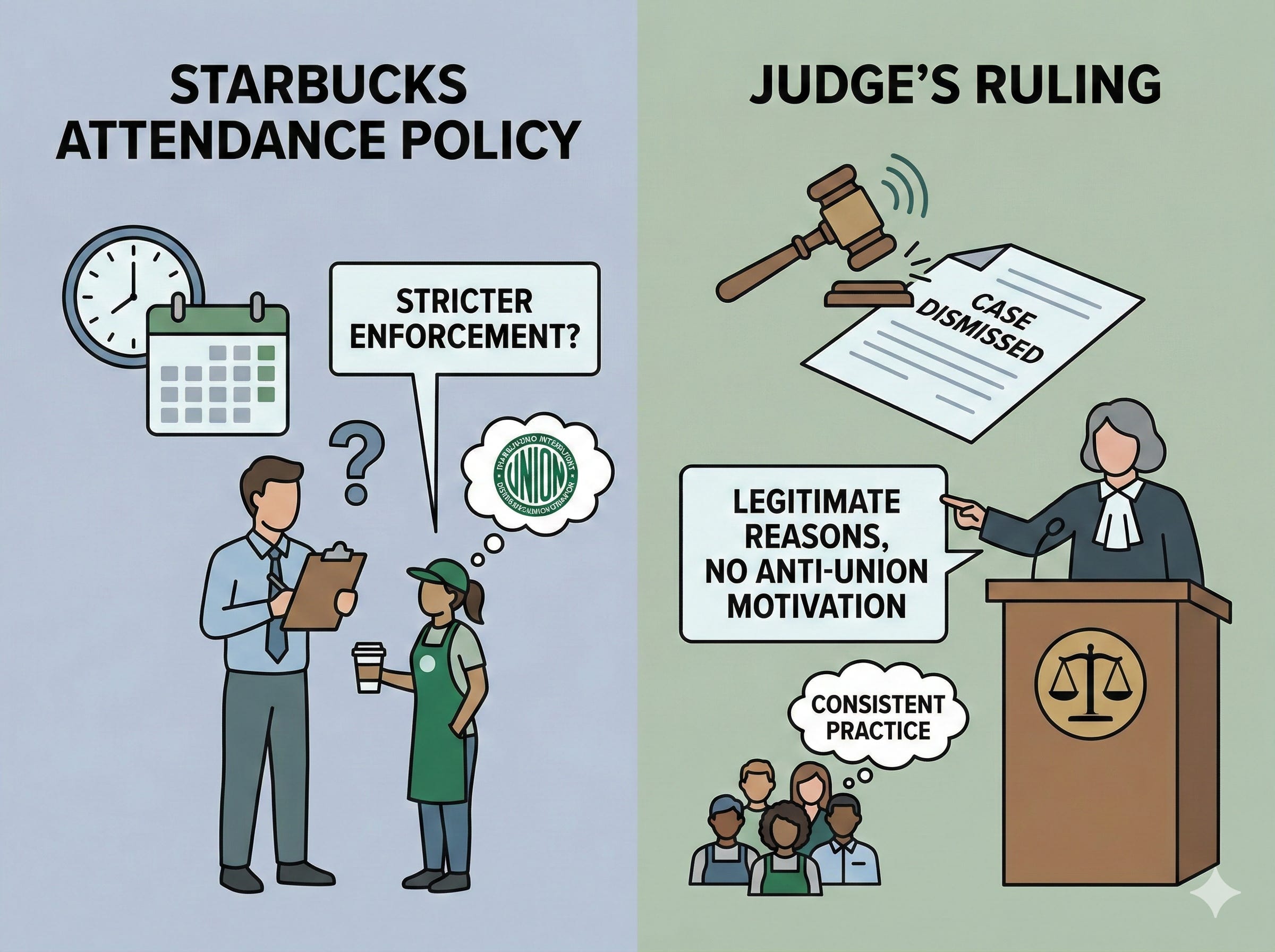
An Administrative Law Judge has dismissed all allegations against Starbucks Corporation in a case involving claims that the company unlawfully changed its attendance policy enforcement and disciplined a union-supporting shift supervisor at its Memphis location.
The case centered on Reaghan Hall, a shift supervisor at Starbucks’ Poplar and Highland store in Memphis, who was active in the store’s 2022 unionization campaign with Workers United. Hall received three disciplinary actions between September 2022 and February 2023 for arriving late to shifts.
The Acting General Counsel alleged these disciplines violated federal labor law because they were motivated by Hall’s union activities and her testimony in Board proceedings related to the February 2022 termination of seven employees. The complaint also alleged Starbucks unlawfully implemented stricter attendance enforcement without bargaining with the union, and that store manager Erik Rocha unlawfully surveilled employees during a November 2022 picket.
Administrative Law Judge Geoffrey Carter found insufficient evidence of unlawful motivation. Rocha became store manager in mid-2022 and had legitimate reasons for emphasizing attendance—Hall herself had repeatedly complained to him about attendance problems among staff. The record showed no evidence that Rocha harbored anti-union animus or had involvement in earlier unfair labor practice allegations.
The judge rejected the claim that Starbucks changed an established past practice, finding that enforcement varied between different store managers over time and that the Acting General Counsel failed to prove a consistent practice of lax attendance enforcement existed.
Regarding surveillance, the judge found Rocha’s presence in his car during the picket was necessitated by Starbucks’ “two-employee rule” rather than coercive observation. Hall did not dispute arriving late on the cited dates, and approximately 30 other employees received similar attendance discipline during the same period.
Significant Cases Cited
Wright Line, 251 NLRB 1083 (1980): Establishes the burden-shifting framework for discrimination cases requiring the General Counsel to show protected activity was a motivating factor, then shifting burden to the employer to prove it would have taken the same action regardless.
Intertape Polymer Corp., 372 NLRB No. 133 (2023): Clarifies that discriminatory motivation can be proven through circumstantial evidence including timing, contemporaneous unfair labor practices, pretextual reasons, departures from past practice, and disparate treatment.
Endurance Environmental Solutions, LLC, 373 NLRB No. 141 (2024): Establishes that the party asserting a past practice must prove it occurred with such regularity that employees could reasonably expect it to continue, and the practice cannot predate union representation.
Starbucks Corp., 372 NLRB No. 122 (2023): Provides that the General Counsel retains the ultimate burden of proving discrimination and credibility determinations may rely on witness demeanor, weight of evidence, and reasonable inferences.
Wendt Corp., 372 NLRB No. 135 (2023): Holds that an employer may defend against unilateral change allegations by showing the change was part of a regular and consistent past pattern without significant managerial discretion.