
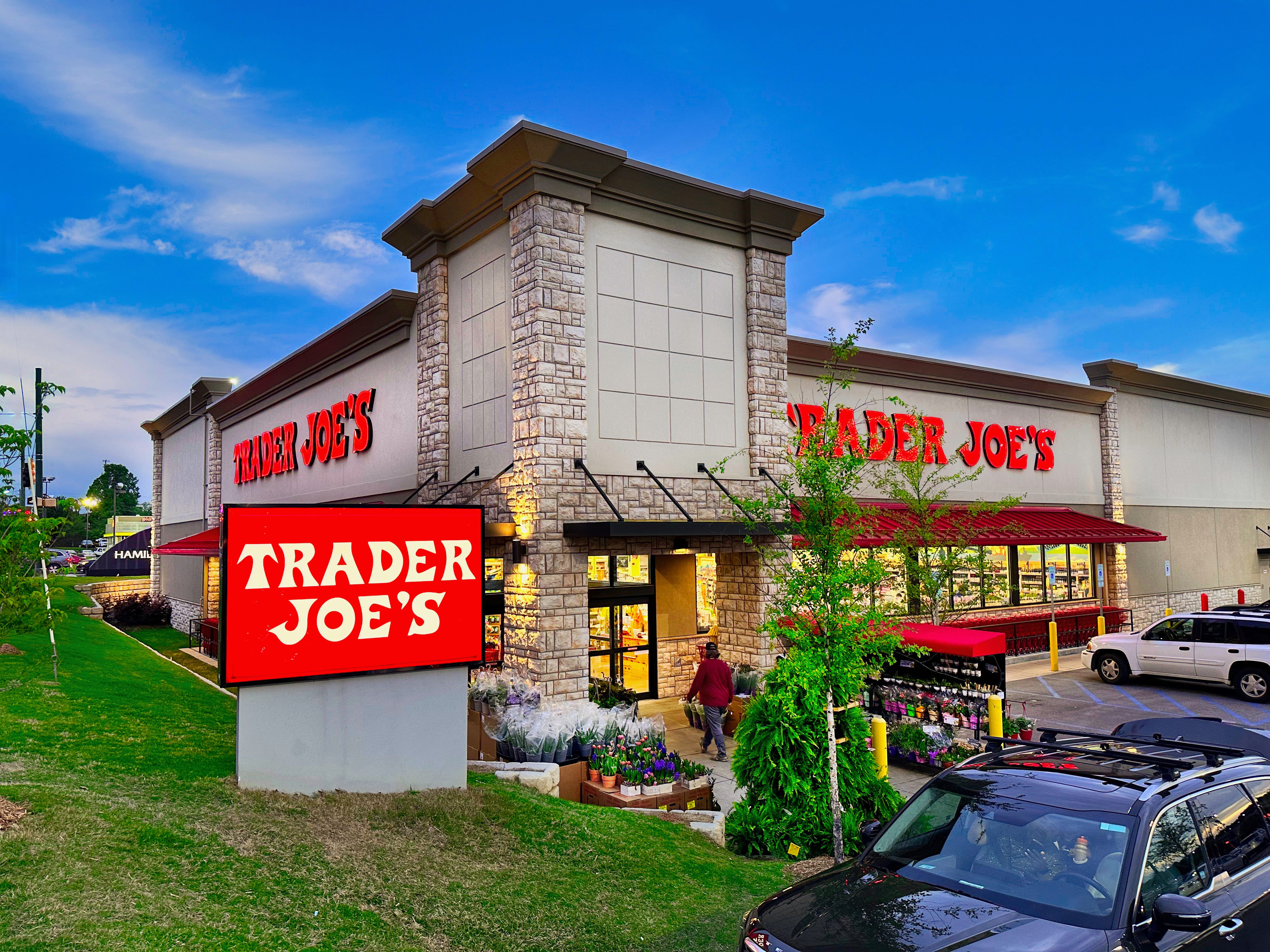
Trader Joe's East, 375 NLRB No. 69, 13-CA-394913 (Published Board Decision)
The Board granted summary judgment against Trader Joe's East Inc., finding it unlawfully refused to recognize and bargain with Trader Joe's United at its Chicago store. The company admitted the refusal but challenged the union's certification, and the Board held that every representation issue it raised had been or could have been litigated in the earlier representation proceeding. The decision is unanimous as to the violation.
The company argued that the election was tainted by objectionable conduct attributable to the union, its agents, or third parties, and that it was denied a fair hearing because of flawed subpoena rulings. Both arguments were raised and rejected in the representation case. The company offered no newly discovered and previously unavailable evidence and showed no special circumstances warranting reexamination, so the Board found no litigable representation issue. It also rejected the company's other defenses. Its admitted refusal to bargain was enough to establish a violation and to show the complaint stated a valid claim. Its claim that the remedies were punitive or beyond the Board's authority was unsupported by explanation or evidence.
The certified unit covers full-time and regular part-time Crew Members and Merchants at the store, following an April 2024 election, resolution of a determinative challenged ballot, and a July 2026 certification. The Board ordered the company to cease and desist, bargain on request, and sign any agreement reached. It must also post a notice physically and electronically. The certification year will run from the date good-faith bargaining begins. Member Prouty, in a footnote, would have ordered additional remedies as he described in his dissent in Longmont United Hospital. These include make-whole relief for provable economic harm, union access to the unit, a bargaining schedule, a one-year notice posting, and a notice reading and distribution.
Significant Cases Cited
Pittsburgh Plate Glass Co. v. NLRB, 313 U.S. 146 (1941): Issues that were or could have been litigated in a representation proceeding generally cannot be relitigated in a later unfair labor practice case absent new evidence or special circumstances.
Frontier Hotel, 265 NLRB 343 (1982): The Board may take official notice of the record in the underlying representation proceeding in a test-of-certification case.
Mar-Jac Poultry Co., 136 NLRB 785 (1962): When an employer unlawfully refuses to bargain, the certification year is construed to begin when good-faith bargaining starts.
Randalls Food & Drug, L.P., 369 NLRB No. 100 (2020): An admitted refusal to bargain is sufficient to establish a violation of the NLRA.
Elemi Restaurant, LLC, JD(SF)-20-26, 28-CA-289582 (ALJ Decision)
An administrative law judge found that Elemi Restaurant, LLC violated Section 8(a)(1) of the NLRA by discharging server Alfonso Treviso for engaging in protected concerted activity, but dismissed the allegation that the discharge also violated Section 8(a)(3) because there was no evidence of union activity known to the employer.
The judge applied the Wright Line framework and found that the General Counsel made a strong initial showing. Treviso had raised group concerns with management about tips, wage discussions, and holiday closure pay during November and December 2021. These included complaints during a point-of-sale outage, an Instagram post about the right to discuss wages, a December inquiry with a coworker about holiday pay, and a December 18 shift in which he dressed in black and told a manager he stood in solidarity with coworkers. The owners repeatedly labeled wage and hours discussions as "gossip" and "toxic rumors," and the owner decided to discharge Treviso the same day as the solidarity display. When Treviso was fired, he was told the reason was "gossiping." The judge read that as a veiled reference to protected activity, relying on the owners' pattern of using such words for Section 7 conduct. Together with generalized animus and close timing, this established unlawful motive. Elemi did not carry its defense. It claimed it was unaware of any concerted activity, which the record contradicted, and that it acted because of his abusive conduct and performance, for which there was no supporting evidence. It had also tolerated his lapses in side duties.
On the Section 8(a)(3) claim, the judge held that Treviso's single passing remark that "that's why unions existed" was not union activity, and that the owner's accusation that a different employee was unionizing did not show Respondent suspected Treviso. The judge also declined to infer union-based animus from timing that was clearly tied to the protected concerted activity.
The recommended order requires Elemi to offer Treviso reinstatement and make him whole with interest, including search-for-work and other direct or foreseeable pecuniary harms. It also requires compensation for adverse tax consequences, expungement of the discharge from his records, and a 60-day notice posting, including electronic posting.
Significant Cases Cited
Wright Line, 251 NLRB 1083 (1980): Establishes the burden-shifting framework for motive-based discipline, requiring the employer to show it would have taken the same action absent protected activity.
Meyers Industries (Meyers II), 281 NLRB 882 (1986): Defines concerted activity to include individual employees bringing truly group complaints to management's attention or seeking to initiate or prepare for group action.
Fresh & Easy Neighborhood Market, 361 NLRB 151 (2014): Explains that activity is protected when it seeks to improve employees' terms and conditions of employment or otherwise their lot as employees.
Aroostook County Regional Ophthalmology Center, 317 NLRB 218 (1995): Holds that discussing wages is protected concerted activity because wages are a vital term and condition of employment.
Climatrol, Inc., 329 NLRB 946 (1999): Treats references to an employee's "attitude" as covert references to Section 7 activity.
United States Postal Service, JD(SF)-21-26, 19-CA-291810 (ALJ Decision)
An administrative law judge found that the Postal Service violated Section 8(a)(3) and (1) of the NLRA by ordering a clerk back to a one-room Montana post office under a postmaster she had reported, denying her transfer requests, and constructively discharging her. The judge concluded that each action was taken because of her protected complaints and that the Postal Service's explanations were pretextual.
The clerk complained to management about the postmaster's abusive treatment, pay and password practices, and other policy violations. She then sought EEO counseling and filed a union grievance. The judge held these steps were protected concerted activity under the Interboro doctrine because they invoked the collective-bargaining agreement's safety and nondiscrimination provisions. They were also concerted under the Meyers Industries standard because they matched complaints by two other women who worked under the postmaster. Applying Wright Line, the judge credited the clerk over several managers and drew adverse inferences from the Postal Service's failure to call the investigator, Cheryl Harju, and to ask the Manager of Post Office Operations, Amy Longshore, about her statement that she was being "forced" to bring the postmaster back. The judge found the investigation selectively disregarded corroborating evidence and that Longshore reversed her own decision to separate the two employees within two weeks of the clerk naming her in an EEO complaint. Reasons for the return order shifted between the manager's contemporaneous email and her hearing testimony.
On transfers, the judge credited testimony that managers said they had been told to back off and that the clerk "wasn't going to get a job." The 18-month lock-in under the memorandum of understanding did not explain the denials, since the installation head could release her, she could return to her prior installation, and the lock-in expired in February 2023. The constructive discharge followed an ultimatum to return to Lincoln or be fired, despite unchallenged medical restrictions barring that assignment.
The recommended order requires reinstatement to a clerk position at a facility she was denied or an equivalent nearby position not under the postmaster, along with make-whole relief, search-for-work and other pecuniary harms, tax-consequence compensation, expungement of her AWOL status and the discharge, and notice posting.
Significant Cases Cited
Wright Line, 251 NLRB 1083 (1980): Sets the burden-shifting framework for adverse actions motivated in part by protected activity, requiring the employer to prove it would have acted the same way absent that activity.
NLRB v. City Disposal Systems, Inc., 465 U.S. 822 (1984): Upheld the Interboro doctrine, treating an employee's honest and reasonable invocation of a collectively bargained right as concerted activity.
Meyers Industries (Meyers II), 281 NLRB 882 (1986): Holds that individual activity is concerted when it seeks to initiate or induce group action or brings truly group complaints to management.
Crystal Princeton Refining Co., 222 NLRB 1068 (1976): Establishes the two-part test for constructive discharge based on intolerable working conditions imposed because of protected activity.
Don Chavas, LLC d/b/a Tortillas Don Chavas, 361 NLRB 101 (2014): Found a violation where an employer transferred an employee who had complained of supervisor harassment under conditions it knew were untenable.
Rural Electric Cooperative, 14-RC-375542 (Unpublished Board Decision)
The Board denied the Petitioner's request for review of a Regional Director's decision on challenged ballots, finding that it raised no substantial issues warranting review. Two classifications had voted under challenge because the parties' stipulated election agreement deferred whether they belonged in the unit. The Regional Director ordered the ballots opened and counted.
The Regional Director applied the standard from American Steel Construction, Inc. and concluded that, even assuming the petitioned-for unit shares a community of interest, the Employer showed that the disputed classifications share an overwhelming community of interest with the classifications in that unit. Under Odwalla, Inc., that showing supports their inclusion. The Board agreed that the Employer met its burden.
The Board also noted a procedural problem. The Request for Review cited no evidence on the overwhelming community of interest question, which does not comply with Section 102.67(e) of the Board's Rules and Regulations. That rule requires a request for review to be a self-contained document that lets the Board rule without consulting the record. The Board nonetheless addressed the merits, assuming the request was not procedurally deficient. It added that it did not rely on any implication that certain community-of-interest factors carry greater or lesser inherent weight.
Chairman Murphy and Member Mayer did not participate in American Steel and expressed no opinion on whether it was correctly decided, but agreed to apply it for institutional reasons. Member Macy also applied it for institutional reasons but said he would be open to reconsidering that precedent in a future appropriate case.
Significant Cases Cited
American Steel Construction, Inc., 372 NLRB No. 23 (2022): Sets the Board's standard for unit determinations, under which an employer arguing that additional employees must be included shows they share an overwhelming community of interest with the petitioned-for unit.
Odwalla, Inc., 357 NLRB 1608 (2011): Addresses the community of interest analysis for determining whether additional classifications must be included in a unit.