
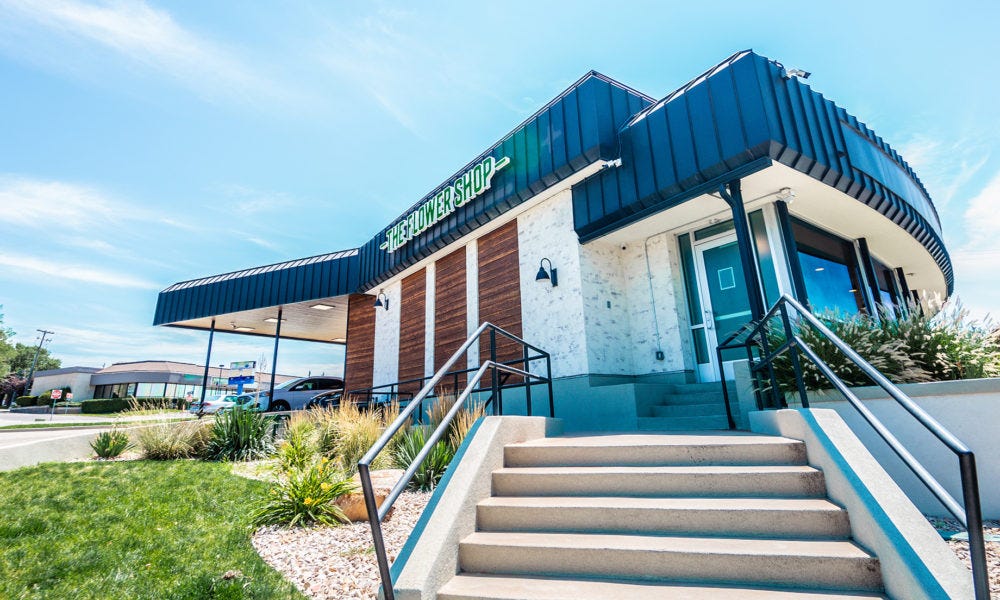
True North of Utah, LLC D/B/a the Flower Shop, JD-75-26, 27-CA-340860 (ALJ Decision)
An administrative law judge found that a Utah medical marijuana pharmacy violated the NLRA by firing three employees who supported a union organizing drive and by banning two of them from its pharmacies. The judge dismissed the allegations that a fourth employee's firing was unlawful and that the employer refused to recognize and bargain with the union, and declined to issue a bargaining order.
The judge first rejected the employer's procedural objections. Its constitutional challenges to removal protections and to agency adjudication without a jury were deemed waived for lack of explanation and evidence, and were also foreclosed by Board precedent in Commonwealth Flats Development Corp. d/b/a Seaport Hotel Boston. The jurisdictional challenge, based on the pharmacy's operation within Utah's medical marijuana framework, was denied under existing Board precedent, with the employer free to raise it again before the Board or the courts. The judge also upheld a trial schedule that gave the employer extra time after the General Counsel added a bargaining allegation days before trial.
Applying the Wright Line framework, the judge found that Wagner, Hughes, and Rueda were all fired in violation of Section 8(a)(3) and (1). Managers knew of their union activity, in part because an assistant manager attended the first union meeting, and evidence of animus included suspicious timing, departures from past practice, and exaggerated or shifting reasons. The employer failed to show it would have fired them anyway. Wagner was put on a performance improvement plan without the usual prior discipline and then fired for attendance, though attendance lapses had long been tolerated. Hughes was fired for charging a patient a lower price after a delivery mix-up, though similar mistakes drew only coachings. Rueda was fired for missing a staff meeting and for religious group-chat posts, but another employee who missed the same meeting went undisciplined until months later, and the employer skipped the investigation steps its anti-harassment policy promised. The bans on Hughes and Rueda rested on vague or unsubstantiated harassment claims and departed from the employer's practice of issuing warnings for similar conduct. By contrast, Ruthven's firing was found lawful. Although the General Counsel made an initial showing, the employer proved it would have fired her anyway for a heated argument with her manager, which violated a performance improvement plan that predated the union campaign.
The 8(a)(5) allegation was dismissed because no evidence showed the union or employees ever sent the recognition letter or otherwise requested recognition. A Gissel bargaining order was denied on that ground and because the union lost majority support by April 1, before the unlawful firings occurred. The judge ordered reinstatement, make-whole relief including search-for-work and other direct pecuniary harms, tax-consequence compensation, records expungement, and notice posting. The request for a notice-reading remedy was treated as waived.
Significant Cases Cited
Wright Line, 251 NLRB 1083 (1980): Sets the burden-shifting framework requiring the General Counsel to show protected activity was a motivating factor, after which the employer must prove it would have taken the same action regardless.
NLRB v. Gissel Packing Co., 395 U.S. 575 (1969): Authorizes a bargaining order without an election where unfair labor practices make a fair election unlikely and card-based majority sentiment would be better protected.
Commonwealth Flats Development Corp. d/b/a Seaport Hotel Boston, 373 NLRB No. 142 (2024): Rejected constitutional challenges to Board proceedings based on removal protections and the Seventh Amendment.
General Motors LLC, 369 NLRB No. 127 (2020): Applies Wright Line to alleged employee misconduct and allows employers to maintain civil workplaces but not to discriminate against protected activity.
Cemex Construction Materials Pacific, LLC, 372 NLRB No. 130 (2023): Sets the standard for an employer's duty to recognize a union upon request or file an RM petition.
MasterSpas, LLC, 25-RC-390920 (Regional Election Decision)
A Regional Director found that a unit limited to shipping dock workers and dock worker team leads at a Fort Wayne, Indiana hot tub and swim spa manufacturer is appropriate, and ordered an election. The Employer argued that the smallest appropriate unit must also include yard jockeys, shipping clerks, a cargo-and-freight specialist, small parts clerks, and dealer support representatives, which would roughly double the unit from about 14 to 28 employees. The Regional Director concluded the Employer did not carry its burden of showing an overwhelming community of interest with any of those classifications.
Applying the framework reinstated in American Steel Construction, Inc., the Regional Director noted that the parties stipulated the petitioned-for employees share an internal community of interest. They are also readily identifiable as a group. They load and unload trucks at Building 3, are the only employees using sit-down propane-powered forklifts, work two shifts, share common supervision, and train together. Because the Employer contested whether the unit was sufficiently distinct, the question was whether the excluded employees shared an overwhelming community of interest with the dock workers under the traditional factors. The Regional Director found the evidence fell short. The dock workers are supervised by shipping supervisors who oversee no one else. The excluded classifications sit in different reporting chains, converging with the dock workers only at the Shipping Manager level for shipping clerks and at higher management levels for the rest. Their work, equipment, and work locations also differ. The only interchange in the record was the team lead occasionally covering a shipping clerk's vacation, with no evidence of how often or for how long.
The Regional Director acknowledged that the groups share benefits, hourly pay, similar starting wages, a common breakroom, and some contact and integration in moving finished product to dealers. But citing Nissan North America, Inc. and WideOpenWest Illinois, LLC, the decision explained that functional integration requires employees who must work together and depend on one another, not merely employees serving the same general goal. The Employer's evidence might show that its broader unit is also appropriate, but that does not require adding the other classifications. The election was set for September 25, 2026, in the Building 3 breakroom. The decision may be reviewed by the Board through a request for review, which does not stay the election.
Significant Cases Cited
American Steel Construction, Inc., 372 NLRB No. 23 (2022): Reinstated the Specialty Healthcare framework, under which a party seeking to add classifications to a petitioned-for unit must show an overwhelming community of interest with the excluded employees.
Specialty Healthcare & Rehabilitation Center of Mobile, 357 NLRB 934 (2011): Established that a petitioned-for unit is appropriate if its employees are readily identifiable and share a community of interest, unless the opposing party shows excluded employees share an overwhelming community of interest with them.
Overnite Transportation Co., 322 NLRB 723 (1996): Held that the Board looks first to the unit the petitioner seeks, and if it is appropriate, the inquiry ends, since more than one appropriate grouping may exist.
United Operations, Inc., 338 NLRB 123 (2002): Set out the community-of-interest factors, including departments, skills, job functions, integration, contact, interchange, terms of employment, and supervision.
Nissan North America, Inc., 372 NLRB No. 48 (2023): Stated that integrated operations alone do not establish functional integration for unit purposes.
Momentive Performance Materials, 06-RC-372834 (Regional Election Decision)
A Regional Director directed a self-determination election allowing about 20 Quality Control Lab Technicians at a West Virginia silicone and specialty chemicals plant to vote on joining an existing unit of roughly 206 production and maintenance employees. The union, which has represented that unit since about 1965, sought the election under the Armour-Globe doctrine. The Employer agreed the technicians could form an appropriate standalone unit but argued they lack a sufficient community of interest with the existing unit. The Regional Director rejected that argument.
The technicians are a distinct, identifiable segment because they work in a single department, in one location, under shared supervision, and the parties stipulated that they could be a standalone unit. On community of interest, three factors favored inclusion. The technicians are functionally integrated with production, since their sample testing determines whether production continues, and Production Operators have frequent daily contact with them in person, by phone, and through the shared LIMS software. Contact with maintenance employees was neutral. Terms and conditions of employment also favored inclusion because both groups share shifts, hourly pay, overtime eligibility, health insurance, a retirement plan, and employment policies. Wage and benefit differences were given less weight because they stem largely from the collective bargaining agreement. The Regional Director also relied on the Board's general approach of including quality control employees in production and maintenance units.
Other factors weighed against inclusion or were neutral. There was almost no interchange, with a single permanent transfer about 30 years ago. Job functions were distinct, and the skills and training factor was treated as favoring inclusion only modestly, because both groups use LIMS even though the technicians need a different skill set. Departmental organization was neutral, and because the existing unit already spans several departments, separate departments counted for less. Supervision was mixed: the technicians have their own supervisor, but that person works only weekday days, so production chain-of-command leads handle urgent matters at other times. Bargaining history was not relevant. The Regional Director concluded the favorable factors outweighed the rest.
A mail-free, in-person election was set for January 15 and 16, 2026, at the plant. If a majority votes for the union, the technicians will be added to the existing unit. Otherwise they remain unrepresented. The decision also sets voter list and notice-posting requirements and notes that a request for review may be filed with the Board.
Significant Cases Cited
Armour & Co., 40 NLRB 1333 (1942): Established, together with Globe Machine, the doctrine allowing unrepresented employees to vote on joining an existing bargaining unit.
Globe Machine & Stamping Co., 3 NLRB 294 (1937): Recognized self-determination elections where a group of employees may choose among different possible bargaining units.
Warner-Lambert Co., 298 NLRB 993 (1990): Held that employees added to an existing unit must be an identifiable, distinct segment and share a community of interest with the unit.
Blue Grass Industries, 287 NLRB 274 (1987): Found quality control employees integral to production and generally includable in a production and maintenance unit despite separate supervision.
St. Vincent Charity Medical Center, 357 NLRB 854 (2011): Held that a single-classification group in one department, location, and supervisory chain is an identifiable, distinct group for an Armour-Globe election.
Guaranteed Investments Oh LLC Dba Guaranteed Dispensary, 09-CA-359348 (Unpublished Board Decision)
The Board approved a Formal Settlement Stipulation resolving five consolidated unfair labor practice cases against a Dayton, Ohio cannabis dispensary and issued a consent order requiring it to stop a wide range of alleged NLRA violations. The parties, the dispensary, UFCW Local 75, and the General Counsel, waived further proceedings and agreed to entry of a consent judgment by any appropriate court of appeals. The Board also corrected a typo in the unit's street address, which is 1910 Wayne Avenue rather than 1919.
The order covers a unit of full-time and regular part-time Patient Care Assistants, whom the Union has represented since October 26, 2023. The employer must stop promising benefits, higher wages, or tips in exchange for rejecting the Union, threatening employees that unionization is futile, soliciting grievances, soliciting or assisting a decertification petition, and engaging in surveillance, impression of surveillance, and interrogation. It must also stop discharging employees for union activity. On the bargaining side, the order bars refusing to bargain, surface and regressive bargaining, delaying information requests, bypassing the Union, and unilaterally implementing policies, pay raises, and coffee and snacks without bargaining to agreement or good-faith impasse. It also bars refusing to bargain over discipline and discharge.
Affirmative remedies include bargaining at least 24 hours a month on request, with written progress reports every 15 days to the Regional Director and the Union. The employer must reimburse the Union's bargaining expenses from December 5, 2024, respond to outstanding information requests, rescind new work rules on uniforms, tips, progressive discipline, and attendance points on the Union's request, and restore a 40-hour paid sick leave policy in place of the 8-hour limit. The notice must be posted, mailed, emailed, and shared electronically, and read aloud to employees on work time by manager Jennifer Penick or a Board agent, with a Union representative present.
Five discharged employees, Jasmine Knox, Matthew Shober, Brandon Johnson, Kayla Grable, and Kayli Gunckel, receive backpay, interest, tax and expense compensation, and frontpay totaling between about $16,300 and $44,200 each, paid in three installments over 90 days. The employer must also compensate for adverse tax consequences, file W-2s and a backpay allocation report by September 15, 2026, and expunge the discharges from its records. Each employee declined an offer of reinstatement.
PrimeFlight Aviation Services, Inc., 32-RC-383912 (Unpublished Board Decision)
The Board denied PrimeFlight Aviation Services' request for review of the Regional Director's certification of the International Association of Machinists and Aerospace Workers (IAM), Air Transport District 141, as the union's representative. A three-member panel found the request raised no substantial issues warranting review. Because review was denied, the Board also denied the Employer's request for extraordinary relief in the form of expedited consideration as moot.
The order contains no extended reasoning, but a footnote shows the case turns on a jurisdictional question involving the National Mediation Board (NMB), which administers the Railway Labor Act for airline and related carrier employees. Member Prouty noted that the NMB recently ruled on this exact issue in Swissport Cargo Services, LP, and saw no need to ask the NMB whether it meant what it said.
Members Mayer and Macy each wrote separately on whether to consult the NMB again. Member Mayer joined in denying review but said that in a future appropriate case he would be willing to consider referring the jurisdictional issue back to the NMB to confirm its position remains the same. Member Macy would have referred this case to the NMB for the limited purpose of determining that agency's position on the jurisdictional issue. The footnote does not state whether Member Macy joined the denial of review.
Significant Cases Cited
Swissport Cargo Services, LP, 52 NMB No. 8 (2024): The NMB ruled on the same jurisdictional issue presented here, which Member Prouty treated as settling the NMB's position.
OQ Chemicals Corporation, 16-RC-354943 (Unpublished Board Decision)
The Board denied the Employer's requests for review of the Regional Director's decision directing an election, his report on objections, and his certification of the union as representative, finding that they raised no substantial issues warranting review. Member Mayer dissented in part, as described below.
The Employer's first objection claimed that Work Group Leads engaged in pro-union supervisory conduct, including soliciting authorization cards. The Regional Director rejected it by relying on his determination in a companion representation case that the Work Group Leads are not statutory supervisors. The Board acknowledged that this situation is not squarely governed by earlier issue preclusion cases such as Wolf Creek Nuclear Operating Corp. and Carry Companies of Illinois, Inc., because the earlier decision there was not yet final, since the Employer's request for review was still pending. It also noted that this was not a test-of-certification case like FPA Medical Management, Inc. Even so, the Board held that the Employer could not relitigate supervisory status. The issue had been fully litigated, and under Section 102.67(c) a pending request for review does not stay the Regional Director's actions unless the Board orders otherwise. Absent changed circumstances, a party should not get a second chance at an issue merely because review is pending, a result the Board said serves administrative finality and the expeditious processing of representation cases. The Board added that the Employer was not prejudiced, because its request for review in this case preserved its appeal and would allow a remand if the Board later reversed the supervisory status ruling. Member Mayer, who had dissented from the Board's affirmance of that ruling in the companion case, would have granted review and remanded the objection to the Region.
On the second objection, the Board agreed that union representatives in the Employer's parking lot did not create an objectionable impression of surveillance. They were a significant distance from the polling building's entrance, and the evidence did not show they were there for more than two or three hours, while the election involved 14 hours of polling over two days. The Board also rejected the argument that the Regional Director lacked authority to issue his report and certification without a Board quorum, citing Satellite Healthcare (Santa Rosa). The Board construed the Regional Director's report as a decision disposing of objections under Section 102.69.
Significant Cases Cited
Wolf Creek Nuclear Operating Corp., 365 NLRB 574 (2017): Applied issue preclusion to bar relitigation of an issue decided in a final Regional Director decision, based on the Board's interest in administrative finality.
Carry Companies of Illinois, Inc., 310 NLRB 860 (1993): Barred relitigation of an issue previously decided in a final Regional Director decision.
FPA Medical Management, Inc., 324 NLRB 802 (1997): In test-of-certification cases, the Board declines to litigate issues that were or could have been raised in the underlying representation proceeding absent special circumstances.
J. P. Mascaro & Sons, 345 NLRB 637 (2005): Overruled a surveillance objection where the party's representative stood at least 30 feet from the facility's front door.
Amazon.com Services LLC, 373 NLRB No. 92 (2024): Found no reasonable impression of surveillance where the election spanned multiple sessions and days and the petitioner's representatives were stationed in certain areas only briefly.
Legacy Cannabis in Duluth, MN has an independent union now, certified under the Minnesota Labor Peace Agreement rule. The primary organizer was fired and has been coming to our local DSA Labor Group meetings. He's still working on the union, but also organizing with another one at the Coop where he now works. The new union has had zero press, I think.