
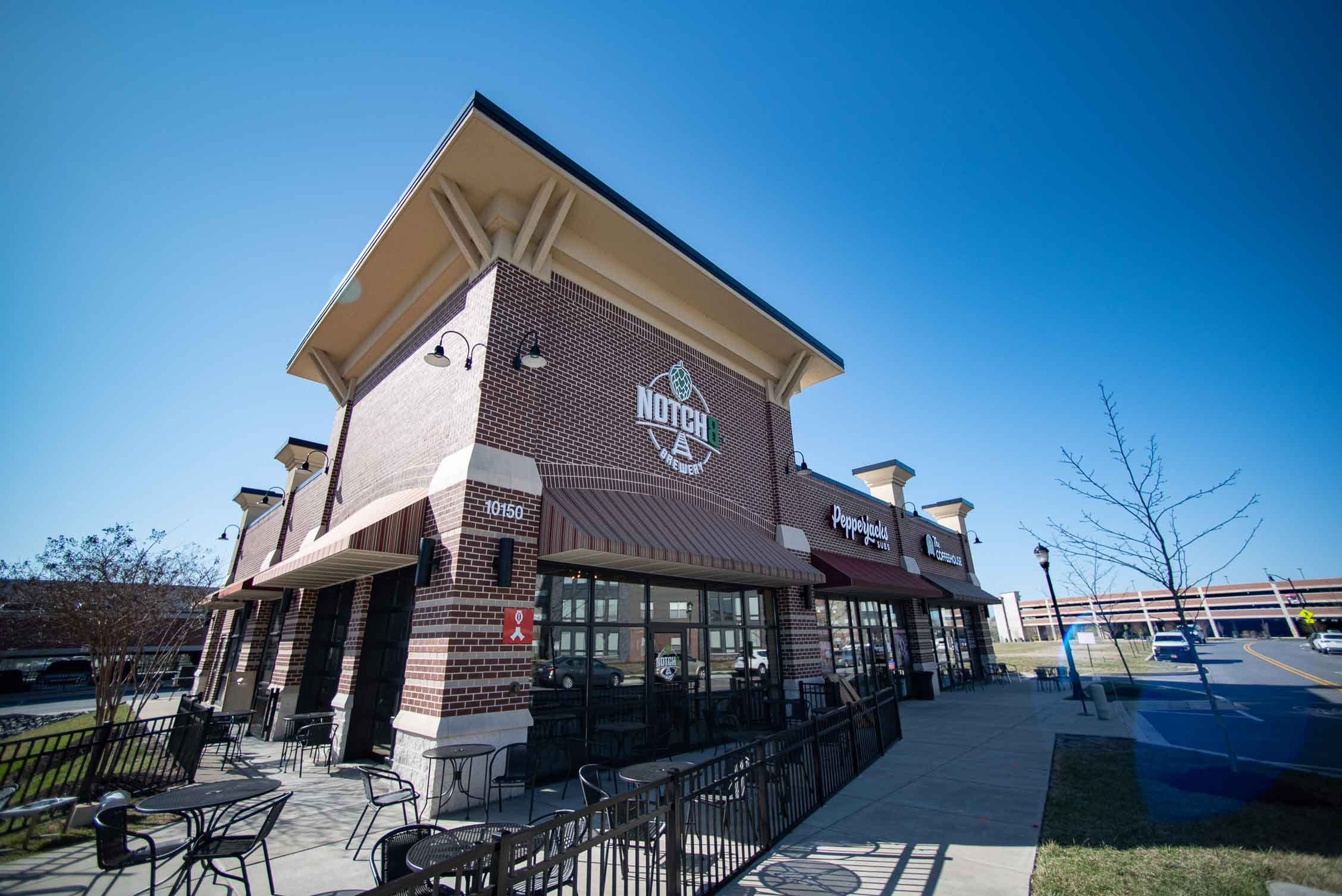
Pepperjacks, LLC D/B/a Notch 8 Brewery, 375 NLRB No. 65, 05-CA-328932 (Published Board Decision)
The Board found that a Maryland restaurant and brewery operator unlawfully fired an employee for talking with coworkers about overtime and break issues and for reporting those concerns to the Maryland Department of Labor. The employee, a bartender trainee, had spent several weeks discussing with coworkers that they were owed overtime for hours worked across the company’s three affiliated businesses and that they were being denied adequate breaks. She also pointed coworkers toward the NLRB and the state labor department, and ultimately filed a report with Maryland’s labor agency herself. Days later, the owner called her into his office, told her he knew about her “backdoor” conversations with other employees, and said he would not tolerate it. He sent her home, and the company advertised for her replacement position that same day. When she tried to confirm by text whether she still had a job, the company refused to answer in writing and cut off her access to its scheduling system.
The Board agreed with the administrative law judge that the company’s shifting justifications for the firing, including claims of alcohol violations, theft, and voluntary job abandonment that surfaced only after the charge was filed, were pretextual. It held that discussing wage and hour concerns with coworkers and pursuing them through a government agency is protected concerted activity under the NLRA, and that the owner’s statements about “backdoor” conversations were direct evidence of unlawful animus. The Board also rejected the company’s argument that the employee had abandoned her job, since the company’s own conduct, sending her home, advertising her job, and refusing to clarify her status, would reasonably lead her to believe she had been discharged. It ordered reinstatement, backpay, and other standard remedial relief, and noted that the company’s exceptions brief had cited nonexistent cases, a lapse it said practitioners, even those representing themselves, are responsible for avoiding.
Significant Cases Cited
Wright Line, 251 NLRB 1083 (1980): Sets the burden-shifting framework requiring the General Counsel to show protected activity, employer knowledge, and animus before the employer must prove it would have taken the same action regardless.
Cordúa Restaurants, Inc., 368 NLRB No. 43 (2019): Held that an employee’s discussions with coworkers about wages and pursuit of a wage collective action are protected concerted activity.
Starbucks Corp., 372 NLRB No. 50 (2023): Found direct evidence of animus in a manager’s statement accusing an employee of turning coworkers against him.
North American Dismantling Corp., 331 NLRB 1557 (2000): Held that an employee reasonably believed they were discharged where the employer’s conduct would lead a prudent person to that conclusion.
Nortech Waste, 336 NLRB 554 (2001): Held that an employer may not invoke other laws to shield conduct that is discriminatory under the NLRA.
Cruise Network Plus, Inc, D/B/a Capital Area Travel Leaders, 375 NLRB No. 66, 07-CA-354201 (Published Board Decision)
The National Labor Relations Board granted the General Counsel’s motion for summary judgment against Cruise Network Plus, Inc., d/b/a Capital Area Travel Leaders, finding that the company unlawfully fired an employee for discussing wages and working conditions with coworkers.
The case arose after the company’s second amended answer to the complaint admitted nearly all of the allegations against it and raised no factual disputes requiring a hearing. Because the company did not contest the facts or respond to the Board’s notice to show cause, the Board treated the case as ripe for decision without a trial, citing the standard that summary judgment is proper when there is no genuine issue of material fact and the moving party is entitled to judgment as a matter of law.
The underlying facts showed that employee Cameron A Magee engaged in protected concerted activity in October 2024 by discussing wages and working conditions with other employees. The company fired her for that conduct less than three weeks later. Her termination notice also directed her not to contact any company customers by phone, email, text, or social media, a prohibition the Board found independently unlawful because it restricted her ability to engage in protected communications.
The Board concluded that both the discharge and the restrictive language in the termination notice violated Section 8(a)(1) of the NLRA, which protects employees’ rights to act together for mutual aid and protection.
As a remedy, the Board ordered the company to offer Magee reinstatement to her former position and make her whole for lost wages and benefits, including compensation for any direct or foreseeable pecuniary harms such as job search expenses, consistent with the Board’s approach in Thryv, Inc. The company must also compensate Magee for adverse tax consequences from a lump-sum backpay award, remove references to the unlawful discharge from her personnel file, rescind the unlawful no-contact provision in the termination notice, and post a notice to employees describing their rights under the NLRA.
Significant Cases Cited
Betteroads Asphalt, LLC, 369 NLRB No. 114 (2020): Set out the standard that summary judgment is appropriate when there is no genuine issue of material fact and the moving party is entitled to judgment as a matter of law.
Thryv, Inc., 372 NLRB No. 22 (2022): Established that make-whole remedies must include compensation for all direct or foreseeable pecuniary harms resulting from an unlawful discharge, not just lost wages.
F. W. Woolworth Co., 90 NLRB 289 (1950): Established the formula used by the Board for computing backpay owed to unlawfully discharged employees.
New Horizons, 283 NLRB 1173 (1987): Set the interest rate standard applied to backpay awards.
Kentucky River Medical Center, 356 NLRB 6 (2010): Established that interest on backpay awards is compounded daily.
OQ Chemicals Corporation, 375 NLRB No. 62, 16-RC-354942 (Published Board Decision)
The Board reviewed whether work group leads at a Texas chemical plant are statutory supervisors under Section 2(11) of the NLRA, focusing on whether they responsibly direct other employees using independent judgment. A majority of the Board (Chairman Murphy and Member Prouty) affirmed the Regional Director's finding that the work group leads are not statutory supervisors, concluding that even if they possess authority to responsibly direct operators, the employer failed to show that this direction involves independent judgment rather than routine adherence to standard operating procedures and daily production orders.
The majority found that witnesses for the employer, including the operations director and a manufacturing supervisor, gave only vague, conclusory testimony that work group leads use "discretion" and "judgment" to handle abnormal situations like leaks or shutdowns, without explaining what factors the leads actually weigh or how they exercise that discretion. The record also showed that work group leads routinely contact on-call maintenance, environmental, and management personnel when problems arise, undercutting the claim that they act with independent authority. Because direction appeared largely dictated by standard operating procedures and daily orders rather than independent judgment, the majority held the employer did not meet its burden of proof, citing comparable precedent where leads followed established routines and had ready access to higher management.
Having found no primary indicia of supervisory status, the majority also rejected the employer's secondary arguments, including that the leads are the highest-ranking employees present during night and weekend shifts, since secondary indicia alone cannot establish supervisory status.
Member Mayer dissented, arguing the record did establish both responsible direction and independent judgment. Mayer pointed to disciplinary actions taken against two work group leads after a chemical spill caused by operators on their shifts as evidence of accountability, and highlighted testimony describing leads making consequential choices such as whether to shut down a unit, swap equipment, or call a plant-wide outage. Mayer also emphasized that for most hours of plant operation, no higher-level manager is present, making it implausible that no one is exercising supervisory authority over operators during those times, and argued the majority set too high an evidentiary bar by discounting unrebutted testimony about the leads' use of discretion and training.
Significant Cases Cited
Oakwood Healthcare, Inc., 348 NLRB 686 (2006): Established the Board's framework for determining supervisory status, including the standards for responsible direction and independent judgment under Section 2(11).
NLRB v. Kentucky River Community Care, 532 U.S. 706 (2001): Held that the burden of proving supervisory status rests with the party asserting it.
Croft Metals, Inc., 348 NLRB 717 (2006): Found no independent judgment where lead persons followed established routines, employees performed repetitive tasks, and the employer's evidence about decision-making factors was minimal.
Shaw, Inc., 350 NLRB 354 (2007): Declined to find independent judgment where direction followed prior instructions and was subject to close daily oversight by higher management.
G4S Government Solutions, Inc., 363 NLRB 977 (2016): Declined to find independent judgment where testimony about decision-making factors was vague and lacked concrete examples.
YWCA of Olympia, JD-73-26, 19-CA-352644 (ALJ Decision)
An administrative law judge dismissed allegations that a nonprofit serving women and girls unlawfully fired four employees for engaging in protected concerted activity and unlawfully threatened them with discharge.
The employees, who held various program roles, had repeatedly complained to management about low wages, their workload, and what they described as a hostile work environment after a co-director became frustrated and walked out of a staff meeting. The judge found that the General Counsel made out an initial case of discrimination, since the employees' complaints were protected activity, management knew about them, and there was some evidence of animus, including the timing of the layoffs following the complaints.
But the organization overcame that showing by proving it would have restructured the workforce regardless of the complaints. The judge detailed the nonprofit's severe financial distress, worsened by pandemic-era losses, which led to a 2023 restructuring that eliminated one program and laid off several workers, followed by a second restructuring in 2024 that eliminated the remaining program positions and invited employees to apply for newly created roles. None of the four employees reapplied, and management testified, credibly according to the judge, that they would have been rehired had they done so. By the time of the hearing, only one employee remained on staff. The judge also noted that if the organization truly wanted to get rid of the employees over their wage complaints, it had an opportunity to do so earlier when two of them failed to properly supervise students on a field trip, including an incident in which a minor was sexually assaulted, but instead chose leniency and retained them.
On the threat allegation, the judge found that a co-director's statement that employees unhappy with their pay were free to look for other jobs was not a threat of discharge. Given the extensive back-and-forth between the employees and management, including grievance proceedings and mediation, a reasonable employee would have understood the remark as a frank acknowledgment of the organization's financial limits rather than a coercive threat.
Significant Cases Cited
Wright Line, 251 NLRB 1083 (1980): Established the burden-shifting framework for determining whether an adverse employment action was unlawfully motivated by protected activity.
Mesker Door, 357 NLRB 591 (2011): Once the General Counsel shows protected activity was a motivating factor, the burden shifts to the employer to prove it would have taken the same action regardless.
Bruce Packing Co., 357 NLRB 1084 (2011): An employer cannot meet its defense burden merely by showing a legitimate reason existed; it must show it would have acted the same way absent the protected conduct.
Metropolitan Transportation Services, 351 NLRB 657 (2007): If an employer's stated reasons for an action are pretextual, it fails to establish that it would have taken the same action regardless of protected conduct.
Hendrickson USA, LLC, 366 NLRB No. 7 (2018): The test for an unlawful threat is whether a statement could reasonably be interpreted by employees as coercive of their rights under the NLRA.
Laborforce, LLC, M&K Employee Services, and M&K Truck Centers, as Joint Employers and/or Alter Egos, JD-72-26, 13-CA-328585 (ALJ Decision)
An administrative law judge found that a group of commonly owned Illinois truck dealership and staffing entities, operating as joint employers and alter egos, violated the NLRA in a dispute with the union representing mechanics and parts workers at an Alsip, Illinois truck center.
The judge concluded that the companies bargained in bad faith with the union over a successor contract between July and November 2023. The evidence showed the employer made regressive proposals, reneged on items the parties had already tentatively agreed to, and abruptly reversed course on retirement benefits late in negotiations by proposing to move employees from the union's 401(k) plan to its own, just weeks before a contract extension was set to expire. The judge found the employer's claim of a lawful bargaining impasse unconvincing, noting the union had continued to make concessions and had proposed a compromise on retirement benefits that the employer rejected without serious consideration.
Because no valid impasse existed, the judge ruled that the employer's unilateral switch of employees' health insurance in late October 2023 and its implementation of a full "last, best, and final" contract offer on November 1, 2023, including changes to wages and retirement benefits, were unlawful.
The decision also addressed the discharge of four employees, Edward Dusek, Jason Haller, Jim Volpe, and William Peterson, who had joined a strike beginning November 1, 2023. The company fired them in June 2024 after claiming they had taken jobs with competitors or customers in violation of a no-competition clause. The judge found this justification to be pretext, citing the lack of any real investigation, reliance on secondhand information from a manager who did not testify, and factual inaccuracies, including one employee who had not even started his new job on the date he was fired. The judge found the terminations were motivated by the employees' union and strike activity, violating the NLRA's protections for concerted activity.
Finally, the judge found that the company's August 2024 withdrawal of recognition from the union, following a decertification petition, was unlawful because it was tainted by the company's own unfair labor practices, which had contributed to employee disaffection with the union. As a remedy, the judge ordered reinstatement and back pay for the four discharged employees, rescission of the unilateral changes, restoration of prior contract terms, and an affirmative bargaining order requiring the company to recognize and bargain with the union.
Significant Cases Cited
Taft Broadcasting Co., 163 NLRB 475 (1967): Established the framework for determining whether a lawful bargaining impasse has been reached, based on factors like bargaining history, good faith, and the parties' understanding of the state of negotiations.
Wright Line, 251 NLRB 1083 (1980): Set forth the burden-shifting framework used to determine whether an employee's discharge was unlawfully motivated by protected activity.
NLRB v. Katz, 369 U.S. 736 (1962): Held that an employer's unilateral change to terms and conditions of employment during bargaining, without a valid impasse, violates the duty to bargain in good faith.
Master Slack Corp., 271 NLRB 78 (1984): Established the four-factor test for determining whether an employer's unfair labor practices caused or tainted a subsequent decertification petition.
Vincent Industrial Plastics, Inc. v. NLRB, 209 F.3d 727 (D.C. Cir. 2000): Required a reasoned, case-specific balancing analysis to justify imposing an affirmative bargaining order as a remedy.
K/BTF Broadway LLC & Loyal Building Services, Inc., JD-74-26, 29-CA-340889 (ALJ Decision)
An administrative law judge ruled that K/BTF Broadway LLC, the current owner of the Broadway Commons mall in Hicksville, New York, violated the NLRA by refusing to bargain with a union representing cleaning staff and by unilaterally cutting their benefits and transferring their work to a new contractor.
The case centered on a chain of ownership and contracting relationships. For years, mall cleaning workers employed by Loyal Building Services were covered by a collective-bargaining agreement between their union, Local 2 Building Service Employees & Factory Workers, and the mall's previous owner, KRE Broadway Mall Owner. Although Loyal handled hiring, supervision, and discipline, KRE set wages, benefits, and hours, and the judge found KRE and Loyal were joint employers under the Board's current joint-employer standard.
When K/BTF purchased the mall in February 2024, it kept the same cleaning contractor, the same workforce, and the same terms of employment, even continuing to pay union dues and benefits for a time. The judge concluded this made K/BTF a successor employer obligated to recognize and bargain with the union, rejecting the company's argument that language in its purchase agreement with KRE disclaiming any assumption of union contracts could override that statutory duty. The judge cited NLRB v. Burns International Security Services and Fall River Dyeing & Finishing Corp. v. NLRB for the principle that a successor's bargaining obligation turns on continuity of operations and retention of the predecessor's workforce, not on private contractual disclaimers.
After the union demanded recognition in February 2024, K/BTF's attorney denied any obligation to bargain. Around the same time, company representatives told Loyal's president there was no union at the mall, after which Loyal stopped deducting union dues and paying health insurance and pension contributions without notifying the union. In June 2024, K/BTF terminated Loyal's cleaning contract in favor of a cheaper vendor, laying off all twelve unit employees in July without bargaining over the decision or its effects.
The judge ordered K/BTF to recognize and bargain with the union, rescind the unlawful changes, and make the affected employees whole for lost wages and benefits with interest, plus compensation for any adverse tax consequences from a lump-sum backpay award.
Significant Cases Cited
NLRB v. Burns International Security Services, 406 U.S. 272 (1972): A successor employer that continues predecessor operations substantially unchanged and hires a majority of the predecessor's union-represented workforce must recognize and bargain with the incumbent union.
Fall River Dyeing & Finishing Corp. v. NLRB, 482 U.S. 27 (1987): Successor status depends on whether employees would understandably view their job situations as essentially unaltered, based on factors like same business, same jobs, and same supervisors.
NLRB v. Katz, 369 U.S. 736 (1962): An employer must bargain with a union over wages, hours, and other mandatory subjects before making unilateral changes.
Fibreboard Paper Products Corp. v. NLRB, 379 U.S. 203 (1964): Replacing unit employees with an independent contractor to perform the same work under similar conditions is a mandatory subject of bargaining.
Transmontaigne, Inc., 337 NLRB 262 (2001): A union's right to recognition and an employer's duty to bargain are statutory rather than contractual obligations.
A v Decking Inc. D/B/a a v Metal Decking, 20-RC-373769 (Unpublished Board Decision)
The Board denied the employer's request for review of a regional decision certifying a union election, finding no substantial issues warranted a second look.
The employer had tried to challenge both the decision to hold the election by mail ballot and the certification of the results, but the Board explained that under its rules governing stipulated election agreements, parties may only seek review of post-election disputes. The order setting a mail-ballot election itself was not reviewable, though the employer was permitted to challenge the post-election ruling that rejected its objection to the mail-ballot format. The Board denied that objection on the merits.
On a separate objection claiming the union made improper promises to employees during the campaign, the Board found the employer's allegations too vague to warrant any investigation, let alone a hearing, since they failed to specify which union agents made promises, to which employees, when, or how. The Board noted that statements suggesting employees would not have to return to their worksites or listen to supervisors if the union won were not objectionable.
The Board also declined to rely on the regional director's citation to a case about Board agents opening polls late, since that scenario did not occur here, though it still found the employer failed to show any error in ordering a mail-ballot election. Finally, the Board corrected a clerical error in the underlying decision, noting that only one vote opposed representation, not seven as originally stated.
Significant Cases Cited
Pea Ridge Iron Ore Co., 335 NLRB 161 (2001): Addresses objections based on a Board agent opening the polls later than the scheduled time.
Midland National Life Insurance Co., 263 NLRB 127 (1982): Sets the standard for evaluating alleged misrepresentations or promises made during a union election campaign.
Transportation Unlimited, Inc., 312 NLRB 1162 (1993): Holds that mere speculative harm is not enough to overturn an election result.