
The Book Rescuers, JD-62-26, 12-CA-360500 (ALJ Decision)
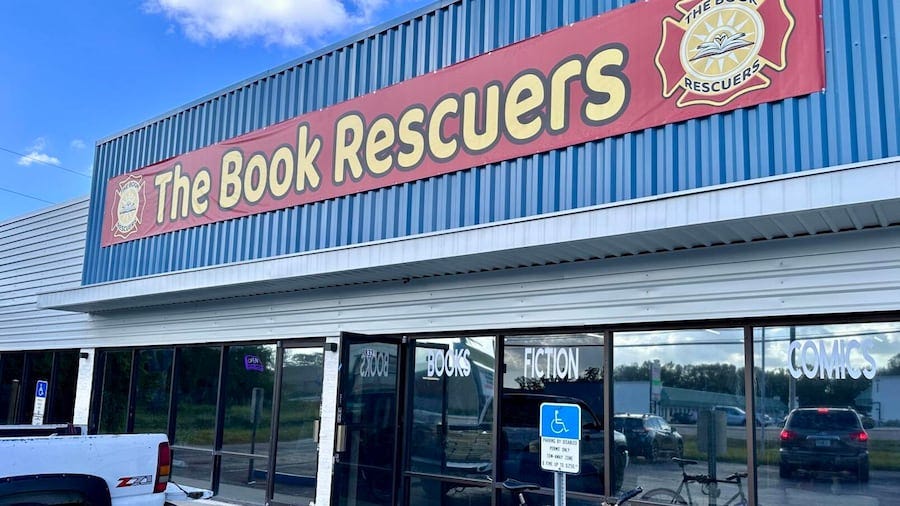
An administrative law judge dismissed most of the allegations against a used bookstore in Largo, Florida, after finding that an employee fired for discussing wages with coworkers was not engaged in protected concerted activity.
The bookstore terminated Charlee Howard in February 2025. The company claimed it fired her for improperly accessing a coworker’s pay information on the owner’s computer, but the judge rejected that explanation as not credible, pointing to inconsistent testimony from the owners and the lack of any contemporaneous documentation of the stated reason. Instead, the judge found that Howard was actually fired for talking to other employees, including Logan Davis and Emily Butrick, about pay rates in an effort to show that she herself was underpaid.
Despite finding that explanation pretextual, the judge still ruled against Howard on the core claim because her wage discussions were not “concerted” activity protected by the NLRA. Citing the Board’s standard from Myers Industries, the judge explained that Section 7 protects employees who act with or on behalf of coworkers, not those raising purely personal grievances. Howard admitted her concern was only about her own pay and never proposed any group action or tried to recruit coworkers to jointly pursue a change in wages or working conditions. The judge distinguished this case from Board precedent finding wage discussions “inherently concerted,” noting that in those cases employees were making common cause with one another, which did not happen here.
The judge did find one narrow violation. After firing Howard, store co-owner Sarah Stewart told her she should not have discussed wages with other employees and should have brought concerns directly to the owners instead. The judge credited Howard’s testimony on this point, finding it corroborated by text messages sent immediately afterward, and concluded that this statement unlawfully suggested employees could not discuss pay with each other, violating Section 8(a)(1). The remedy ordered is limited to a cease-and-desist order and a posted notice; the broader wrongful-termination claim was dismissed.
Significant Cases Cited
Myers Industries (Myers I), 268 NLRB 493 (1984): Concerted activity under Section 7 must be engaged in with or on the authority of other employees, not solely on behalf of the employee alone.
Wright Line, 251 NLRB 1083 (1980): Established the burden-shifting framework requiring the General Counsel to show protected conduct was a motivating factor before the employer must prove it would have acted the same regardless.
Component Bar Products, Inc., 364 NLRB 1901 (2016): Found wage discussions inherently concerted where an employee sought to make common cause with a coworker.
Parexel International, LLC, 356 NLRB 516 (2011): Recognized that disciplining an employee to preemptively block protected activity can violate the Act.
U.S. Service Industries, Inc., 314 NLRB 30 (1994): An employer violates the Act by discharging an employee based on a mistaken belief that the employee engaged in protected concerted activity.
Tim Force Tin Shop, 375 NLRB No. 44, 27-CA-322370 (Published Board Decision)
The Board affirmed an administrative law judge's finding that a Casper, Wyoming HVAC contractor unlawfully refused to sign and honor a collective-bargaining agreement it had already agreed to with a sheet metal workers union.
The case centered on a Wyoming HVAC company that had long operated under union contracts negotiated jointly with another local signatory contractor and the union. During 2023 negotiations for a successor agreement, the company's owner repeatedly told the union's regional manager he had not yet decided whether to accept the proposed terms. But in a phone call on the day the union planned to hold a ratification vote, the owner told the union representative he was "good with it" and to "take it to the membership." The union then held its ratification meeting, the membership approved the contract, and the union mailed signed copies to the company for countersignature. The owner never signed and later told the union he did not agree to the contract and intended to pay employees different wages than the agreement specified, citing frustration over the union's inability to supply enough workers.
The judge found that under settled Board law, a party can become bound to a collective-bargaining agreement through verbal assent even without a signature, and that the formation of a contract turns on the parties' objectively manifested intent rather than private, unstated reservations. Crediting the union representative's account of the June 13 phone calls, largely because the company owner's testimony was inconsistent and he was never asked to specifically deny the statements attributed to him, the judge concluded that the owner's words constituted a clear acceptance of the contract terms. Combined with the union membership's unqualified ratification of those same terms, this established the "hallmark" indicia the Board looks for in finding a binding agreement was reached.
The judge ordered the company to execute and retroactively honor the contract, make affected employees whole for lost wages and benefits with interest, make required pension and benefit fund contributions, and compensate employees for adverse tax consequences from lump-sum backpay. On review, the three-member Board panel affirmed the judge's rulings and conclusions, adopting the recommended order with modifications to conform to the Board's standard remedial language, including a requirement that the company file copies of backpay recipients' W-2 forms with the regional office.
Significant Cases Cited
New Orleans Stevedoring Co., 308 NLRB 1076 (1992): The Board lacks authority to order an employer to execute an agreement it has not assented to, but the obligation to execute arises once a meeting of the minds occurs on all substantive issues.
NLRB v. Haberman Const. Co., 641 F.2d 351 (5th Cir. 1981): A labor contract's formation does not depend on reducing the parties' intent to be bound to writing, and a party's assent to an unsigned document can itself form a contract.
Delta Sandblasting Co., Inc., 367 NLRB No. 17 (2018): A verbal acceptance of collective-bargaining terms can bind a party, and it is appropriate to evaluate the parties' conduct against the backdrop of their prior negotiations in assessing whether a meeting of the minds occurred.
Dist. 4, Commc'ns Workers of Am. AFL-CIO v. NLRB, 59 F.4th 1302 (D.C. Cir. 2023): Mutual expressions of satisfaction, such as a handshake or its equivalent, and unqualified membership ratification of agreed-on contract changes are hallmark indications that a binding agreement was reached.
Thryv, Inc., 372 NLRB No. 22 (2022): Established that remedies for unfair labor practices should include compensation for other direct or foreseeable pecuniary harms beyond traditional backpay.
Greco Steel Products, Inc., 375 NLRB No. 47, 06-RC-350334 (Published Board Decision)
The Board granted an employer’s request for review of a regional director’s decision certifying a union as the exclusive representative of a bargaining unit of iron workers, finding that unresolved questions about union agency required further review before the election results could stand.
The dispute centered on a phone conversation between a union local’s business manager and an employee whose union membership had been suspended. The employee testified that the business manager told him that if the union won the upcoming election, he would not have to pay a reinstatement fee of up to $800 to restore his membership, but if the union lost, he would have to pay the fee through another path. The employer argued this amounted to an unlawful promise of a financial benefit designed to induce support for the union, while the regional director had found no objectionable conduct and certified the election results, which the union won by a 9 to 7 vote.
The Board agreed with the employer that the promised fee waiver constituted a prohibited gift of tangible economic value under established precedent, since the union’s constitution gave it unfettered discretion over whether to waive such fees and there was no established practice of routinely waiving them. The Board also found that because the margin of victory was narrow enough that the single employee’s vote could have changed the outcome, it did not matter whether the promise was shared with other voters.
However, the Board found that the regional director had never resolved a disputed threshold question: whether the business manager who made the promise was actually an agent of the petitioning union, since the statement was attributable to the union only if agency could be established. Because the regional director had sidestepped that issue, the Board remanded the case for a determination on agency in the first instance.
Member Prouty dissented, arguing that the record contained no evidence establishing that the business manager, who worked for a local union, was an agent of the international union named as the petitioner. Prouty would have found the employer failed to meet its burden of proving agency and said no remand was necessary because the evidence could not support such a finding regardless.
Significant Cases Cited
Go Ahead North America, LLC, 357 NLRB 77 (2011): Held that a union cannot promise a gift of tangible economic value, such as waiving back dues, as an inducement to win support in a representation election.
Harborside Healthcare, Inc., 343 NLRB 906 (2004): Established that in assessing the margin of victory in an election, the Board assumes unopened, uncounted challenged ballots were cast in favor of the objecting party.
King Electric, Inc. v. NLRB, 440 F.3d 471 (D.C. Cir. 2006): Found a union’s promise of a benefit objectionable where the union retained discretion over whether to grant it, rather than having an invariable practice of doing so.
Millard Processing Services, 304 NLRB 770 (1991): Held that the party asserting an agency relationship bears the burden of proving it.
Carbon Fuel Co. v. Mine Workers, 444 U.S. 212 (1979): Established that an international union is not automatically liable for the acts of its local affiliates based on affiliation alone.
The Queen’s Medical Center, 375 NLRB No. 46, 20-CA-366357 (Published Board Decision)
The National Labor Relations Board has ordered The Queen’s Medical Center to bargain with the Hawai’i Nurses’ Association, OPEIU Local 50, after the hospital refused to recognize the union and withheld information following a certification election.
The dispute arose after a self-determination election in which respiratory therapists voted to join an existing bargaining unit of radiation therapists already represented by the union. The hospital contested that certification, arguing the Regional Director had erred by directing the election without first analyzing whether the respiratory therapists shared a community of interest with the existing unit, and by certifying what it called a nonconforming unit under the healthcare amendments to the NLRA. The Board had already rejected these arguments once, denying the hospital’s request for review in the underlying representation case.
Because the hospital admitted refusing to bargain and provide information, the General Counsel moved for summary judgment, and the Board granted it. The Board explained that an employer cannot relitigate representation issues in an unfair labor practice case unless it offers newly discovered evidence or shows special circumstances, neither of which the hospital did here, citing Pittsburgh Plate Glass Co. v. NLRB.
The Board also found the hospital unlawfully refused to turn over a lengthy list of information the union had requested, including wage, benefit, scheduling, and disciplinary records for the new bargaining unit members. Information about unit employees’ terms and conditions of employment is presumptively relevant to collective bargaining and must be disclosed on request, and the hospital offered no basis to rebut that presumption beyond its already-rejected challenge to the certification.
The Board ordered the hospital to bargain with the union on request, furnish the requested information, and post a notice to employees. Member Prouty, dissenting in part, would have imposed additional remedies, including compensation for economic harm caused by the delay in bargaining, union access to the bargaining unit, and notice reading to employees.
Significant Cases Cited
Pittsburgh Plate Glass Co. v. NLRB, 313 U.S. 146 (1941): An employer cannot relitigate in an unfair labor practice proceeding representation issues that were or could have been raised in the underlying representation case, absent newly discovered evidence or special circumstances.
Metro Health Foundation, Inc., 338 NLRB 802 (2003): Information concerning unit employees’ terms and conditions of employment is presumptively relevant to collective bargaining and must be furnished on request.
NP Sunset LLC d/b/a Sunset Station Hotel Casino, 367 NLRB No. 62 (2019): Reaffirmed that an employer’s refusal to furnish presumptively relevant bargaining information violates the NLRA.
Frontier Hotel, 265 NLRB 343 (1982): The Board may take official notice of the record in a related representation proceeding when deciding a refusal-to-bargain complaint.
Longmont United Hospital, 374 NLRB No. 52 (2026): Cited in Member Prouty’s dissent advocating for additional remedies, including make-whole relief, in test-of-certification refusal-to-bargain cases.
Country Cupboard, 375 NLRB No. 45, 10-CA-370518 (Published Board Decision)
The Board granted the General Counsel's motion for default judgment against Country Cupboard of Barnwell, LLC after the company failed to file an answer to a complaint alleging it unlawfully fired an employee for discussing wages with coworkers.
The case arose from a charge filed by Sheryl Navarro, who worked at the company's Barnwell, South Carolina restaurant. According to the complaint, Navarro discussed wages, hours, and other working conditions with fellow employees between March and July 2025. On July 21, 2025, the restaurant's owner told employees they were being discharged because they had discussed wages with each other, and Navarro was fired that same day.
Because the Respondent never answered the complaint, despite being served and later warned by the Region that a default judgment motion would follow, the Board treated the complaint's allegations as admitted under Section 102.20 of its rules. The Board noted that the company appeared to be unrepresented by counsel but found that acting without a lawyer does not by itself excuse a failure to answer, citing its precedent in Patrician Assisted Living Facility and Sage Professional Painting Co.
Based on the admitted facts, the Board concluded that the discharge and the owner's statement violated Section 8(a)(1) of the NLRA, which protects employees' right to engage in concerted activity for mutual aid and protection.
As a remedy, the Board ordered the company to offer Navarro reinstatement to her former position, make her whole for lost wages and other benefits with interest, and cover any additional costs tied to her job search, consistent with the Board's approach in Thryv, Inc. The company must also compensate Navarro for any adverse tax consequences from a lump-sum backpay award, file a report allocating the backpay to the correct tax years, remove references to the unlawful discharge from its files, and post a notice to employees describing their rights under the NLRA.
Significant Cases Cited
Patrician Assisted Living Facility, 339 NLRB 1153 (2003): Pro se status alone does not establish good cause for failing to file an answer to a Board complaint.
Sage Professional Painting Co., 338 NLRB 1068 (2003): Reaffirmed that lack of counsel does not excuse a respondent's failure to answer a complaint.
Thryv, Inc., 372 NLRB No. 22 (2022): Expanded make-whole remedies to include compensation for direct or foreseeable pecuniary harms beyond traditional backpay.
F. W. Woolworth Co., 90 NLRB 289 (1950): Established the method for computing backpay on a quarterly basis.
Kentucky River Medical Center, 356 NLRB 6 (2010): Required interest on backpay awards to be compounded daily.
Starbucks Corporation, JD-63-26, 05-CA-318025 (ALJ Decision)
An administrative law judge found that Starbucks unlawfully disciplined several pro-union employees at its Ashbrook store in Ashburn, Virginia, but dismissed other allegations after a nine-day trial covering events from late 2022 through 2023.
The judge concluded Starbucks violated the NLRA when store manager Craig Stots ordered shift supervisor Crystal Jewett to go home and change out of a T-shirt bearing a union logo on April 7, 2023. The judge found this discipline selective and disparate, since Starbucks had tolerated far more visible dress code violations, including graphic T-shirts and out-of-palette clothing, without ever before sending anyone home to change.
The judge also found unlawful motivation behind the discharge of barista Nicole Kang, who was fired in February 2023 after being accused of cursing at a coworker in front of customers. The judge found that no customers were actually present, that Starbucks had never before disciplined anyone for profanity despite it being common in the store, and that Kang's punishment was far harsher than that given to other employees, including one who cursed directly at a manager. The timing, a month after the union's certification, and the shifting, unsupported justification reinforced the finding of anti-union motive.
Final written warnings issued to Gio Carvalho, Jewett, and Gabrielle Duritsa for attendance violations were also found unlawful. The judge noted that before the union campaign, no Ashbrook employee had received a final warning for a missed shift, and that after the campaign began, such warnings went almost exclusively to union supporters while other employees with similar or worse attendance problems went undisciplined.
On the bargaining front, the judge found that Starbucks unlawfully implemented a new annual recertification requirement for barista trainers without notifying or bargaining with the union, since the position carried a training bonus and qualified as a mandatory subject of bargaining.
However, the judge dismissed claims involving the discharge of shift supervisor Chelsea Brent, finding her firing was based on a legitimate belief that she falsified time records and violated a safety policy requiring two employees to be present when opening the store, not her union support. The judge also rejected claims that Starbucks unlawfully denied training assignments to Duritsa and barista Marium Rashid, attributing the lapse to staffing shortages rather than anti-union animus, and dismissed the claim that Starbucks unlawfully suspended its Partner of the Quarter award program, since there was no established practice of issuing the award every quarter.
The judge ordered Starbucks to reinstate Kang with backpay, remove the unlawful discipline from employee files, bargain with the union over the barista trainer certification policy, and post a notice to employees.
Significant Cases Cited
Wright Line, 251 NLRB 1083 (1980): Established the burden-shifting framework for determining whether an employer's adverse action against an employee was motivated by protected union activity.
NLRB v. Katz, 369 U.S. 736 (1962): Held that once a bargaining relationship begins, an employer must maintain the status quo on mandatory subjects of bargaining and cannot make unilateral changes without first notifying and bargaining with the union.
Be-Lo Stores, 318 NLRB 1 (1995): Found disparate enforcement of a dress code violated the NLRA where an employer required an employee to remove or cover a union T-shirt while permitting other non-union shirts.
Electrolux Home Products, 368 NLRB No. 34 (2019): Held that false or pretextual justifications offered by an employer for an adverse action can support an inference that the employer's true motive was unlawful.
Thryv, Inc., 372 NLRB No. 22 (2022): Expanded backpay remedies to include compensation for any direct or foreseeable pecuniary harms resulting from an unlawful discharge, beyond lost wages.
Becker County, Minnesota, 18-WH-390932 (Unpublished Board Decision)
The Board has certified Law Enforcement Labor Services, Inc. as a bona fide representative for purposes of Section 7(b) of the Fair Labor Standards Act, covering a unit of Becker County, Minnesota employees. The certification applies to workers in job classifications including Dispatcher, Corrections Officer, Transport Officer, Program Coordinator, Sentence to Serve Crew Lead, and Relief Planner, excluding supervisory and confidential employees.
The union had petitioned the Regional Director for Region 18 for this certification. The record showed that Minnesota's Bureau of Mediation Services had already named the union as the exclusive representative of these employees in a 2024 order, and the county had recognized the union through a collective-bargaining agreement running from 2024 through 2026. After the Regional Director issued a Notice to Show Cause asking why the certification should not be granted, no party objected, so the Board proceeded to issue the certification.
The Board noted that this type of certification, which relates specifically to FLSA overtime provisions for public safety and similar employees, does not by itself establish that the union has a right to recognition as the exclusive bargaining representative under the NLRA.
Significant Cases Cited
County of Alameda, 322 NLRB 614 (1996): A certification of a union as bona fide for FLSA Section 7(b) purposes does not automatically confer exclusive bargaining representative status under the NLRA.