
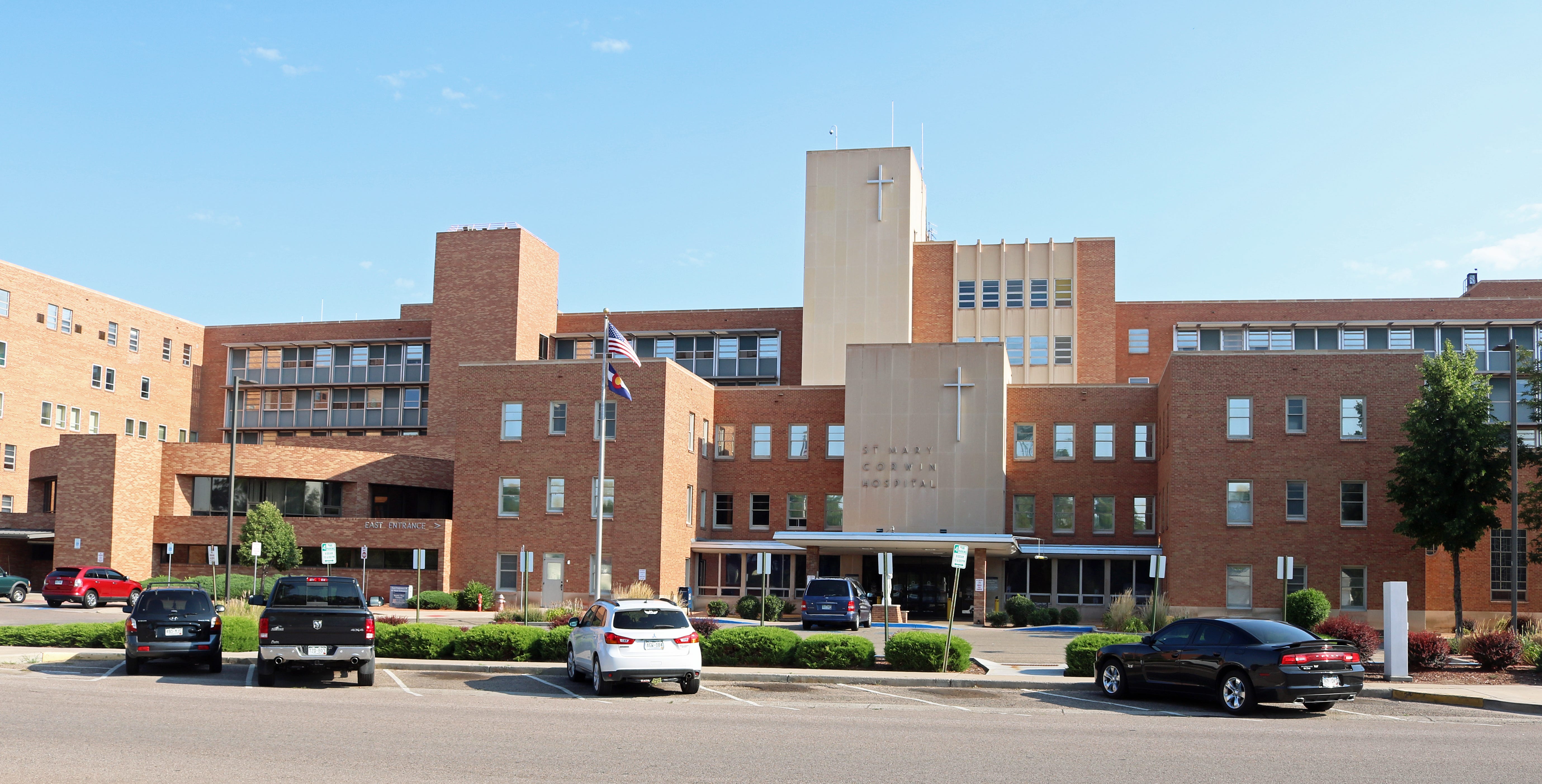
Catholic Health Initiatives Colorado Dba Centura Health-St. Mary Corwin Medical Center, 375 NLRB No. 37, 27-CA-273705 (Published Board Decision)
The Board reversed an administrative law judge's finding that a Colorado hospital operator unlawfully withdrew recognition from a union representing nonprofessional employees, even though the employer separately committed several unrelated violations of the NLRA in the lead-up to that withdrawal.
The case arose after an employee filed a petition to decertify Communications Workers of America as the bargaining representative for about 151 workers at two Pueblo facilities. The Board agreed with the judge that the employer broke the law in the weeks before the petition was submitted: supervisors prohibited an employee from discussing the union during work hours, threatened him with discipline and reassignment, and an employer agent promised workers higher pay if they signed the decertification petition and directly solicited signatures for it. Those actions, the Board found, went beyond permissible "ministerial" involvement in a decertification effort and violated Section 8(a)(1).
The central dispute concerned what happened next. By the time the petition reached management on March 5, 2021, it carried signatures from a majority of the unit, and the employer withdrew recognition from the union, later making unilateral wage increases and other changes without bargaining. The judge held that because the employer had tainted the petition through its own misconduct, it could not rely on it as valid evidence that the union had lost majority support, citing the Board's Hearst Corp. presumption as applied in SFO Good-Nite Inn.
The Board majority disagreed, holding that 53 percent of unit employees had already signed the petition before the employer's unlawful conduct began on February 24. Because those earlier signatures were untainted, the majority reasoned, the employer possessed valid evidence of actual loss of majority support and could lawfully withdraw recognition, relying on Pacific Grove Convalescent Hospital. The majority therefore dismissed the 8(a)(5) allegations tied to the withdrawal and the resulting unilateral changes to wages, dues deductions, and bulletin board access, and eliminated the judge's proposed affirmative bargaining order and notice-reading remedy.
Member Prouty dissented on this point, arguing that the majority misapplied Hearst, which he read as creating a conclusive presumption that any employer unfair labor practice aimed at advancing a decertification effort taints the resulting petition in its entirety, regardless of when individual signatures were collected. He would have upheld the judge's finding that the withdrawal of recognition and subsequent unilateral changes were unlawful, and would have preserved the notice-reading remedy.
Significant Cases Cited
Hearst Corp., 281 NLRB 764 (1986): An employer's unfair labor practices aimed at advancing an employee decertification effort conclusively taint the resulting petition, barring reliance on it regardless of individual employees' awareness of the misconduct.
SFO Good-Nite Inn, 357 NLRB 79 (2011): Reaffirmed and elaborated the Hearst presumption, explaining that an employer's direct participation in a decertification effort creates a petition too unreliable to rebut the union's presumption of continuing majority status.
Pacific Grove Convalescent Hospital, 350 NLRB 518 (2007): Found a decertification petition untainted, and withdrawal of recognition lawful, where a majority of unit employees signed before the employer's later unlawful solicitation of additional signatures.
Levitz Furniture Co. of the Pacific, Inc., 333 NLRB 717 (2001): Established that an employer may withdraw recognition from an incumbent union only upon a showing that the union has actually lost majority support.
Auciello Iron Works, Inc. v. NLRB, 517 U.S. 781 (1996): Recognized that a recognized union is entitled to a presumption of majority support, which may become rebuttable over time.
Service Electric Company, 10-RC-391380 (Regional Election Decision)
A regional director has directed an election for a proposed bargaining unit of Field Safety Coordinators at Service Electric Company, rejecting the company's argument that these employees are statutory supervisors who should be excluded from union representation.
The electrical contractor had opposed the petition filed by the International Brotherhood of Electrical Workers Local 175, arguing that its six Field Safety Coordinators in the company's central region wield supervisory authority under Section 2(11) of the NLRA because they can assign and direct work, discipline employees, hand out rewards, evaluate performance, and resolve grievances. After an August 2026 hearing, the regional director found the company failed to prove any of these claims with the kind of specific, non-conclusory evidence the Board requires.
On work assignment, the director found the coordinators' role limited to flagging safety violations, offering guidance, and occasionally halting unsafe work, none of which amounted to assigning employees to tasks, shifts, or locations under the standard set in Oakwood Healthcare, Inc. The authority to stop work was not exclusive to the coordinators, and one coordinator's occasional placement of injured workers on light duty was too isolated and mechanical to count.
On discipline, testimony showed that any recommendations coordinators made were independently verified by management before action was taken, meaning the coordinators did not exercise the kind of unreviewed disciplinary authority that confers supervisory status.
Regarding rewards, the director noted that lunches and small gifts given to crews for safety achievements were tied to a formal "good catch" program reviewed by management, and the record did not establish how frequently these rewards occurred, undermining the company's claim of independent judgment.
The director also rejected the company's grievance-adjustment argument, distinguishing informal problem-solving from the kind of formal grievance handling that indicates supervisory status, and found that leading safety training sessions did not amount to evaluating employees.
Because the employer could not meet its burden of proof on any of the statutory indicia, the director certified the petitioned-for unit as appropriate and scheduled a secret-ballot election for September 16, 2026.
Significant Cases Cited
Oakwood Healthcare, Inc., 348 NLRB 686 (2006): Established the framework for determining whether an employee has authority to assign or responsibly direct work sufficient to confer supervisory status.
NLRB v. Kentucky River Community Care, 532 U.S. 706 (2001): Held that the party asserting supervisory status bears the burden of proving it.
Lucky Cab Co., 360 NLRB 271 (2014): Held that disciplinary authority only confers supervisory status if it leads to personnel action without independent investigation by management.
Veolia Transportation Services, 363 NLRB 1879 (2016): Found that infrequent or isolated rewards, without evidence of independent judgment, do not establish supervisory status.
Passavant Retirement & Health Center v. NLRB, 149 F.3d 243 (3d Cir. 1998): Addressed whether resolving informal workplace problems constitutes adjusting grievances for supervisory status purposes.
Premier Beverage Company, LLC, Dba Breakthru Beverage Florida, 12-RD-374423 (Unpublished Board Decision)
The Board denied a union's request for review of a regional director's decision overruling its election objection in a decertification proceeding, though it reached that result on different grounds than the regional director had used.
The union had objected to the election on the theory that the employer improperly gave replacement workers a benefit by employing them as driver helpers following a route bidding process earlier in the year. The regional director overruled the objection after finding the union's evidence insufficient. The Board disagreed with that reasoning but still denied review, explaining that the objection essentially restated an unfair labor practice charge the union had already filed and that the Board had already found lacked merit.
The Board reiterated that when an election objection's core allegation is that conduct violated the NLRA, the Board will not evaluate the objection on its own terms because doing so would require the Board to make an unfair labor practice finding outside the proper charge process. That would intrude on the General Counsel's exclusive authority under Section 3(d) of the Act to issue complaints and prosecute unfair labor practice cases. The proper avenue for the union to pursue its claim, the Board explained, is to appeal the regional director's dismissal of its unfair labor practice charge to the General Counsel, which the union had already done.
Because the request for review was denied, the Board also denied as moot the union's request for a stay of the underlying proceedings. The Board added that even if the stay request were not moot, it would still deny it because the union failed to make the required "clear showing" that a stay was necessary, particularly since the hearing had been postponed and there was no sign the regional director planned to rule on ballot challenges tied to pending arbitration before those arbitration decisions were issued.
Significant Cases Cited
Virginia Concrete Corp., 338 NLRB 1182 (2003): The Board will not consider an election objection where sustaining it would require finding that the underlying conduct violated the Act.
Texas Meat Packers, 130 NLRB 279 (1961): Established that making unfair labor practice findings in representation proceedings improperly interferes with the General Counsel's authority to prosecute such charges through the separate charge process.
Times Square Stores Corporation, 79 NLRB 361 (1948): Early authority holding that alleged unfair labor practice conduct affecting an election should be addressed through the filing of charges rather than through the representation case itself.