
Siren Retail Corp. V. NLRB, 24-3168 (2nd Circuit)
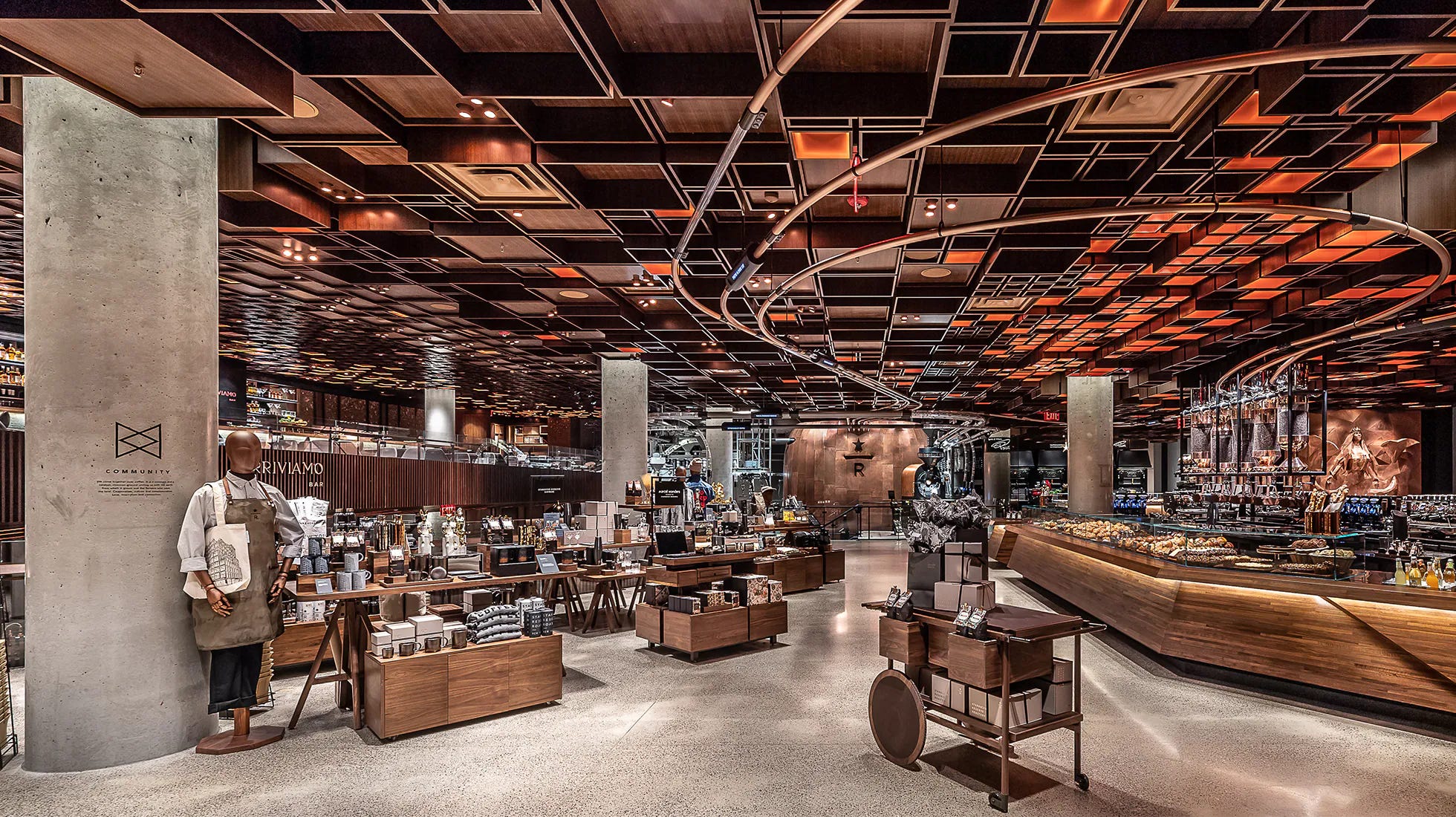
A federal appeals court sided with Starbucks in a dispute over dress code rules the company applied at its Reserve Roastery store in New York City, rejecting a labor board finding that the company's policies on union pins and shirts illegally interfered with workers' organizing rights.
The case grew out of a 2022 incident in which several employees at the Roastery wore black t-shirts bearing the Workers United union logo over their aprons during a national push to negotiate the chain's first union contract. A manager told the employees the shirts violated the store's dress code and asked them to change. Workers United filed an unfair labor practice charge, and the Board's general counsel went after three separate policies: a rule limiting employees to one union pin, a rule barring pins or buttons on political, religious, or personal issues, and a rule requiring that any writing on shirts be pre-approved by the company.
An administrative law judge found the one-pin rule lawful, reasoning it was essentially the same policy the Second Circuit had already upheld in Starbucks I. But the judge found the other two policies unlawful, applying the Board's own precedent in Tesla, Inc., which presumes that uniform policies limiting union insignia are illegal unless the employer narrowly tailors them to specific business needs. The Board itself later went further, reversing the judge on the one-pin issue too and finding all three policies unlawful.
The Second Circuit disagreed on both fronts. On the one-pin policy, the court found the facts indistinguishable from Starbucks I, in which it had already ruled that limiting employees to a single union button did not violate the NLRA, given Starbucks' interest in avoiding message clutter on its uniforms. The court found the differences the Board pointed to, such as the more relaxed "steampunk" dress code at the Roastery versus the plain black-and-white look at ordinary stores, legally irrelevant to that reasoning.
On the other two policies, the court rejected the Board's Tesla framework outright, agreeing with a prior Fifth Circuit ruling that had also thrown out Tesla. The panel held that Tesla's presumption against nearly all workplace dress rules, combined with its requirement that employers narrowly tailor policies to survive scrutiny, misreads the Supreme Court's decision in Republic Aviation Corp. v. NLRB. That decision, the court explained, requires a genuine balancing of employees' organizing rights against employers' interests in workplace discipline and business image, not a strict-scrutiny-style test that effectively assumes employer policies are unlawful. The court also concluded it owed no deference to the Board's reading of Supreme Court precedent under the framework set out in Loper Bright Enterprises v. Raimondo, which eliminated the deference courts previously gave to agency legal interpretations, while noting that factual findings by the Board still receive deference if backed by substantial evidence.
The court denied enforcement of the Board's order and sent the case back to the agency, directing it to reevaluate the pin-issue and shirt-logo policies under a properly balanced standard that weighs the extent of any restriction on workers' rights, whether the policy is neutral and consistently enforced, and the surrounding circumstances. The court also flagged that the Board's remedial order appeared broader than its findings justified and asked the agency to narrow it accordingly on remand.
Significant Cases Cited
Republic Aviation Corp. v. NLRB, 324 U.S. 793 (1945): Established that employees have a right under Section 7 to wear union insignia at work, subject to an employer's ability to show special circumstances justifying restrictions, requiring a balance between employee organizing rights and employer business interests.
NLRB v. Starbucks Corp. (Starbucks I), 679 F.3d 70 (2d Cir. 2012): Upheld a Starbucks policy limiting employees to one union pin, finding the company's interest in avoiding message clutter sufficient to justify the restriction.
Tesla, Inc., 371 NLRB No. 131 (2022): Set a Board standard presuming that employer uniform policies restricting union insignia are unlawful unless narrowly tailored to specific special circumstances.
Loper Bright Enterprises v. Raimondo, 603 U.S. 369 (2024): Overruled Chevron deference, directing courts to exercise independent judgment on questions of law rather than deferring to agency interpretations of ambiguous statutes.
Wal-Mart Stores, Inc., 368 NLRB No. 146 (2019): Applied a balancing test weighing the impact on employees' NLRA rights against an employer's legitimate business justifications for dress code policies, later overruled by Tesla.
Real Entertainment – Philadelphia, LLC, a Wholly Owned Subsidiary of LiveConnections.org, D/B/a Worl, 374 NLRB No. 34, 04-CA-370494 (Published Board Decision)
The National Labor Relations Board issued a default judgment against Real Entertainment—Philadelphia, LLC, the entity operating the World Café Live music venue in Philadelphia, after the company failed to respond to a series of unfair labor practice complaints while operating as a debtor-in-possession in bankruptcy.
The Board found that the company committed a broad range of violations tied to two organizing efforts. In June 2025, eight front-of-house employees walked out and protested outside the venue over wages, treatment by management, and job security. The company fired all of them the next day, along with employee Elizabeth Grecco, whom it believed had participated even though she had not. Management also threatened the workers with a lawsuit over the walkout.
A second wave of activity followed in the fall of 2025, when employees raised complaints about late and inaccurate wage payments and filed wage theft complaints with the City of Philadelphia. The company responded by cutting several employees from the work schedule and ultimately terminating or discharging four of them, conduct the Board found was also driven by their support for UNITE HERE Local 274, which the front-of-house staff had voluntarily recognized as their bargaining representative that July.
The Board further found that the company unlawfully withdrew recognition from Local 274 in September 2025 and refused to bargain with it, and separately refused to bargain with International Alliance of Theatrical Stage Employees, Local 8, which represented the venue's production staff. The company also made unilateral changes to production employees' pay structure and hours-reporting requirements without bargaining with Local 8, including switching a salaried employee to hourly pay, requiring use of a new timekeeping system, cutting off a travel and phone stipend, and adding a supervisor approval step for hours before payroll.
Because the company never answered the complaints or offered any justification, despite reminders that a default judgment motion would follow, the Board treated all the allegations as admitted. It ordered reinstatement and full backpay, including compensation for related financial harms and adverse tax consequences, for the thirteen affected employees. The Board also ordered the company to recognize and bargain with both unions on request, rescind the unilateral changes made to production employees' terms of employment, remove references to the unlawful discharges from personnel files, and post and read aloud a notice to employees describing their rights.
Significant Cases Cited
Patrician Assisted Living Facility, 339 NLRB 1153 (2003): Pro se status alone does not establish good cause for failing to file an answer to a Board complaint.
Cardinal Services, Inc., 295 NLRB 933 (1989): Bankruptcy proceedings do not deprive the Board of jurisdiction to process an unfair labor practice case to final disposition.
F.W. Woolworth Co., 90 NLRB 289 (1950): Established the standard method for computing backpay owed to unlawfully discharged employees.
Thryv, Inc., 372 NLRB No. 22 (2022): Held that backpay remedies must include compensation for all direct or foreseeable pecuniary harms, not just lost wages.
AdvoServ of New Jersey, Inc., 363 NLRB 1324 (2016): Requires employers to compensate employees for adverse tax consequences of receiving lump-sum backpay awards.
Boardroom Styling Lounge - Houston/Galleria, JD-60-26, 16-CA-373437 (ALJ Decision)
An administrative law judge has ordered a Houston hair salon to reinstate and compensate a stylist who was fired after refusing to sign confidentiality and non-solicitation agreements, finding the agreements themselves unlawfully restricted employee rights.
The case arose after HB Boardroom Galleria hired Elizabeth Villegas as a stylist in August 2025. About three weeks later, the company's area manager told Villegas by text that she and other employees had to sign two documents as a condition of employment: a "Confidentiality of Salary and Benefit Agreement" barring employees from discussing pay and benefits with each other, and a "Confidentiality, Non-Compete & Non-Solicitation Agreement" that prohibited employees, for two years after leaving the company, from soliciting or inducing coworkers to leave their jobs. The company told Villegas it would not modify the agreements. When she refused to sign, she was fired.
The company did not contest the allegations. At an August 2026 hearing, its counsel admitted every paragraph of the amended complaint, and General Counsel moved for summary judgment, which the company did not oppose. Based on those admissions, the judge found that maintaining both agreements interfered with employees' rights under Section 7 of the NLRA, that telling Villegas the agreements were a non-negotiable condition of employment was similarly unlawful, and that firing her for refusing to sign violated Section 8(a)(1) of the Act.
As a remedy, the judge ordered the company to offer Villegas reinstatement to her former job, make her whole for lost earnings and other financial harms including job-search expenses, cover any adverse tax consequences from a lump-sum backpay award, and remove references to the unlawful discharge from her personnel file. The company must also rescind the overbroad provisions in its confidentiality and non-compete agreements, notify all current and former employees that the language will no longer be enforced, and post a notice describing employees' rights at its Houston Galleria location.
Significant Cases Cited
F.W. Woolworth Co., 90 NLRB 289 (1950): Establishes the standard method for calculating backpay owed to unlawfully discharged employees.
New Horizons, 283 NLRB 1173 (1987): Sets the interest rate applied to backpay awards in Board remedies.
Kentucky River Medical Center, 356 NLRB 6 (2010): Requires that interest on backpay awards be compounded daily.
Thryv, Inc., 372 NLRB No. 22 (2022): Expanded the Board's standard remedy to include compensation for other direct or foreseeable pecuniary harms beyond lost wages resulting from unlawful discharge.
AdvoServ of New Jersey, Inc., 363 NLRB 1324 (2016): Requires employers to compensate discharged employees for adverse tax consequences of receiving backpay as a lump sum.
KGW-Tv, 19-RC-376874 (Unpublished Board Decision)
The Board declined to review a regional director's decision directing an election in a case involving IBEW Local 48's petition to add several classifications to an existing bargaining unit at a television station. The petitioned-for classifications, including producers, digital content producers, and content coordinators, share a community of interest with the existing unit of directors and broadcast technicians, the Board found, because they work in the same department under common supervision, have regular work-related contact, and share basic terms of employment such as hourly pay and workplace rules.
The Board also found functional integration between the groups, noting that directors code broadcasts according to producers' instructions and that broadcast technicians provide technical support across all the petitioned-for classifications. While the Board clarified that interchange between employee groups is not a "critical" factor in this analysis, contrary to a suggestion in the regional director's decision, it agreed that the interchange factor, along with skills, training, and job duties, weighed against holding a separate self-determination election. On balance, the Board concluded these factors were outweighed by the shared community of interest.
Finally, the Board upheld the regional director's finding that the petitioned-for producers are not statutory supervisors, agreeing they lack authority to assign or responsibly direct other employees. Because of that conclusion, the Board did not need to decide whether the producers exercise independent judgment in preparing broadcast rundowns.
Significant Cases Cited
Walt Disney Parks & Resorts, U.S., Inc., 373 NLRB No. 99 (2024): Set out the community-of-interest factors used in self-determination election analysis, including that interchange is not a critical factor.
Public Service Co. of Colorado, 365 NLRB 1017 (2017): Held that differences in terms and conditions of employment stemming from a collective-bargaining agreement are entitled to less weight in the self-determination context.
Transerv Systems, Inc., 311 NLRB 766 (1993): Found a high degree of functional integration where two employee groups had to work together to complete most deliveries.
Publix Super Markets, Inc., 343 NLRB 1023 (2004): Found functional integration where certain employees performed support functions essential to all operations at a facility.
Peacock Productions of NBC Universal Media, LLC, 364 NLRB 1523 (2016): Addressed the standard for determining whether employees have authority to assign or responsibly direct work as statutory supervisors.