
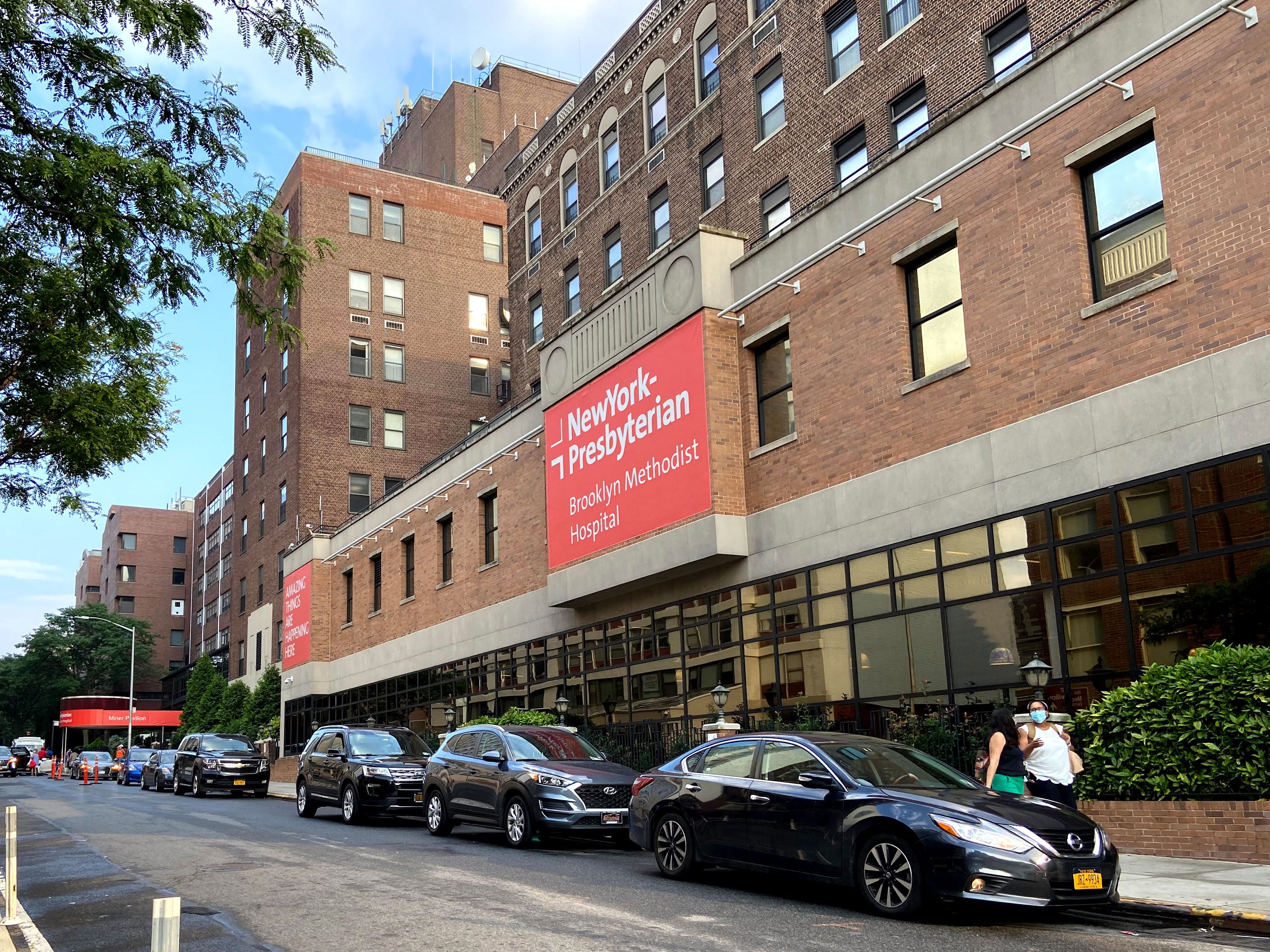
New York-Presbyterian Brooklyn Methodist Hospital, JD-51-26, 29-CA-332578 (ALJ Decision)
An administrative law judge ruled that New York Presbyterian – Brooklyn Methodist Hospital violated the NLRA when it unilaterally imposed a mandatory uniform requirement on its registered nurses without first bargaining with their union, the New York State Nurses Association.
The dispute traced back to the hospital's dress code policy, which historically allowed individual units to set their own attire standards. During 2023 contract negotiations, the hospital proposed adding a mandatory uniform requirement to the collective bargaining agreement, but the union rejected it, campaigning with the slogan "We Need RNs Not Uniforms," and the final contract contained no uniform language. Several months later, in November 2023, the hospital announced it would implement the uniform policy anyway, citing its management-rights clause, and put it into effect in March 2024 despite the union's objections and a request to bargain.
The judge first addressed whether the case should be deferred to the grievance-arbitration process under the union's contract, applying the six-factor test from Wonder Bread. Although several factors favored deferral, including the parties' long bargaining relationship and the broad scope of their arbitration clause, the hospital's last-minute refusal to waive timeliness defenses and unwillingness to arbitrate the matter weighed heavily against deferral, so the judge proceeded to the merits.
On the merits, the judge found the new uniform policy was a material, substantial, and significant change to nurses' terms and conditions of employment, comparing the case to Salem Hospital Corp., where a similar hospital-wide dress code overhaul was found unlawful because it rendered employees' existing attire unusable and limited their options for cold-weather clothing. The judge rejected the hospital's argument that the change merely continued a past practice of allowing unit-level dress code variation, noting that the new policy was a hospital-wide mandate affecting the entire nursing staff, a much broader change than any prior unit-specific adjustments.
The judge also found the hospital's unilateral action was not protected by its management-rights clause under either the clear-and-unmistakable-waiver standard from Endurance Environmental Solutions or the contract-coverage test from MV Transportation. Because the hospital had proposed uniform language during bargaining and the union successfully kept it out of the final contract, the union never waived its right to bargain over the issue, and the hospital's later reliance on the management-rights clause to justify unilateral action was inconsistent with that bargaining history.
As a remedy, the judge ordered the hospital to rescind the uniform policy and any related discipline, make affected employees whole for losses, and bargain with the union before making any future changes to nurses' terms and conditions of employment.
Significant Cases Cited
Wonder Bread, 343 NLRB 55 (2004): Established the six-factor test for determining when the Board should defer unfair labor practice charges to grievance-arbitration procedures.
Salem Hospital Corp., 360 NLRB 768 (2014): Held that a hospital's overhaul of its uniform and dress code policy was a material, substantial, and significant change requiring bargaining.
MV Transportation, Inc., 368 NLRB No. 66 (2019): Set out the contract-coverage test for evaluating whether a management-rights clause privileges unilateral employer action.
Endurance Environmental Solutions, LLC, 373 NLRB No. 141 (2024): Restored the clear-and-unmistakable-waiver standard for assessing contractual defenses to unilateral-change allegations.
Crittenton Hospital, 342 NLRB 686 (2004): Recognized that uniform requirements and workplace attire are generally mandatory subjects of bargaining.
Metro Surfaces, LLC, 27-RC-389972 (Regional Election Decision)
A regional director for the National Labor Relations Board has ordered that a union representation election for tile layers, marble setters, stone masons, terrazzo workers, and finishers at Metro Surfaces, LLC be conducted by mail rather than in person.
The petition, filed by the Bricklayers & Allied Craftworkers Mountain West Administrative District Council, Local Union No. 1 Utah, sought to represent a bargaining unit of roughly 86 workers employed by the Salt Lake City construction company. After a hearing, the parties resolved most issues by stipulation, leaving only the question of whether the election should be held manually at the employer's facility or by mail ballot.
The employer argued for a manual election, citing the Board's general preference for in-person voting and noting that employees were already accustomed to traveling to job sites, so a trip to the facility to vote would not be burdensome. It proposed two two-hour voting sessions at its Salt Lake City office.
The union countered that a mail ballot was more appropriate because the employer's job sites are spread across a wide area of Northern Utah, with some more than two hours from the main facility, and because a substantial number of eligible voters, including laid-off former employees, do not regularly report to that facility at all.
The regional director agreed with the union. Citing San Diego Gas & Electric, the decision explained that mail ballots may be warranted when eligible voters are geographically scattered or when their schedules mean they are not reliably present at a common location at a common time. The record showed that of the unit's eligible voters, at least 17 were no longer actively employed and would have no regular occasion to travel to the facility, while many of the roughly 69 active employees worked at scattered job sites and kept inconsistent schedules, some working four ten-hour days and others five eight-hour days with varying start and end times. Because there was no assurance that a meaningful share of eligible voters would be at the facility at the same time, the director found that a mail ballot election would best ensure the greatest employee participation.
The decision also set the voting unit, eligibility criteria, and a timeline for mailing ballots in late August 2026 with counting scheduled for September 21, 2026, and it reminded the parties of their obligations regarding the voter list and notice posting, as well as their right to seek Board review of the ruling.
Significant Cases Cited
San Diego Gas & Elec., 325 NLRB 1143 (1998): Held that a mail ballot election may be appropriate when eligible voters are geographically scattered or their schedules mean they are not present at a common location at common times, and outlined factors regional directors should weigh in choosing between manual and mail balloting.
Aspirus Keweenaw, 370 NLRB No. 45 (2020): Reaffirmed the Board's general preference for manual elections because they allow in-person supervision and promote employee participation, while recognizing exceptions apply in certain circumstances.
Daniel Construction Co., 133 NLRB 264 (1961): Established the eligibility formula used to determine which construction industry employees, given the transient nature of such work, qualify to vote in a representation election.
Steiny & Co., 308 NLRB 1323 (1992): Refined and reaffirmed the construction industry voter eligibility formula for representation elections.
Halliburton Services, 265 NLRB 1154 (1982): Recognized that the Board has delegated broad discretion over election arrangements, including the mechanics of voting, to its regional directors.
Southern Electric Corporation of Mississippi, 12-RC-360889 (Unpublished Board Decision)
The National Labor Relations Board denied an employer's request for review of a Regional Director's order in a representation case involving Southern Electric Corporation of Mississippi and the International Brotherhood of Electrical Workers, Local 222. The Regional Director had approved the union's withdrawal of one objection and portions of several others, overruled two objections, and directed a hearing on the remaining objections, which were consolidated with a related unfair labor practice case.
The employer's request for review focused only on the Regional Director's decision to send one objection, along with portions of two others, to a hearing. A Board majority consisting of Chairman Murphy and Member Prouty found no substantial issues warranting review, holding that Regional Directors have discretion under the Board's rules to determine which issues require a hearing when an offer of proof could establish grounds for setting aside the election. The majority noted it lacked access to the union's offer of proof and saw no abuse of discretion in the Regional Director's decision. Because an unfair labor practice hearing involving related conduct by the employer was already scheduled, the majority found no reason to delay proceedings for a supplemental decision, though it left the employer free to raise its legal arguments in that separate case.
Member Mayer dissented in part. He would have granted review of the objections alleging that two general foremen improperly served as election observers. Mayer explained that the general foremen were included in the stipulated bargaining unit, and that Board precedent generally does not hold an employer responsible for a unit supervisor's conduct absent evidence the employer encouraged or ratified it. He also pointed to precedent barring objections to an individual's status as an observer unless raised at the preelection conference, which he said did not happen here. In his view, the Regional Director's order failed to address this precedent or explain why the objections could support setting aside the election, and he would have remanded the matter for a supplemental decision.
Significant Cases Cited
Craft Maid Kitchens, 284 NLRB 1042 (1987): An employer is generally not held responsible for the antiunion conduct of a supervisor included in the bargaining unit absent evidence the employer encouraged, authorized, or ratified that conduct.
Alpha Baking Co., 344 NLRB 262 (2005): A party cannot object to an election based on an individual's supervisory status when that individual was included in a stipulated unit and cast an unchallenged ballot.
Poplar Living Center, 300 NLRB 888 (1990): Reinforces that objections premised on an included unit member's supervisory status are barred where the individual voted without challenge.
Liquid Transporters, Inc., 336 NLRB 420 (2001): A party seeking to challenge an individual's eligibility to serve as an election observer must raise the objection at the preelection conference.
McLaren Oakland, 07-RC-365793 (Unpublished Board Decision)
The Board denied the employer's requests for review of a regional director's decision certifying a union as the bargaining representative, finding no substantial issues warranted further review.
The dispute centered on a Stipulated Election Agreement that established the bargaining unit. After the election, the employer tried to challenge the unit's scope and argued the union had agreed to withdraw two of the three petitioned-for locations from the certified unit. The Board reaffirmed that stipulated election agreements are generally enforced and that a party may withdraw from one only with an affirmative showing of unusual circumstances or by agreement of both parties. It agreed with the regional director that the employer failed to show the union had actually agreed to any such withdrawal, particularly since there was no communication from the union itself confirming such an agreement. The Board also found that the employer's post-election objection to the unit's composition conflicted with established precedent barring parties from repudiating stipulated election agreements after the fact.
The Board went on to address the employer's alternative argument that even if the parties had reached an agreement to modify the unit, that modification should have been honored as a voluntary resolution. The Board explained that while parties to a bargaining relationship may voluntarily agree to modify a certified unit's scope during collective bargaining, such a modification cannot be a condition precedent to negotiations themselves. Because the employer had proposed to withdraw its improper post-election objection only if the union agreed to exclude the two locations, the Board found this amounted to conditioning bargaining itself on the unit change, an arrangement it declined to sanction due to concerns about gamesmanship.
Finally, the Board addressed case law cautioning against certifying a substantially different unit than the one voted on in the election. It found that concern did not require intervention here, since the parties remain free to voluntarily exclude the two locations from the unit through the bargaining process itself, without the Board formally modifying the certification after the election.
Significant Cases Cited
Hampton Inn & Suites, 331 NLRB 238 (2000): Stipulated election agreements are generally enforced, and a party may withdraw from one only upon an affirmative showing of unusual circumstances or by agreement of the parties.
Cruis Along Boats, Inc., 128 NLRB 1019 (1960): Parties may not repudiate or challenge the terms of a stipulated election agreement after the election has been conducted.
Canterbury Gardens, 238 NLRB 864 (1978): Parties to a bargaining relationship may voluntarily modify the composition or scope of a certified bargaining unit during negotiations, but only if the modification is not made a condition precedent to those negotiations.
Hamilton Test Systems v. NLRB, 743 F.2d 136 (2d Cir. 1984): Counsels against Board certification of a substantially different bargaining unit than the one in which the election was actually conducted.
HR Bristol, LLC, 10-RC-384480 (Unpublished Board Decision)
The Board denied an employer's request for review of a regional director's decision rejecting the employer's election objections as untimely, finding the request raised no substantial issues warranting review. The employer's separate request to stay certification of the union was denied as moot, and its motion for special leave to file a reply was also denied.
In a concurring footnote, one Board member agreed the acting regional director correctly applied the Board's existing rules in rejecting the late e-filed objections, but expressed openness to amending those rules to give regional directors discretion to accept late-filed objections in certain circumstances, citing the Board's general policy of favoring decisions on the merits over default.
Significant Cases Cited
Paolicelli, 335 NLRB 881 (2001): Recognized that the Board's established policy favors determinations on the merits rather than by default.
Touchstone Climbing, Inc., 20-RC-369707 (Unpublished Board Decision)
The National Labor Relations Board denied Touchstone Climbing's request to review a regional director's decision directing elections at four separate facility-based bargaining units, finding the employer raised no substantial issues warranting review.
The employer had argued that a single-facility presumption should not apply because certain job classifications were dispatched from the company's headquarters to work across its various locations. The Board rejected this argument, noting that the employer cited no precedent supporting its position and that Board law has long held that roving employees do not negate the separate identities of individual facilities.
The Board also addressed the employer's burden in trying to overcome the presumption that single-facility units are appropriate. It agreed with the acting regional director that the employer failed to meet this "heavy burden," pointing to the significant local autonomy over employment decisions at each facility and the lack of meaningful interchange between employees at different locations. On the question of geographic distance between facilities, up to fifty miles apart in the Bay Area, the Board found this factor did not support the employer's position, particularly because the employer's own proposed unit would have combined the roving classifications with all facilities across the region, and because no party argued that any two geographically close facilities should be grouped together on their own.
In a footnote, the Board also clarified that while the acting regional director had relied in part on Audio Visual Services Group, LLC in listing factors relevant to rebutting the single-facility presumption, that case actually involved a petitioned-for multi-facility unit, a distinct legal question with its own test, though there is some overlap in the relevant factors.
Because the request for review was denied, the Board also denied as moot the employer's separate request to consolidate the case with two other pending cases.
Significant Cases Cited
California Pacific Medical Center, 357 NLRB 197 (2011): Established that a party seeking to overcome the single-facility presumption bears a heavy burden.
Trane, 339 NLRB 866 (2003): Listed the factors relevant to overcoming the single-facility presumption.
RB Associates, 324 NLRB 874 (1997): Held that the existence of roving employees did not negate the separate identities of individual facilities under the single-facility presumption.
Purnell's Pride, Inc., 252 NLRB 110 (1980): Found that roving employees did not defeat the appropriateness of single-facility units.
Audio Visual Services Group, LLC, 370 NLRB No. 39 (2020): Addressed factors relevant to a petitioned-for multi-facility unit, a distinct inquiry from rebutting the single-facility presumption.