
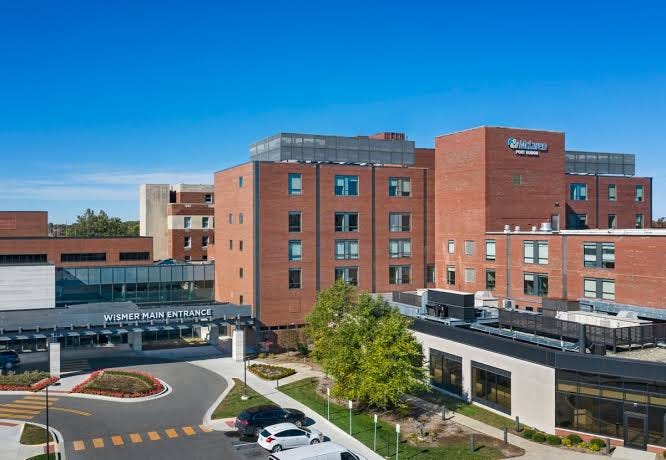
McLaren Port Huron, JD-50-26, 07-CA-354191 (ALJ Decision)
An administrative law judge found that a Michigan hospital violated the NLRA by taking too long to respond to a union's request for bargaining information and by failing to keep the union informed about the delay.
Local 332, International Brotherhood of Teamsters, was certified in July 2024 to represent a technical employee unit at McLaren Port Huron. In September 2024, the union's business representative sent the hospital a fourteen-item information request covering things like employee rosters, wage rates, work rules, benefit plans, and staffing data, information the union said it needed to prepare for upcoming contract negotiations. The hospital did not respond or acknowledge the request for about seven weeks, and only did so after the union sent a third follow-up email. Even then, the hospital's vice president of labor relations told the union only that the request was "voluminous" and would take time, without mentioning that the hospital had suffered a ransomware attack in August that disrupted its computer systems, or that it was simultaneously closing out its fiscal year. The hospital provided most of the requested information by early November, but did not complete its response to several items, including questions about sickness and accident benefits, until December 30, more than fifteen weeks after the original request.
The judge held that all of the requested information was presumptively relevant because it concerned the terms and conditions of employment of unit employees, so the union did not need to make any special showing of need. The central issue was whether the hospital's delay in providing it was reasonable. Citing Board precedent, the judge explained that an employer must either supply requested information in a timely fashion or adequately explain why it cannot, and that timeliness is judged by looking at the nature of the information, the difficulty of obtaining it, the length of the delay, the reasons for the delay, and whether the employer communicated those reasons to the union as they arose.
The judge credited the hospital's evidence about the ransomware attack and the resulting need to manually verify records, and found that this justified much of the delay in responding to most of the request, as well as additional time needed for two items requiring a manual review of employee timecards. However, the judge found the hospital offered no justification at all for taking more than fifteen weeks to respond to the request for sickness and accident benefit information, or for waiting over two months to tell the union that no such policy existed. The judge also found that the hospital's failure to tell the union about the ransomware attack, fiscal-year timing, or other obstacles until the unfair labor practice charge had already been filed amounted to a failure to communicate in good faith about the status of its response. Comparing the case to prior Board decisions, the judge noted that employers found not to have unlawfully delayed had promptly told unions what was slowing them down and kept them updated, something McLaren Port Huron did not do.
Based on these findings, the judge concluded that the hospital violated Section 8(a)(5) and (1) of the NLRA by unreasonably delaying its response to the union's information request. The recommended order requires the hospital to cease and desist from this conduct and to post a notice to employees describing their rights.
Significant Cases Cited
Detroit Edison, 440 U.S. 301 (1979): An employer's duty to bargain includes providing relevant information a union needs to perform its duties as the employees' bargaining representative.
Red Rock Casino Resort & Spa, 368 NLRB No. 52 (2019): Employee names, dates of hire, pay rates, job classifications, personnel policies, and benefit plans are presumptively relevant to a union's bargaining role.
TDY Industries, LLC, 369 NLRB No. 128 (2020): An employer must supply requested information in a timely fashion or adequately explain why it will not be furnished, and untimely responses violate Section 8(a)(5) just as a refusal would.
West Penn Power Co., 339 NLRB 585 (2003): The Board applies no per se rule on timing but asks whether the employer made a reasonable, good-faith effort to respond as promptly as circumstances allowed, and finds no undue delay where the employer periodically updates the union on status.
Starbucks Corp., 373 NLRB No. 48 (2024): An eight-week failure to acknowledge an information request, followed by a failure to contemporaneously communicate reasons for further delay, supports a finding of unlawful delay.