
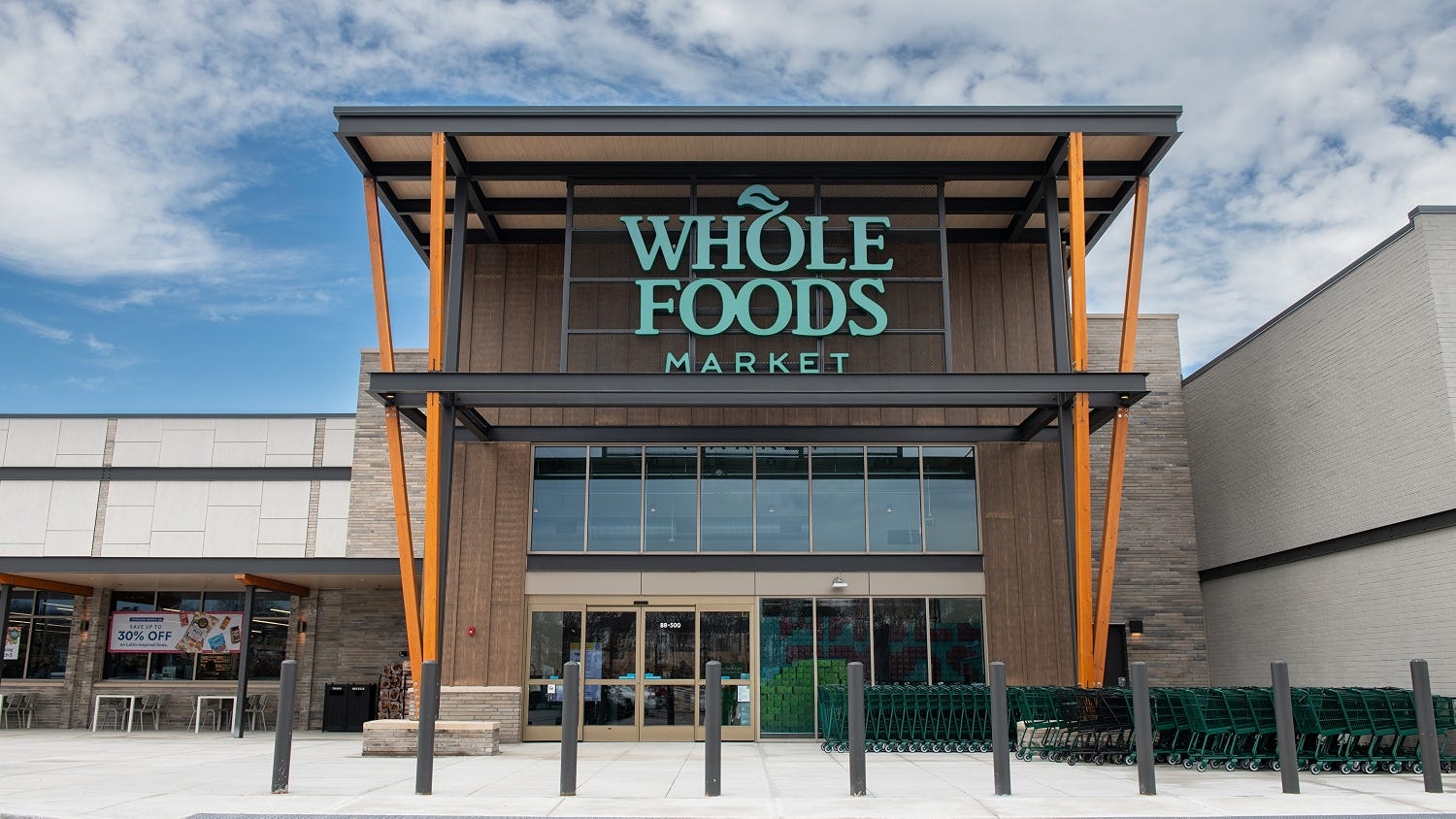
Whole Foods Markets, Inc., 375 NLRB No. 20, 01-CA-263079 (Published Board Decision)
The Board considered a set of consolidated cases arising from Whole Foods stores across the country during the summer of 2020, after employees began wearing “Black Lives Matter” messaging on masks, pins, buttons, and clothing following the murder of George Floyd. An Administrative Law Judge had found that this conduct was not protected activity under the NLRA, and the Board agreed, dismissing that portion of the complaint. The Board reasoned that the General Counsel had not shown the required connection between the employees’ BLM messaging and their own terms and conditions of employment, distinguishing the case from Home Depot, which had issued after the judge’s decision.
The Board reversed the judge on a separate issue involving the company’s dress code. The dress code language in Whole Foods’ employee handbook stemmed from a 2013 settlement agreement with NLRB Regional Directors, but the company had inadvertently dropped the word “printed” from the agreed language when publishing the rule, broadening its apparent scope. For roughly eight years, neither the General Counsel nor the Regions flagged any problem with the company’s compliance, and one region had closed its file on the settlement. The Board found that Whole Foods had engaged in good-faith compliance with the settlement and that, under St. Francis Hotel, an unfair labor practice cannot be based on the subject matter of a settlement agreement unless the settlement itself is set aside first, which the General Counsel never sought to do. Because the dress code allegation was squarely based on the subject of the 2013 settlement, the Board treated the settlement as a bar to the claim and dismissed the complaint in its entirety.
Member Prouty dissented in part, arguing that the omission of “printed” substantially broadened the rule beyond what the settlement permitted, meaning Whole Foods never actually complied with the settlement’s terms. In his view, the majority’s reliance on St. Francis Hotel was misplaced because that case addressed whether to set aside a settlement following a new violation, not whether the original settlement terms were followed in the first place. He would have found the broadened dress code rule unlawful and upheld the judge’s related finding.
Significant Cases Cited
St. Francis Hotel, 260 NLRB 1259 (1982): The Board will not find an unfair labor practice based on the subject matter of a settlement agreement unless the settlement is first set aside.
Home Depot, 373 NLRB No. 25 (2024): Addressed whether employee display of BLM messaging at work constitutes protected activity under the NLRA, a decision the Board here found distinguishable and did not endorse as correctly decided.
In-N-Out Burger, 365 NLRB 471 (2017): Employees have a protected Section 7 right to display and wear union insignia, including pins relating to terms and conditions of employment.
Republic Aviation Corp. v. NLRB, 324 U.S. 793 (1945): Established that Section 7 protects employees’ rights to wear union buttons and insignia, subject to balancing against employers’ right to maintain workplace discipline.
Eastex, Inc. v. NLRB, 437 U.S. 556 (1978): Employee activity is protected under the mutual aid and protection clause only where there is a reasonable and direct nexus between the message and improving employees’ terms and conditions of employment.
Menorah Campus, Inc. D/B/a the Harry and Jeanette Weinberg Campus, 375 NLRB No. 19, 03-CA-353575 (Published Board Decision)
The Board granted the General Counsel's motion for default judgment against a long-term care and nursing home operator that failed to file a timely answer to a complaint alleging repeated failures to honor its collective-bargaining agreement with 1199SEIU United Healthcare Workers East.
The employer never sought an extension of time to answer the complaint, and when it eventually filed an answer more than two weeks after the deadline set out in a warning letter from the Region, it offered no explanation for the delay and submitted no supporting affidavit as required by the Board's rules for late filings. Because the employer failed to show good cause for the untimely filing, the Board rejected the answer, deemed the complaint's allegations admitted, and noted that the employer's pending Chapter 11 bankruptcy proceeding did not strip the Board of authority to resolve the case, since Board proceedings fall within the regulatory exception to the bankruptcy automatic stay.
Based on the admitted allegations, the Board found that the employer violated the NLRA by unilaterally abandoning multiple provisions of its contract with the union, including failing to remit withheld union dues, pay retroactive raises, maintain health, dental, and vision coverage, make pension contributions, honor the grievance and arbitration procedure, and provide required layoff notices. The Board also found the employer unlawfully refused to furnish the union with requested financial and staffing information, and unlawfully closed its facility and laid off the entire bargaining unit without giving the union notice or a chance to bargain over the decision and its effects.
As a remedy, the Board ordered the employer to make employees and the union whole for all resulting losses, including dues, wage increases, health and pension contributions, and any other foreseeable financial harms, with interest. It also ordered the employer to resume the grievance procedure, furnish the requested information, and bargain with the union over the effects of the closure, backed by a limited backpay requirement modeled on the Board's standard remedy for bargaining violations tied to plant closures, running from five days after the decision until specified bargaining benchmarks are met.
Significant Cases Cited
Elevator Constructors Local 2 (Unitec Elevator Services Co.), 337 NLRB 426 (2002): Establishes that a party seeking to file an untimely document must support its request with a sworn affidavit setting forth the specific facts justifying the delay.
Cardinal Services, 295 NLRB 933 (1989): Holds that a party's bankruptcy filing does not deprive the Board of jurisdiction to process an unfair labor practice case because Board proceedings fall within the police/regulatory power exception to the automatic stay.
Transmarine Navigation Corp., 170 NLRB 389 (1968): Establishes the standard limited backpay remedy used to accompany bargaining orders in effects-bargaining violations tied to plant closures or relocations.
Thryv, Inc., 372 NLRB No. 22 (2022): Extended standard Board remedies to include compensation for all direct or foreseeable pecuniary harms resulting from unlawful conduct, not just traditional backpay.
New Horizons, 283 NLRB 1173 (1987): Set the interest rate methodology used in computing backpay and other monetary remedies in Board cases.
BLES Healthcare Management, LLC- Rosemont Care and Rehabilitation Center, 375 NLRB No. 22, 04-CA-345152 (Published Board Decision)
The Board granted a default judgment against a Bryn Mawr, Pennsylvania nursing and rehabilitation facility after it failed to answer a consolidated complaint alleging violations of the NLRA's bargaining obligations.
SEIU Healthcare Pennsylvania had represented a unit of licensed practical nurses, restorative nurses, and service and maintenance employees at the facility since 2005, most recently under a collective-bargaining agreement that ran through June 2025 and was later extended. The complaint alleged that starting in May 2024, the employer stopped posting vacant bargaining unit CNA positions without notifying the union or bargaining over the change. It further alleged that beginning in April 2025, the union made a detailed information request covering bargaining unit demographics, staffing and turnover data, health insurance and retirement plan details, safety records, and workplace policies, and that the employer either withheld much of this information entirely or unreasonably delayed producing other portions of it.
Because the employer never filed an answer to the complaint despite being properly served and warned that a default judgment motion would follow, and never responded to the Board's notice to show cause, the Board deemed all the complaint's allegations admitted under Section 102.20 of its Rules and Regulations. Based on those admitted facts, the Board concluded that the employer violated Section 8(a)(5) and (1) of the NLRA both by unilaterally ceasing to post CNA vacancies without bargaining and by failing, refusing, or unreasonably delaying to furnish the union with relevant and necessary information.
As a remedy, the Board ordered the employer to rescind the unilateral change regarding CNA position postings, to bargain with the union before making any future changes to unit employees' terms and conditions of employment, and to furnish the outstanding requested information to the union. It also ordered the standard notice-posting remedy, including physical and electronic posting for 60 days, and required a sworn certification of compliance.
ArtCenter College of Design, 375 NLRB No. 17, 31-CA-325485 (Published Board Decision)
The Board upheld an administrative law judge's dismissal of a complaint alleging that ArtCenter College of Design unlawfully failed to give the California Federation of Teachers adequate notice and a meaningful opportunity to bargain over the effects of creating two new nonunit management positions.
The dispute arose after the college announced a "realignment" of its academic departments that would create rotating assistant chair and associate chair positions, absorbing administrative duties previously handled by faculty directors who were part of the bargaining unit. The union argued the college rushed to implement the plan and then stonewalled meaningful bargaining over how the change would affect unit employees' pay, course loads, and job security. The college countered that it gave the union advance notice, offered repeatedly to bargain over effects, and that the union itself let months pass without pursuing the negotiations it had requested.
The Board agreed with the judge that the college's notice and conduct satisfied its bargaining obligations under the NLRA. In a brief explanatory footnote, the Board stressed that the effects of the reorganization remained genuinely open for negotiation as of the parties' August 1, 2023 bargaining session and their follow-up correspondence in early August. It noted that the new chair titles and positions did not take effect until August 20, 2023 at the earliest, that no unit employee actually lost a faculty director position before September 2023, and that certain effects, such as the loss of stipends, did not hit unit employees until after the parties' final bargaining session on October 2, 2023. Because bargaining was still live and consequential when the union stopped pursuing it, the Board found no violation and dismissed the complaint in full.
Significant Cases Cited
First National Maintenance Corp. v. NLRB, 452 U.S. 666 (1981): Effects bargaining must be conducted in a meaningful manner and at a meaningful time.
Comau, Inc., 364 NLRB 523 (2016): An employer must give a union notice and a chance to bargain over the effects of a managerial decision even where it has no duty to bargain over the decision itself, and that notice must come before the change becomes a fait accompli.
Berklee College of Music, 362 NLRB 1517 (2015): A union is not excused from pursuing effects bargaining merely because implementation has begun, so long as the primary effects have not yet been felt and negotiation remains possible.
Frontier Communications, 370 NLRB No. 131 (2021): Once an employer gives timely notice, it becomes the union's responsibility to request and pursue effects bargaining.
Komatsu America Corp., 342 NLRB 649 (2004): Effects bargaining must occur while the union still represents the employees affected by the change.
Frito-Lay, Inc., 375 NLRB No. 18, 18-RD-356346 (Published Board Decision)
A three-member panel of the Board denied a union's request for review of a Regional Director's decision overruling election objections in a decertification vote that ended in a 75-75 tie, with Member Prouty dissenting.
The case arose from a decertification petition filed at Frito-Lay's Menomonee Falls, Wisconsin distribution facility. The union raised several objections to the election, two of which became the focus of the dispute. First, the union argued that the employer effectively prevented a terminated employee and union steward, who had a pending grievance over his discharge and was actively campaigning, from voting by telling him without qualification that he was barred from company property. Second, the union argued that a manager improperly promised employees a wage increase if they voted to decertify the union, telling a steward that new employees had been told they would receive raises matching a nonunion facility's pay if the union were removed.
The majority, Chairman Murphy and Member Mayer, found neither objection raised a substantial issue warranting review. On the property-ban objection, they concluded the employer's statements reflected only its general policy against terminated employees being on the premises and did not reference the election, and that the employee never actually attempted to vote or was told he could not vote on election day. They noted that even though the employee was eligible to vote under challenge, his assumption that he would be barred was not enough to establish actual objectionable conduct, and cited Pruitt Health-Virginia Park, LLC v. NLRB for the principle that the closeness of an election result does not matter absent actual misconduct. On the wage-promise objection, the majority agreed with the Regional Director that the limited testimony about the manager's statement, recounted secondhand, lacked sufficient detail about the context and content of the original conversations with employees to meet the union's burden of proving an objectionable promise of benefits.
Member Prouty dissented, arguing that both objections independently warranted setting aside the election given how close the vote was. He reasoned that an unqualified statement barring a terminated employee from company property, made days before an election scheduled to occur on that property, would reasonably be understood to prevent the employee from voting, regardless of whether the union separately told him he could vote under challenge. He also found that the manager's admitted statement to the steward, that he had told new employees they would get a raise if they decertified the union, was itself direct and sufficiently precise evidence of an unlawful promise of benefits under G & K Services, Inc., without need for further corroboration. Applying the Board's multi-factor test from Taylor Wharton Division, he would have sustained both objections and ordered a rerun election.
Significant Cases Cited
Taylor Wharton Division, 336 NLRB 157 (2001): Sets out the multi-factor objective standard for evaluating whether conduct tends to interfere with employees' freedom of choice in an election.
Pacific Tile & Porcelain Co., 137 NLRB 1358 (1962): Holds that an employee with a pending grievance or arbitration over their discharge remains eligible to vote in an election, subject to challenge.
G & K Services, Inc., 357 NLRB 1314 (2011): Holds that a promise of benefit to employees creates an inference of interference with their free choice, though whether a wage comparison amounts to such a promise depends on context.
Pruitt Health-Virginia Park, LLC v. NLRB, 888 F.3d 1285 (D.C. Cir. 2018): Holds that absent actual objectionable misconduct, the closeness of an election result does not itself justify setting the election aside.
Cambridge Tool & Mfg. Co., 316 NLRB 716 (1995): Establishes the objective standard under which conduct is objectionable if it has a tendency to interfere with employees' freedom of choice.
Pinebrook Nursing Home, 22-CA-270599 (Advice Memo)
A nursing home did not violate the NLRA when it granted, and later rescinded, temporary COVID-19 hazard pay for unionized employees without bargaining, according to an NLRB advice memo.
GeriCare, Inc. operated Pinebrook Nursing Home in Englishtown, New Jersey, where 1199 SEIU Healthcare Workers East has represented employees for decades under a collective-bargaining agreement that expired in 2005. When the COVID-19 pandemic hit in March 2020, Pinebrook faced severe staffing shortages, with some departments seeing absentee rates of 50 to 100 percent. After New Jersey's Health Commissioner ordered nursing homes to accept COVID-19-positive residents back from hospitals, the employer began paying hourly hazard pay of $3.00 to $9.00 at sister facilities, then extended it to nearly all Pinebrook employees by mid-April 2020, without notifying or bargaining with the union. By June 2020, staffing had returned close to pre-pandemic levels, and the employer stopped the hazard pay in early to mid-July 2020.
The union filed a charge, and the region issued a complaint alleging the unilateral rescission violated Section 8(a)(5) of the NLRA. Advice concluded that both the grant and the rescission of hazard pay were part of a single decision, privileged by the exigent circumstances of the pandemic's early months, rather than two separate actions each carrying its own bargaining obligation. Citing Bottom Line Enterprises and RBE Enterprises of S.D., Inc., the memo explained that an employer can be excused from bargaining when a major economic threat requires immediate action without time to bargain to impasse. It noted the Board has already recognized the early pandemic period as this kind of exigency in Metro Man IV, LLC d/b/a Fountain Bleu Health. Because the hazard pay was tied specifically to the COVID-19 staffing crisis, and there was no indication the employer reserved discretion to end it for other reasons, the grant and rescission were treated as one act not subject to separate bargaining. The memo distinguished this from Alaris Health at Boulevard East v. NLRB, where the Third Circuit rejected an exigency defense because that employer repeatedly altered and ended bonuses without any evidence tying the changes to actual pandemic-driven staffing problems.
The memo also addressed whether the employer might still have owed effects bargaining over the rescission's impact. Even assuming such an obligation existed, it concluded that pursuing it would serve no purpose under the Act's policies, since any bargaining would concern only whether the pandemic emergency still required hazard pay, an issue long since moot. The Pinebrook facility has since been sold to three successive owners, and the memo reasoned that forcing the current owner to bargain over a moot issue tied to an emergency nearly six years old would not be a productive use of agency resources. The region was instructed to withdraw the complaint and dismiss the underlying charge if not withdrawn.
Significant Cases Cited
Bottom Line Enterprises, 302 NLRB 373 (1991): An employer may be excused from bargaining in good faith when a major economic threat requires immediate action without sufficient time to bargain to impasse.
RBE Enterprises of S.D., Inc., 320 NLRB 80 (1995): Reaffirmed the economic exigency exception to an employer's bargaining obligations.
Metro Man IV, LLC d/b/a Fountain Bleu Health, 372 NLRB No. 37 (2022): The Board recognized that conditions at the outset of the COVID-19 pandemic in early 2020 constituted economic exigencies excusing unilateral action, and the Sixth Circuit later held that a unilateral grant and rescission of hazard pay tied to facility COVID levels was one privileged decision.
Alaris Health at Boulevard East v. NLRB, 123 F.4th 107 (3d Cir. 2024): The Third Circuit rejected an exigent-circumstances defense where an employer repeatedly altered and terminated bonuses without evidence connecting the changes to pandemic-related staffing shortages.
First National Maintenance Corp. v. NLRB, 452 U.S. 666 (1981): Bargaining must be conducted in a meaningful manner and at a meaningful time.
FirstService Residential Minnesota, 18-CA-335765 (Advice Memo)
The NLRB Division of Advice directed the Region to abandon a theory that a restrictive covenant in a property management company's contracts with its building clients unlawfully interfered with employees' Section 7 rights.
The case arose after the General Counsel rescinded a series of prior memoranda, prompting the Region to ask whether it should still pursue a complaint theory grounded in an earlier Advice memo involving Planned Companies. That earlier memo had found that a restrictive covenant, functioning like a no-poach agreement between businesses, interfered with employee rights under the Act.
The Acting General Counsel concluded that under current law, restrictive covenants of this kind between companies do not generally affect employees' Section 7 rights. As a result, Advice instructed the Region not to pursue that theory. The Region was permitted to continue processing a separate, unrelated allegation concerning provisions of the employer's employment agreement under existing law, and the case was closed in Advice.
Goodkind Group & Park Lane Hotel, as Joint Employers, 02-CA-372011 (Unpublished Board Decision)
The Board denied a hotel employer's petition to revoke an investigative subpoena issued in connection with an unfair labor practice case brought against it and an associated staffing agency as joint employers. The Board found that the subpoena sought information relevant to the matters under investigation and described the evidence sought with sufficient particularity, satisfying the requirements of Section 11(1) of the NLRA and Section 102.31(b) of the Board's Rules and Regulations. The employer had not shown any other legal basis for revoking the subpoena.
The Board also addressed the employer's argument that it should not have to produce documents more easily obtained elsewhere or documents outside its possession, custody, or control. The Board clarified that while the employer need not produce evidence it does not possess, it must conduct a reasonable and diligent search for the requested material. For information held by others, the employer must attempt to obtain it if it has a legal right to do so, and must affirmatively tell the Region if the information doesn't exist or if third parties refuse to provide it. The Board noted that the Region remains free to seek such information directly from those third parties if the employer's efforts are unsuccessful.
Significant Cases Cited
NLRB v. North Bay Plumbing, Inc., 102 F.3d 1005 (9th Cir. 1996): Addressed the standards governing enforcement of Board investigative subpoenas.
NLRB v. Carolina Food Processors, Inc., 81 F.3d 507 (4th Cir. 1996): Addressed the standards governing enforcement of Board investigative subpoenas.
Clear Channel Outdoor, Inc., 346 NLRB 696 (2006): Held that in responding to a subpoena, a party must produce not only documents in its possession but any documents it had a legal right to obtain.
Searock v. Stripling, 736 F.2d 650 (11th Cir. 1984): Held that a party subject to a subpoena or discovery request must produce documents it has a legal right to obtain, even if not in its immediate possession.
Mass General Brigham, 01-RC-354925 (Unpublished Board Decision)
The Board granted the employer's request for review of a Regional Director's decision directing an election in a petitioned-for unit at Mass General Brigham that combines acute-care hospital employees with employees at non-acute-care facilities. The Board explained that it recently granted review in Essentia Health to solicit briefing on what unit composition standard applies when a proposed multi-facility bargaining unit spans both acute-care hospitals and non-acute-care facilities. Because the Mass General Brigham petition raises the same question, the Board will consider this case together with Essentia Health.
Member Prouty dissented from the grant of review. He noted that under Section 102.67(d) of the Board's Rules and Regulations, review of a Regional Director's action is warranted only where "compelling reasons" exist, and he found no such showing here. He also pointed out that the petitioned-for employees had already voted for union representation and that a Certificate of Representation had been issued, so using the case to explore the boundaries of the Board's Health Care Rule would only prolong uncertainty for employees about their bargaining representative, echoing the position he took in his Essentia Health dissent.
United States Postal Service, 05-CA-287508 (Unpublished Board Decision)
The Board denied the U.S. Postal Service's motion asking it to reconsider an earlier decision finding that the agency's solicitation policy unlawfully restricted employees' rights to collect signatures on petitions at work. The Board found that the Postal Service had not shown any material error or extraordinary circumstances that would justify revisiting the ruling.
The Postal Service had argued that the Board improperly conflated two different provisions, the Postal Operations Manual's solicitation rule and a separate federal regulation, 39 C.F.R. § 232.1(h)(1), and that the validity of the regulation was never properly raised by the unfair labor practice charge or complaint. The Board rejected this, noting that the original charge alleged the agency maintained a "bad rule" in its solicitation policy, and the complaint quoted the regulation's language and heading almost verbatim, including its ban on "collecting signatures on petitions, polls, or surveys" on postal property. That was enough, the Board said, to put the regulation's lawfulness squarely at issue.
The Postal Service also argued that the Board's order effectively rescinded an entire federal regulation, including provisions barring conduct that would violate the Hatch Act. The Board clarified that this was not the case. Under the original order, the agency can comply either by rescinding the unlawful portion of the rule or by revising it to make clear that it does not restrict employees' rights under Section 7 of the NLRA. The Postal Service remains free to maintain restrictions on the other conduct covered by the regulation, so long as the rule does not sweep in protected activity like collecting coworkers' signatures on a union petition or a petition about workplace terms and conditions.