
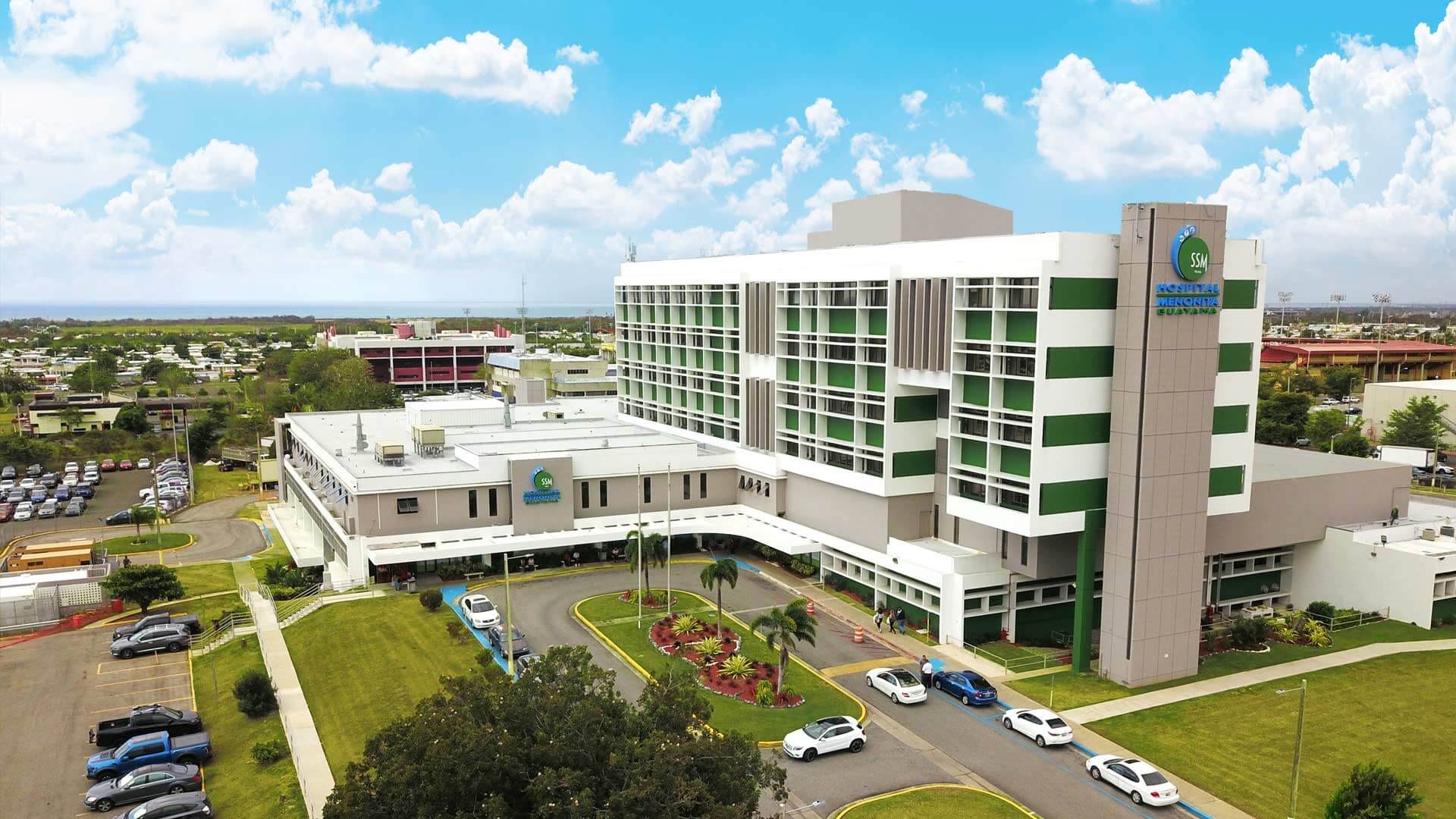
Hospital Menonita De Guayama, Inc. V. NLRB, 22-1163 (DC Circuit)
The D.C. Circuit, reconsidering its own prior decision after the Supreme Court vacated it in light of Loper Bright Enterprises v. Raimondo, struck down the National Labor Relations Board's "successor bar" rule as inconsistent with the NLRA.
The successor bar, adopted by the Board in UGL-UNICCO Service Co., bars any challenge to an incumbent union's majority status for up to one year after a business changes ownership, forcing a new employer to recognize and bargain with the union even if it has lost majority support among employees. The court had previously upheld the rule in Hospital Menonita I by deferring to the Board's judgment that the bar was a reasonable policy choice, relying heavily on the First Circuit's Chevron-based reasoning in NLRB v. Lily Transportation Corp. After the Supreme Court granted certiorari, vacated that judgment, and remanded for reconsideration in light of Loper Bright, the panel concluded it could no longer defer to the Board's interpretation of its own statutory authority and had to decide independently whether the bar was lawful.
Applying that independent review, the majority held the successor bar cannot be squared with the statute's text. Section 7 gives employees an unqualified right to choose whether and how to bargain collectively, and Section 9(a) conditions a union's status as exclusive representative on actual majority support. The bar overrides both guarantees by creating an irrebuttable presumption of majority support that no employer, employee, or rival union can challenge. The court also noted that Congress provided only one specific bar on such challenges, the one-year election bar following a certified election under Section 9(c)(3), suggesting the Board lacked authority to invent an additional, broader bar tied to successorship rather than certification.
The court rejected the Board's arguments that the rule was justified by its general policymaking authority, by industrial stability concerns, or by the Supreme Court's decision in Auciello Iron Works, Inc. v. NLRB, which addressed a narrower and rebuttable "contract bar" rather than an absolute prohibition on challenges. Because the Board had refused to consider the hospital's evidence that a majority of employees in each bargaining unit rejected the union, the court granted the hospital's petition for review, denied the Board's cross-petition for enforcement, and remanded the case.
A dissenting judge argued that the original panel's decision did not actually rest on Chevron deference but instead reflected the NLRA's own delegation of broad policymaking discretion to the Board, a principle he said Loper Bright preserved rather than eliminated, and that the original decision should therefore have been reinstated without further revision.
Significant Cases Cited
Loper Bright Enterprises v. Raimondo, 144 S. Ct. 2244 (2024): Overruled Chevron deference, holding courts must independently interpret statutes rather than defer to agency interpretations of their own statutory authority.
International Ladies' Garment Workers' Union v. NLRB, 366 U.S. 731 (1961): Held that an employer violates Section 7 rights by recognizing and bargaining with a union that lacks majority employee support.
NLRB v. Lily Transportation Corp., 853 F.3d 31 (1st Cir. 2017): Upheld the Board's successor bar rule by applying Chevron deference, reasoning it was a permissible construction of the NLRA.
Auciello Iron Works, Inc. v. NLRB, 517 U.S. 781 (1996): Upheld the Board's rebuttable "contract bar" presumption of union majority support, which could be overcome by evidence the union actually lacked majority support.
Fall River Dyeing & Finishing Corp. v. NLRB, 482 U.S. 27 (1987): Held that a Board rule is entitled to deference from courts only if it is rational and consistent with the Act.
Enright Seeding, Inc., 374 NLRB No. 142, 25-CA-210670 (Published Board Decision)
The Board dismissed a complaint alleging that a construction-industry subcontractor unlawfully refused to furnish information to a union, ruling on remand that the union's charge was untimely under Section 10(b) of the NLRA.
The case returned to the Board after the Eighth Circuit rejected its earlier finding that the employer, Enright Seeding, Inc., had a Section 9(a) bargaining relationship with the union, International Union of Operating Engineers, Local 150. The court held that contract language alone, without evidence that a majority of employees had actually designated the union as their representative, could not establish 9(a) status, and it remanded for the Board to consider whether the employer's obligations instead arose under Section 8(f), a provision unique to the construction industry that allows bargaining relationships without proof of majority support.
On remand, the Board found it did not need to resolve the Section 8(f) question because the union's underlying unfair labor practice charge was filed too late. The Board explained that when an employer completely repudiates a contract, the union must file a charge within six months of receiving clear and unequivocal notice of that repudiation, or the charge is time-barred even as to later contract violations. Here, the owner of Enright Seeding told a union organizer in August 2016 that the company had no contract with the union, and he maintained that position consistently over the following months, refusing to meet with union representatives or respond to grievance proceedings. The Board found this constituted clear and unequivocal notice of repudiation more than six months before the union filed its November 2017 charge, making the charge untimely regardless of whether the repudiation itself was lawful under Section 8(f) rules.
The Board rejected arguments from the General Counsel and the union that the employer remained bound because it could not lawfully repudiate an 8(f) agreement mid-term, explaining that the relevant question was not the lawfulness of the repudiation but whether the charge over it was timely filed. It also found irrelevant the employer's later entry into a settlement agreement, since that decision reflected litigation strategy rather than any ambiguity about its earlier repudiation.
Significant Cases Cited
Staunton Fuel & Material, 335 NLRB 717 (2001): Held that specific contract language can establish a union's Section 9(a) status if certain minimum requirements are met.
NLRB v. Enright Seeding, Inc., 109 F.4th 1012 (8th Cir. 2024): Held that contract language alone cannot establish a Section 9(a) relationship without actual evidence of majority employee support.
Vallow Floor Coverings, 335 NLRB 20 (2001): Held that the Section 10(b) limitations period for a repudiation charge begins running when the union receives clear and unequivocal notice of the repudiation.
A & L Underground, 302 NLRB 467 (1991): Held that the burden of proving clear and unequivocal notice of repudiation rests on the employer, and that the timeliness defense does not apply where the employer's conduct was ambiguous.
John Deklewa & Sons, 282 NLRB 1375 (1987): Established that Section 8(f) allows construction-industry employers and unions to form bargaining relationships without proof of majority support, and that such agreements cannot be repudiated before expiration absent a decertification election.
ESCNC D/B/a Eye Surgery Center of Northern California, 375 NLRB No. 1, 20-CA-358895 (Published Board Decision)
The Board granted the General Counsel's motion for summary judgment against ESCNC, LLC d/b/a Surgery Center of Northern California, finding the company unlawfully refused to bargain with Teamsters Local No. 150 after the union was certified as the exclusive bargaining representative of a unit of nurses, medical assistants, and other clinical and administrative staff at the company's Roseville facility.
The company had admitted refusing to recognize and bargain with the union and refusing to turn over requested information, but argued the certification itself was invalid because the underlying representation proceeding denied it due process and because the Board misapplied the law on community of interest and supervisory status under Section 2(11). The Board rejected these arguments, explaining that issues already raised and decided in a representation case cannot be relitigated in a subsequent unfair labor practice proceeding absent newly discovered evidence or special circumstances, neither of which the company offered. The Board found no basis to depart from that rule under the narrow exceptions recognized in Sub-Zero Freezer Co. and St. Francis Hospital.
The Board also rejected a series of constitutional and procedural affirmative defenses as unsupported bare assertions, including claims that Board proceedings violate the Fifth and Seventh Amendments, that removal protections for Board members and administrative law judges are unconstitutional, and that the agency's combined investigative, prosecutorial, and adjudicative functions violate due process. On the removal-protection argument, the Board noted the company had not shown any harm resulting from those protections, consistent with Collins v. Yellen.
On the merits, the Board found that most of the information the union requested, including personnel records, wage and benefit plans, job descriptions, and disciplinary records, was presumptively relevant to the union's representational duties and had to be furnished. It denied summary judgment only as to the union's request for employees' Social Security numbers, since that information is not presumptively relevant and the union had not shown why it needed it, and remanded that narrow issue to the Regional Director.
The Board ordered the company to bargain with the union on request, furnish the requested information (excluding Social Security numbers), and post a remedial notice to employees. It also extended the union's certification year to begin running from the date bargaining actually starts in good faith, consistent with Mar-Jac Poultry Co.
Significant Cases Cited
Pittsburgh Plate Glass Co. v. NLRB, 313 U.S. 146 (1941): Established that issues litigated or litigable in a representation proceeding cannot be relitigated in a subsequent unfair labor practice case absent newly discovered evidence or special circumstances.
Sub-Zero Freezer Co., 271 NLRB 47 (1984): One of a limited set of cases where the Board departed from the rule against relitigating representation issues in a refusal-to-bargain case.
St. Francis Hospital, 271 NLRB 948 (1984): Another limited exception where the Board reconsidered representation findings in a certification-testing case.
Collins v. Yellen, 594 U.S. 220 (2021): Held that a party challenging an officer's removal protections must show resulting harm to obtain relief.
Maple View Manor, 320 NLRB 1149 (1996): Held that employee Social Security numbers are not presumptively relevant and a union must separately establish their relevance to obtain them.