
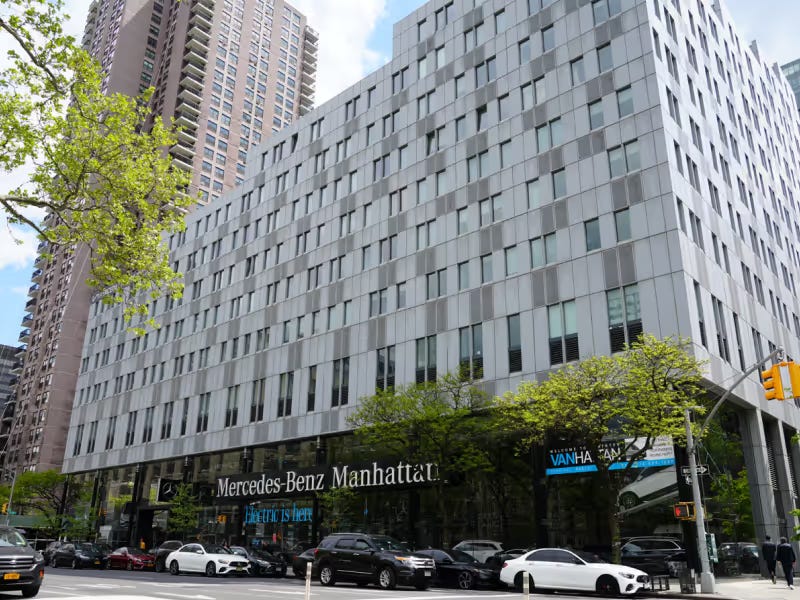
Mercedes-Benz Manhattan Inc., 02-RD-367095 (Unpublished Board Decision)
The Board denied both the union petitioner's and the employer's requests for review of an acting regional director's decision to hold a decertification petition in abeyance under the Board's blocking-charge rule. The Board found the requests raised no substantial issues warranting review, since the regional director had acted consistently with Section 103.20 of the Board's Rules and Regulations, which governs how pending unfair labor practice charges can pause processing of a representation petition.
Chairman Murphy and Member Mayer noted they were applying existing blocking-charge law for institutional reasons and took no position on whether that policy was correctly decided. Member Mayer added separately that current procedure requires regional directors to keep reassessing, as a charge and petition move forward, whether the charge still blocks the petition, and that a director may resume processing the petition if special circumstances arise or if employee free choice becomes possible despite pending unfair labor practice charges. He suggested the Board should consider whether its blocking-charge policy adequately accounts for how much time has passed since a petition was filed, and urged that unfair labor practice cases blocking an election be given priority.
SWCA, Incorporated D/B/a SWCA Environmental Consultants, 27-RM-359491 (Unpublished Board Decision)
The Board denied the Employer's request for review of a Regional Director's decision directing an election and certifying the Union as representative, finding the petition raised no substantial issues warranting review.
The Employer had argued that Assistant Project Archaeologists, Assistant Staff Archaeologists, and Staff Archaeologists were supervisors under Section 2(11) of the NLRA because they possessed authority to hire or effectively recommend hire. The Board agreed with the Regional Director's conclusion that the Employer failed to meet its burden, though it declined to adopt his reasoning that no evidence showed employees in these classifications participate in hiring at all. Instead, the Board found that even considering the Employer's evidence of historical and occasional phone screening of applicants, the Employer failed to show that these employees exercised independent judgment in hiring or recommending hire.
Member Mayer wrote separately to address a procedural issue. The Union had filed a Statement of Position (SOP) in this case after previously demanding recognition for the same unit in an earlier case, disclaiming interest after failing to timely serve its SOP there, then renewing its recognition demand nine days later. Member Mayer agreed the Regional Director correctly declined to preclude the Union from litigating the issues, since there was no evidence the Union had genuinely lost interest in representing the employees in the interim. He characterized the sequence as a maneuver to sidestep the preclusive effect that normally follows an untimely SOP, comparing it to a similar pattern in Detroit Education & Research. Member Mayer suggested the Board's rules should be amended to give regional directors discretion to accept late-filed SOPs where no prejudice is shown, noting the Board's general preference for resolving cases on the merits rather than by default.
Significant Cases Cited
Detroit Education & Research, 373 NLRB No. 15 (2024): A union sought dismissal of its petition after failing to timely serve its SOP, then refiled the petition the same day, illustrating a similar procedural maneuver to avoid preclusion.
Paolicelli, 335 NLRB 881, 882 (2001): The Board's established policy favors resolving cases on the merits rather than by default.
We Care Skilled Nursing Fremont, California, 32-UC-363158 (Unpublished Board Decision)
The Board denied review of a Regional Director’s decision dismissing a unit clarification petition filed by We Care Skilled Nursing in Fremont, California. The Board found the employer’s submission, though styled as a brief in support of exceptions, raised no substantial issues warranting review, and treated it as a request for review under Section 102.67(c) of the Board’s Rules and Regulations. The petition, filed against Service Employees International Union, Local 2015, remains dismissed.