
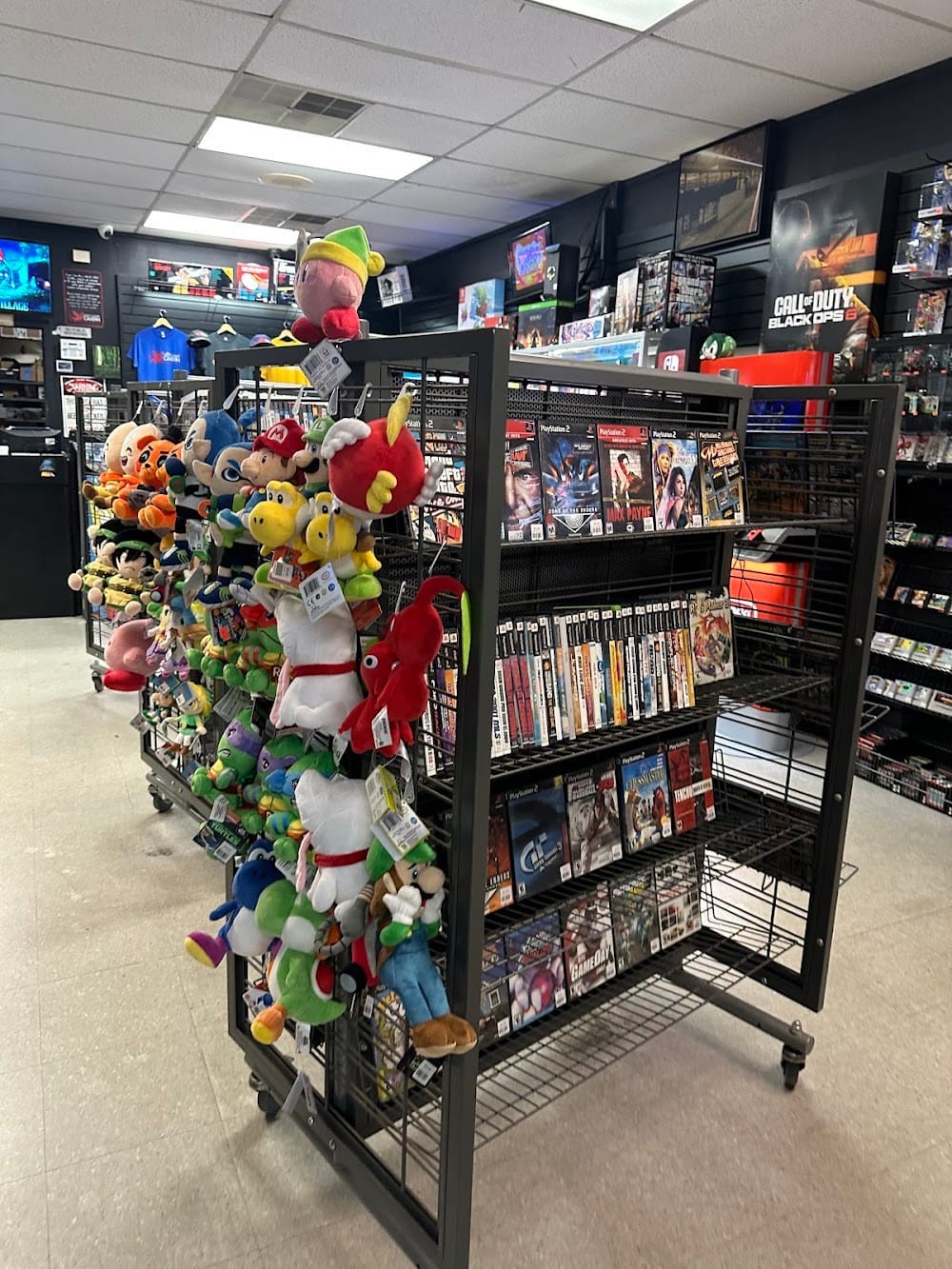
The Purple Eagle LLC D/B/a the Video Game Cavern., JD-44-16, 10-CA-343133 (ALJ Decision)
An administrative law judge found that a South Carolina video game retailer violated the NLRA by maintaining an overly broad nondisclosure agreement and by firing an employee who discussed a manager's pay and job performance with coworkers.
The retailer, which buys, sells, and trades video games, required all employees to sign a nondisclosure agreement after a new owner took over in early 2024. The agreement barred workers from disclosing "confidential information," a term defined to include information about the company's employees, including their salaries, strengths, weaknesses, and skills. An employee named Romulus Lofink signed the agreement along with everyone else.
Lofink had grown frustrated with the store's general manager, whom he believed was performing poorly and, he learned, was being paid considerably more than expected. Over several months, Lofink discussed these concerns regularly with coworkers, sometimes in front of an assistant manager who was a company supervisor, and he also raised the issues directly with the general manager and the owner. In May 2024, the owner learned from customers that Lofink had discussed the manager's salary and criticized his work while in the store. After a brief investigation that did not include interviewing Lofink, the owner confronted him, cited a violation of the nondisclosure agreement, and gave him the choice to resign or be fired. Lofink initially said he would resign but returned the next day and asked to be discharged instead, which the company did, citing the nondisclosure agreement violation in his termination letter.
The judge applied the framework from Stericycle, Inc., which asks whether a work rule could reasonably be read by an employee to restrict activity protected by Section 7 of the NLRA, such as discussing wages or working conditions with coworkers or a union. The judge found the nondisclosure agreement's ban on disclosing employees' salaries, strengths, weaknesses, and skills was exactly this kind of overly broad rule, since it contained no carve-out for NLRA-protected activity. The employer's stated interest in protecting confidential business information from competitors did not excuse the lack of narrower tailoring.
Because the agreement itself was unlawful, the judge found under Continental Group, Inc. that firing Lofink for violating it was also unlawful. The judge further found, applying the Wright Line causation test, that Lofink's discharge was independently unlawful retaliation for protected concerted activity, since he had regularly discussed the manager's performance and pay with coworkers with the goal of improving their working conditions, the company knew about these discussions, and animus toward that activity motivated the firing. The judge rejected the company's arguments that Lofink's statements were false or that his language was so disparaging as to lose the Act's protections, noting the company never proved his statements about the manager's salary were false and that use of profanity, standing alone, does not strip an employee of protection.
The judge ordered the company to rescind the nondisclosure agreement, reinstate Lofink, and make him whole for lost pay and benefits, plus post a notice to employees.
Significant Cases Cited
Stericycle, Inc., 372 NLRB No. 113 (2023): Set the standard for evaluating whether a work rule is facially unlawful, holding a rule is presumptively unlawful if an employee could reasonably read it to restrict Section 7 activity, unless the employer shows a legitimate interest that cannot be achieved through narrower tailoring.
Wright Line, 251 NLRB 1083 (1980): Established the burden-shifting causation test for cases alleging that an employer's action was motivated by protected activity.
Continental Group, Inc., 357 NLRB 409 (2011): Held that discipline imposed under an unlawful work rule itself violates the Act when the employee's conduct was protected or implicated Section 7 concerns.
Pier Sixty, LLC, 362 NLRB 505 (2015): Held that an employee's use of profanity, including toward a supervisor, does not by itself remove the Act's protection.
Valley Hospital Medical Center, 351 NLRB 1250 (2007): Held that an employee's false statements lose the Act's protection only if knowingly false or made with reckless disregard for their truth.
Custom Sign Consultants, JD-42-26, 13-CA-343009 (ALJ Decision)
Kierstyn worked for Custom Sign Consultants, a Chicago sign fabrication company, on two separate occasions, first from March 2022 to September 2023 and then again from December 2023 to May 2024. After returning in his second stint, he began discussing wages with coworkers in the spring of 2024, telling them what he earned and encouraging some who were paid less to ask for raises or push for job duties that matched their pay. Around the same time, the company's owner, Al Frapolli, announced plans to cut employees' hours by five hours a week, which spurred Kierstyn and his coworkers to talk more about whether the cuts were fair given their pay.
On May 17, 2024, the company's shop and production manager, Felix Ortiz, told Kierstyn in front of coworkers that he was no longer allowed to discuss wages. Kierstyn kept talking about wages anyway over the following days. On May 23, Frapolli and office manager Lesley Casas called Kierstyn in and told him he was being discharged, citing "unsatisfactory workmanship" in his termination letter. Kierstyn immediately followed up with Frapolli, who told him he was tired of Kierstyn "acting like a union rep" and "boasting" about his wages.
The administrative law judge, Andrew Gollin, found that Ortiz's instruction not to discuss wages violated Section 8(a)(1) of the NLRA. Although the judge concluded the General Counsel failed to prove Ortiz was a formal statutory supervisor (the evidence on his authority to hire, assign, or direct work was too thin), the judge found Ortiz was nonetheless an agent of the company under Section 2(13) because employees reasonably believed he spoke for management, given his role relaying instructions between Frapolli and the production staff.
On the discharge, the judge applied the Board's Wright Line burden-shifting framework and found the General Counsel proved wage discussions were a motivating factor in Kierstyn's firing. Wage discussions are "inherently concerted" protected activity under the Act regardless of intent to spur group action, and the judge found ample evidence of company knowledge and animus: Frapolli's own statement about Kierstyn "acting like a union rep," the close timing between the wage talk and the firing, shifting and undocumented justifications for the discharge (the company had never disciplined Kierstyn despite dozens of recorded late arrivals, unlike a comparator employee who received formal warnings), and inconsistent testimony about when the decision to fire him was actually made. The company failed to show it would have fired Kierstyn regardless of the wage discussions, so the judge ordered reinstatement, backpay, and related remedies, including compensation for tax consequences and pecuniary harms under Thryv.
Significant Cases Cited
North Mountain Foothills Apartments, LLC, 373 NLRB No. 26 (2024): Held that wage discussions among employees are "inherently concerted" and protected regardless of whether they are intended to induce group action, and that a supervisor's statement barring wage discussion violates Section 8(a)(1).
Wright Line, 251 NLRB 1083 (1980): Established the burden-shifting framework for determining whether an adverse employment action was motivated by protected activity.
Oakwood Healthcare, Inc., 348 NLRB 686 (2006): Set out the standard for supervisory status under Section 2(11), requiring detailed evidence of independent judgment in exercising authority such as hiring, assigning, or disciplining.
Pan-Oston Co., 336 NLRB 305 (2001): Held that an employee can be an agent of the employer under Section 2(13) if employees would reasonably believe the employee was speaking or acting on management's behalf.
Tschiggfrie Properties Ltd, 368 NLRB No. 120 (2019): Held that discriminatory motive (animus) may be proven through circumstantial evidence, including suspicious timing and shifting justifications for an adverse action.
Sona Senior Living IL 2, LLC, 13-RD-383878 (Regional Election Decision)
The Regional Director found that the Employer became a Burns successor when it took over the senior living facility and recognized the incumbent Union. Because the Employer set its own initial terms rather than adopting the predecessor's terms wholesale, the applicable reasonable period for bargaining under UGL-UNICCO Service Co. ran between six months and a year from the parties' first bargaining session, based on the multi-factor test that examines the complexity of the issues, the number of sessions, negotiation progress, and whether an impasse exists.
The Employer argued the petition should be allowed to proceed because the Union dragged its feet on scheduling actual bargaining dates, wasting the reasonable period's protection. The Regional Director rejected this, relying on the "inexcusable procrastination or other manifestations of bad faith" standard from Dominguez Valley Hospital. Reviewing the email record between the parties, the decision found the Union had reached out to the Employer immediately upon learning of the transition, and that the parties exchanged frequent, cordial communications about facility access and scheduling logistics even though no formal bargaining session was ever set. The Regional Director distinguished this case favorably from American Medical Response Ambulance Service, noting the Union here was even more responsive than the union in that prior case, which the Board had also found did not engage in inexcusable procrastination.
The decision also noted that the Employer never proposed its own bargaining dates or complained about the pace of scheduling, citing Virginia Mason Medical Center for the proposition that such employer passivity undercuts a procrastination argument. Because bargaining had not yet begun eight months after the transition, the six-month-to-one-year reasonable period had not yet expired when the decertification petition was filed. The Regional Director also rejected the Employer's argument that the Supreme Court's Loper Bright Enterprises decision undermined the successor bar doctrine, explaining that Loper Bright addresses only the standard of judicial review courts apply to agency interpretations and doesn't disturb the Regional Director's obligation to follow existing Board precedent. The petition was dismissed.
Significant Cases Cited
UGL-UNICCO Service Co., 357 NLRB 801 (2011): Establishes that a successor employer's bargaining obligation is protected by a "reasonable period" of six months to a year, with a shorter fixed six-month period applying only if the employer adopts the predecessor's existing terms without unilateral changes.
St. Elizabeth Manor, Inc., 329 NLRB 341 (1999): Holds that after a successor employer recognizes an incumbent union, election petitions are barred for a reasonable period of time to allow bargaining to occur.
Dominguez Valley Hospital, 287 NLRB 149 (1987): Establishes that a union's delay in requesting bargaining defeats the successor bar only if it amounts to inexcusable procrastination or other manifestations of bad faith.
American Medical Response Ambulance Service, 28-RD-294046 (2022): Found that a seven-month delay by an incumbent union in requesting bargaining after a successorship did not constitute inexcusable procrastination sufficient to defeat the successor bar.
Virginia Mason Medical Center, 350 NLRB 923 (2007): Notes that an employer's failure to complain about bargaining delays or propose its own dates weighs against a claim that the union's delay was unreasonable.
V2X, Inc., 31-RC-383401 (Regional Election Decision)
The Regional Director for Region 31 directed an election among twelve Training Analysis Feedback Facility Leads at V2X's Fort Irwin, California operation, rejecting the employer's argument that these lead employees are statutory supervisors excluded from NLRA protection.
V2X provides training-exercise support to the military at the National Training Center, and its TAFF teams monitor and analyze training operations for Army units passing through the base. Each team is headed by a TAFF Lead who oversees several TAFF Specialists. The company argued that these Leads exercise supervisory authority under Section 2(11) of the NLRA by assigning work, disciplining employees, responsibly directing their work, and promoting them to a "Crew Lead" role. Because Section 2(11)'s supervisory functions are listed in the disjunctive, proof of any single one would have been enough to exclude the Leads from the bargaining unit, but the Regional Director found the employer's evidence too vague and conflicting to establish any of them.
On assignment authority, the record showed TAFF Leads build shift schedules within fixed staffing and hour parameters set by the company, and one Lead testified he simply rotates specialists through workstations because "everybody's able to do the exact same job." That kind of rotational, availability-based scheduling has repeatedly been found not to involve the independent judgment required for supervisory status.
On discipline, the evidence was inconsistent. While TAFF Leads fill out disciplinary forms following a progressive policy set out in the collective bargaining agreement, their manager reviews each write-up and can override it, and testimony conflicted over whether Leads' recommendations are followed without further review. The Regional Director found this insufficient to show Leads discipline, or effectively recommend discipline, independent of oversight.
On direction of work, the decision found no evidence that Leads face any adverse consequences tied to their specialists' performance, a requirement for "responsible direction" under Board precedent. And on promotion, the Regional Director concluded that the informal, unpaperworked designation of a "Crew Lead," which carries only a modest pay bump and minimal added duties, is better understood as an added task than a promotion, and in any event involves no meaningful exercise of judgment since the Lead who testified chose based on straightforward seniority and observed competence.
Because the employer failed to carry its burden on any of the disputed indicia, the Regional Director found the twelve-person TAFF Lead unit appropriate and directed a mail-ballot election, to be conducted between early August and a ballot count on August 25, 2026.
Significant Cases Cited
NLRB v. Kentucky River Community Care, Inc., 532 U.S. 706 (2001): Established that Section 2(11)'s supervisory functions are listed in the disjunctive, so possessing any one function with independent judgment confers supervisory status, and that the party asserting supervisory status bears the burden of proof.
Oakwood Healthcare, Inc., 348 NLRB 686 (2006): Set out the Board's framework defining "assign," "responsibly to direct," and "independent judgment" under Section 2(11).
Golden Crest Healthcare Center, 348 NLRB 727 (2006): Held that generalized or conclusory testimony cannot establish supervisory status; specific evidence and examples are required.
Croft Metals, Inc., 348 NLRB 717 (2006): Found that following a pre-established rotational or delivery schedule in directing employees does not involve independent judgment.
Lucky Cab Co., 360 NLRB 271 (2014): Held that disciplinary authority only confers supervisory status if it leads to personnel action without independent investigation or review by other management.
Holaday-Parks-Fabricators, Inc. D/B/a Holaday-Parks, Inc., 19-RD-388539 (Regional Election Decision)
A regional director has directed a mail-ballot decertification election for a small group of technicians at Holaday-Parks, rejecting the union's argument that the group's bargaining unit had already merged into a larger, pre-existing unit represented by the same union.
The dispute arose because Holaday-Parks had two groups of union-represented employees: an "existing unit" covered since 2023 by a Standard Form of Union Agreement (SFUA) with the International Association of Sheet Metal, Air, Rail & Transportation Workers, Local 55, and a separate "certified unit" of Technicians and Specialists that the union won through a 2024 election. In 2025, after a grievance over non-unit employees performing unit work and an unfair labor practice charge, the union and employer signed a memorandum of understanding (MOU) that brought the certified unit's employees under the terms of the SFUA. When an employee in the certified unit later filed a decertification petition, the union argued that the MOU had effectively merged the certified unit into the larger existing unit, meaning the certified unit no longer existed as a separate, decertifiable entity.
The regional director disagreed, applying the Board's "unequivocal manifestation of intent" standard for finding a merger of bargaining units. Under that standard, established in cases like American Can Co. and reaffirmed in NBC Universal Media, LLC, a party asserting that units have merged must show clear, mutual intent by both the union and the employer to combine them, not just evidence that a shared contract covers both groups' wages and working conditions.
The regional director found that the SFUA itself contains no unit recognition or unit description language, only a description of covered work, so it could not by itself establish an intent to merge units. The MOU, in turn, stated that the certified unit's employees would be covered by the terms of the SFUA, but the director read this as addressing wages and working conditions rather than combining the two units into one. Notably, the MOU explicitly referenced the certified unit's prior election and certification, which the director found reinforced that the certified unit continued to exist as a distinct unit rather than being absorbed into the existing one. The director also noted that when the union originally petitioned for the certified unit in 2024, it sought a stand-alone unit rather than asking to add those employees to the existing unit, further undercutting the merger claim.
Because the union, which bore the burden of proof, failed to show the required unequivocal intent to merge, the director held that the certified unit remained the appropriate unit for decertification purposes and directed a mail-ballot election among the roughly five employees in that unit for July and August 2026.
Significant Cases Cited
NBC Universal Media, LLC, 369 NLRB No. 134 (2020): Reaffirmed that a party alleging a merger of bargaining units must show an "unequivocal manifestation of intent" to merge, based on mutual intent as shown by contract language and bargaining history, and rejected a more holistic "course of conduct" approach.
American Can Co., 109 NLRB 1284 (1954): Established the "unequivocal manifestation of intent" standard for finding that separate bargaining units have merged.
Hygrade Food Products Corp., 85 NLRB 841 (1949): Found no unequivocal intent to merge local plant units where the record only showed the parties negotiated a master agreement for convenience.
Wisconsin Bell, 283 NLRB 1165 (1987): Found a merger had occurred where the union and employer deleted contract language referring to "separate bargaining units" and specified that newly certified employee groups would be included in the overall unit.
Campbell Soup Co., 111 NLRB 234 (1955): Established the general rule that a decertification election must be held in a unit coextensive with the existing certified or recognized unit, since Congress made no provision for decertifying only part of such a unit.
Regal Cinemas, Inc., 19-UC-360345 (Unpublished Board Decision)
Assistant Managers at a Regal Cinemas location lack the authority to discipline employees, the Board found in denying the Employer's request for review of a Regional Director's decision clarifying the bargaining unit represented by Teamsters Local Union 690.
The dispute centered on whether the theater's Assistant Managers exercise genuine disciplinary authority under Section 2(11) of the NLRA, which would make them supervisors excluded from the bargaining unit. The Regional Director had concluded they do not, and the Board agreed that the Employer raised no substantial issues warranting review.
Central to the ruling was the Employer's own progressive discipline policy, which by its own terms allows managers to skip steps or repeat verbal counselings at their discretion. General Manager Justin Powell testified that employees can receive multiple counselings for the same or different infractions before advancing to a second step of formal discipline. Because the policy expressly permits managers to bypass or repeat its stages, the Board found the Employer does not actually follow a progressive disciplinary system, consistent with precedent holding that employers bear the burden of proving such a policy exists. Without a genuine progressive system in place, the verbal and written counselings issued by Assistant Managers do not amount to job-affecting discipline or carry effective recommendations for discipline. The Board also agreed with the Regional Director that the Employer failed to show Assistant Managers exercise independent judgment in disciplinary matters, a separate requirement for supervisory status.
Member Mayer wrote separately to voice disagreement with part of the reasoning. He argued it was unreasonable to discount a manager's authority to issue verbal warnings simply because the employer reserves the right to skip ahead to more severe discipline, including immediate discharge, in serious cases like an assault on a coworker. In his view, tying supervisory status to a rigid, inflexible disciplinary sequence conflicts with how discipline actually works in practice and with Congress's intent in defining supervisors under the Act. Despite this disagreement, Mayer concurred in the result, agreeing that under existing Board precedent the Employer had not shown the Assistant Managers exercise independent judgment.
The Board separately rejected the Employer's argument that the proceeding was invalid because the removal protections shielding Board members from at-will discharge are unconstitutional. Citing recent precedent, the Board noted that the Employer had not shown it suffered any actual harm from those removal protections, a threshold requirement for such a challenge to succeed regardless of its constitutional merits.
Significant Cases Cited
Veolia Transportation Services, 363 NLRB 902 (2016): Employers bear the burden of proving the existence of a progressive discipline policy when relying on it to establish supervisory authority.
Republican Co., 361 NLRB 93 (2014): Reinforces that an employer asserting a progressive discipline policy must actually prove the policy exists and is followed.
Ohio Masonic Home, 295 NLRB 390 (1989): In the absence of a genuine progressive discipline policy, verbal and written counselings do not constitute job-affecting discipline sufficient to confer supervisory status.
Progressive Transportation Services, 340 NLRB 1044 (2003): A disciplinary system need not be rigid and inflexible for the discipline involved to be supervisory, so long as the discipline has the real potential to affect employment.
K & R Contractors, LLC v. Keene, 86 F.4th 135 (4th Cir. 2023): A party challenging the constitutionality of removal protections must show actual harm resulting from those protections, regardless of the underlying constitutional question.
Montefiore Nyack Hospital, 02-RC-349294 (Unpublished Board Decision)
The RN care managers must be given the opportunity to decide whether they want to join a preexisting bargaining unit at Montefiore Nyack Hospital, the Board ruled, rejecting the Employer's request to overturn a regional director's decision ordering a self-determination election.
The Board found that the regional director had properly applied Warner-Lambert Co. in directing the election, agreeing that the RN care managers form an identifiable, distinct segment of employees. Beyond the reasoning already given by the regional director, the Board pointed to additional facts supporting that conclusion: the RN care managers hold different licensure that lets them complete different state-required discharge forms, and they earn significantly higher salaries than the Social Worker care managers who already work in the unit. The Board rejected the Employer's reliance on American Steel Construction, finding that decision inapplicable here. It also found that the petitioned-for RN care managers share a community of interest with the existing unit because both groups consist of registered nurses falling under the same category of the Board's Health Care Rule, citing St. Vincent Charity Medical Center. Given that finding, the Board said it did not need to reach the regional director's separate community-of-interest analysis.
On the question of supervisory status, the Board agreed the Employer failed to show that RN care managers assign significant duties to care management assistants or bedside RNs using independent judgment. Because each RN care manager is paired with one care management assistant and each patient with one bedside RN, and those two roles have distinct duties, there was no real choice involved in assigning work, only one obvious option, citing Oakwood Healthcare, Inc.
The Board also upheld the finding that the RN care managers are not managerial employees. The Employer, who bore the burden of proof, pointed to unspecified internal policies governing the RN care managers' work but never produced those policies or explained what they required, nor did it show through specific examples that the RN care managers exercised independent judgment beyond those policies, as required under Wolf Creek Nuclear Operating Corp.
The Board declined to consider the Employer's argument that it lacked adequate time to prepare witnesses after the Petitioner amended its petition, since the Employer never raised that issue before the regional director and the rules bar new arguments on review. It also rejected, citing its recent decision in Satellite Healthcare (Santa Rosa), the Employer's claim that the regional director lacked authority to direct or certify an election while the Board itself lacked a quorum. Finally, the Board rejected the Employer's constitutional challenge to its own removal protections, agreeing with the regional director that the Employer had shown no actual harm from those protections, citing Winco Holdings, Inc. and the Fourth Circuit's decision in K & R Contractors, LLC v. Keene.
Significant Cases Cited
Warner-Lambert Co., 298 NLRB 993 (1990): Sets the standard for determining whether a group of employees is an identifiable, distinct segment eligible for a self-determination election to join an existing unit.
American Steel Construction, 372 NLRB No. 23 (2022): Addresses the Board's standard for determining whether a petitioned-for unit is appropriate, found inapplicable to self-determination election disputes here.
St. Vincent Charity Medical Center, 357 NLRB 854 (2011): Held that employees falling under the same Health Care Rule category share a community of interest for purposes of a self-determination election.
Oakwood Healthcare, Inc., 348 NLRB 686 (2006): Establishes the framework for determining supervisory status based on the use of independent judgment in assigning work.
Wolf Creek Nuclear Operating Corp., 364 NLRB 1619 (2016): Places the burden on the party asserting managerial status to show, with specific examples, the exercise of independent judgment beyond established policies.