
Os-Db-Jv-2, LLC, 374 NLRB No. 115, 12-CA-339997 (Published Board Decision)
The Board affirmed an ALJ decision finding that a Puerto Rico janitorial contractor violated Section 8(a)(5) of the NLRA by refusing to furnish — and unreasonably delaying in furnishing — information requested by the union representing maintenance workers at three Veterans Administration facilities.
The union requested payroll records, work schedules, and holiday, vacation, and sick-leave data going back two to three years, largely predating the parties’ first collective bargaining agreement, which took effect June 23, 2023. The employer largely stonewalled, referring the union to CBA provisions and asking the union to justify why pre-contract data was still relevant.
The Board, affirming the ALJ, rejected that argument in a key opening footnote. The mere existence of the CBA, which was not even in the record, was insufficient to rebut the presumptive relevance of the requested information. Pre-contract employment data can establish terms and conditions that remain relevant during the life of a contract, and it can be relevant to whether the employer is currently violating the agreement. The Board also noted that because the employer refused everything — including records from the eight months the contract had already been in effect — it could not selectively invoke the CBA as a relevance shield. Under Keauhou Beach Hotel, employers must comply with overbroad requests to the extent they encompass relevant information.
The Board also affirmed the ALJ’s finding that the employer’s eight-week delay in simply informing the union that a VA-dependent pay raise had not yet been disbursed was an independent violation. The ALJ applied the multi-factor timeliness standard from TDY Industries and Safeway and found no justification for the delay, citing a line of decisions including Linwood Care Center and Monmouth Care Center holding that unreasonable delay is as much a violation as outright refusal.
The employer’s reliance on an unpublished ALJ decision, American Medical Response Ambulance Service, was dispatched by the ALJ on multiple grounds: the facts were distinguishable, the employer there had actually provided years of responsive data, and because no exceptions were filed, the decision carried no precedential weight.
The Board modified the ALJ’s order to use standard remedial language, and declined to adopt the General Counsel’s request for a remedy waiving contractual grievance deadlines, agreeing with the ALJ that such relief was not warranted.
Significant Cases Cited
Monmouth Care Center, 354 NLRB 11 (2009): Established that unreasonable delay in furnishing requested information constitutes a violation of Section 8(a)(5) to the same extent as an outright refusal.
Linwood Care Center, 367 NLRB No. 14 (2018): Found a six-week delay in providing wage increase information unreasonable where the information was not complex and the employer offered no justification.
TDY Industries, LLC, 369 NLRB No. 128 (2020): Set out the multi-factor test for evaluating whether an employer provided requested information in a timely manner.
Prime Healthcare Services, 357 NLRB 653 (2011): Held that information about employment practices predating a contract can be relevant to establishing terms and conditions of employment while the contract is in effect.
Keauhou Beach Hotel, 298 NLRB 702 (1990): Required employers to comply with overbroad information requests to the extent they encompass information that is relevant.
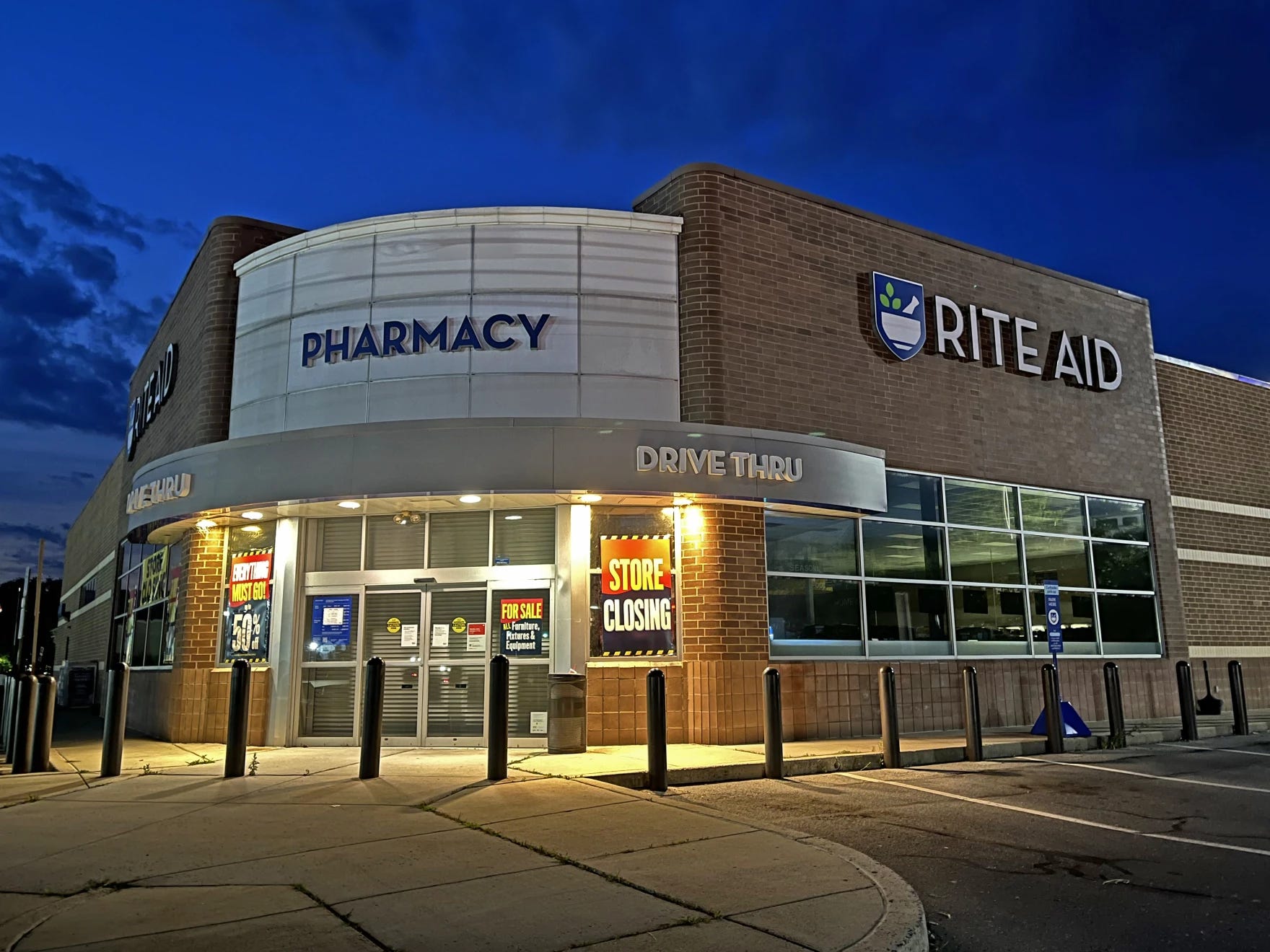
Thrifty Payless, Inc. Dba Rite Aid, 373 NLRB No. 65, 20-CA-255252 (Published Board Decision)
The Board has issued a supplemental decision in a case involving Rite Aid and United Food and Commercial Workers Local 8-Golden State, remanding the matter to an ALJ following a D.C. Circuit ruling that partially overturned the Board’s original remedy.
The underlying violation is not in dispute. Both the Board and the D.C. Circuit agreed that Rite Aid unlawfully implemented a successor contract without first bargaining to an overall impasse, in violation of Section 8(a)(5) and (1) of the NLRA. Among the unilateral changes Rite Aid made was replacing the union’s health and welfare trust fund with a company-sponsored plan and stopping contributions to the fund as of January 1, 2020.
The question on remand is narrower: whether Rite Aid must pay the full amount of missed fund contributions, or whether that figure should be reduced to account for benefits it actually provided to employees through its own plan during the same period. The D.C. Circuit, applying its own circuit precedent from Grondorf, Field, Black & Co. v. NLRB, held that requiring full back-contributions without accounting for those substitute benefits could result in an improper windfall to the fund. The court sent the case back to allow Rite Aid to make that showing. Any disputes over the specific dollar calculations are to be resolved in a compliance proceeding.
The Board accepted the remand, treating the circuit court’s opinion as the law of the case, and returned the matter to ALJ Dickie Montemayor for further proceedings, including reopening the record if necessary. Notably, Rite Aid and the union had jointly requested that the case be held in abeyance pending a potential settlement — complicated by Rite Aid’s bankruptcy proceedings — but the Board denied that request, leaving the question of any abeyance to be argued before the judge.
Significant Cases Cited
Thrifty Payless, Inc. d/b/a Rite Aid, 371 NLRB No. 124 (2022): The original Board decision finding that Rite Aid violated the NLRA by implementing contract terms without bargaining to impasse.
Thrifty Payless, Inc. d/b/a Rite Aid v. NLRB, 86 F.4th 909 (D.C. Cir. 2023): The D.C. Circuit opinion affirming the unfair labor practice finding but remanding on the remedy, holding that Rite Aid must have an opportunity to show its back-contribution liability should be reduced.
Grondorf, Field, Black & Co. v. NLRB, 107 F.3d 882 (D.C. Cir. 1997): The in-circuit precedent applied by the D.C. Circuit establishing that fund contribution obligations may be reduced where an employer provided substitute benefits, to avoid an improper windfall.
Freedom Electrical Construction LLC, 373 NLRB No. 61, 03-CA-323884 (Published Board Decision)
The Board entered a default judgment against Freedom Electrical Construction LLC, a Newfane, New York electrical contractor, after the company failed to answer a complaint filed by IBEW Local 237 or respond to subsequent notices. Under Section 102.20 of the Board’s Rules, unanswered complaint allegations are deemed admitted, and because the company also failed to raise the Section 10(b) six-month statute of limitations as an affirmative defense, that defense was waived.
The admitted facts establish that Freedom Electrical signed a Letter of Assent in October 2019 binding it to successive collective bargaining agreements between the Union and the Niagara Division of the National Electrical Contractors Association — most recently the 2022–2026 agreement. Since about summer 2021, the company stopped applying the contractual wage and fringe benefit provisions to covered unit employees, violating Section 8(a)(5) and (1) of the NLRA.
The Board ordered Freedom Electrical to honor the 2022–2026 agreement, make employees whole for lost wages and benefits with interest compounded daily, contribute any delinquent fringe benefit fund payments, reimburse employees for expenses caused by missing contributions, and compensate employees for adverse tax consequences from lump-sum backpay awards.
Significant Cases Cited
Ogle Protection Service, 183 NLRB 682 (1970): Established the standard formula for computing make-whole backpay remedies in NLRB cases.
New Horizons, 283 NLRB 1173 (1987): Prescribed the interest rate to be applied to backpay awards in Board remedial orders.
Kentucky River Medical Center, 356 NLRB 6 (2010): Required that interest on backpay be compounded daily rather than annually.
AdvoServ of New Jersey, Inc., 363 NLRB 1324 (2016): Required respondents to compensate employees for adverse tax consequences of lump-sum backpay awards and to file reports allocating awards to appropriate calendar years.
Merryweather Optical Co., 240 NLRB 1213 (1979): Established the standard for calculating delinquent fringe benefit fund contributions owed as part of a make-whole remedy.
Nitro Construction Services, 374 NLRB No. 120, 09-CA-313196 (Published Board Decision)
The Board affirmed ALJ Geoffrey Carter’s finding that Nitro Construction Services, a West Virginia electrical subcontractor, violated Section 8(a)(3) and (1) of the NLRA when it laid off two union electricians, Michael Bishop and Robert Darren Brumfield, from a construction project in late December 2022. The Board also affirmed the ALJ’s dismissal of related refusal-to-hire allegations involving two subsequent projects in 2023.
The protected activity at issue was twofold. First, Brumfield confronted superintendent Jason Dillard about returning to work after a COVID-19 infection, noting that the company had recently sent Bishop home based on mere suspicion of illness — a challenge the Board characterized as protected concerted activity raising workplace health and safety concerns. Second, Bishop and Brumfield jointly invoked the collective-bargaining agreement to assert Bishop’s entitlement to four hours of “show-up pay” for a day he had been sent home early, conduct the Board clarified as protected activity under Interboro Contractors and NLRB v. City Disposal Systems. Both of these activities occurred within one to two days before Dillard notified the union of the two-person layoff.
The Board’s most significant analytical work appears in the opening footnotes. There, the Board addressed the supervisory status of foreman Barker, whose knowledge of the protected activity was imputed to Dillard as decisionmaker. The Board noted that supervisory status under Oakwood Healthcare is established by possession of at least one statutory indicia — here, the authority to assign work — and that the company’s failure to except to that finding foreclosed argument on the point. The Board also confirmed that the employer’s failure to sustain its Wright Line defense was properly grounded in pretext: Dillard’s cost-savings rationale lacked any corroborating documentation, was inconsistent with his selection of Brumfield over other similarly situated group-two referrals, and was undercut by the company’s request for ten additional electricians just nine days after the layoffs.
On the refusal-to-hire claims, the ALJ found — and the Board affirmed — that the General Counsel failed to establish animus on the part of project manager Mike Price, who declined to hire Brumfield for the 2023 Mountaineer and Nucor projects because he did not personally know Brumfield. The ALJ found no evidence that Price had any knowledge of the PureCycle events or communicated with Dillard, and the General Counsel failed to rebut Price’s facially neutral preference for familiar workers under FES.
The Board noted, but declined to resolve, a reserved question over the Thryv expanded-remedy framework, with Chairman Murphy and Member Mayer flagging openness to reconsideration in a future case while agreeing to apply it here in the absence of a three-member majority to overrule it.
Significant Cases Cited
Wright Line, 251 NLRB 1083 (1980): Establishes the burden-shifting framework for mixed-motive discrimination cases under Section 8(a)(3), requiring the General Counsel to show protected activity was a motivating factor before the burden shifts to the employer to prove it would have taken the same action regardless.
Oakwood Healthcare, Inc., 348 NLRB 686 (2006): Sets out the three-part test for statutory supervisory status under Section 2(11) of the NLRA, holding that possession of even one enumerated indicia of authority, exercised with independent judgment in the employer’s interest, is sufficient.
FES, 331 NLRB 9 (2000): Establishes the General Counsel’s initial burden in discriminatory refusal-to-hire cases, requiring proof that the employer was hiring, the applicant was qualified, and antiunion animus contributed to the rejection.
Interboro Contractors, Inc., 157 NLRB 1295 (1966): Holds that an individual employee’s invocation of rights under a collective-bargaining agreement constitutes protected concerted activity under Section 7 of the NLRA.
Thryv, Inc., 372 NLRB No. 22 (2022): Expanded the Board’s standard remedy to require employers to compensate employees for all direct and foreseeable pecuniary harms resulting from unlawful conduct, beyond traditional backpay.