
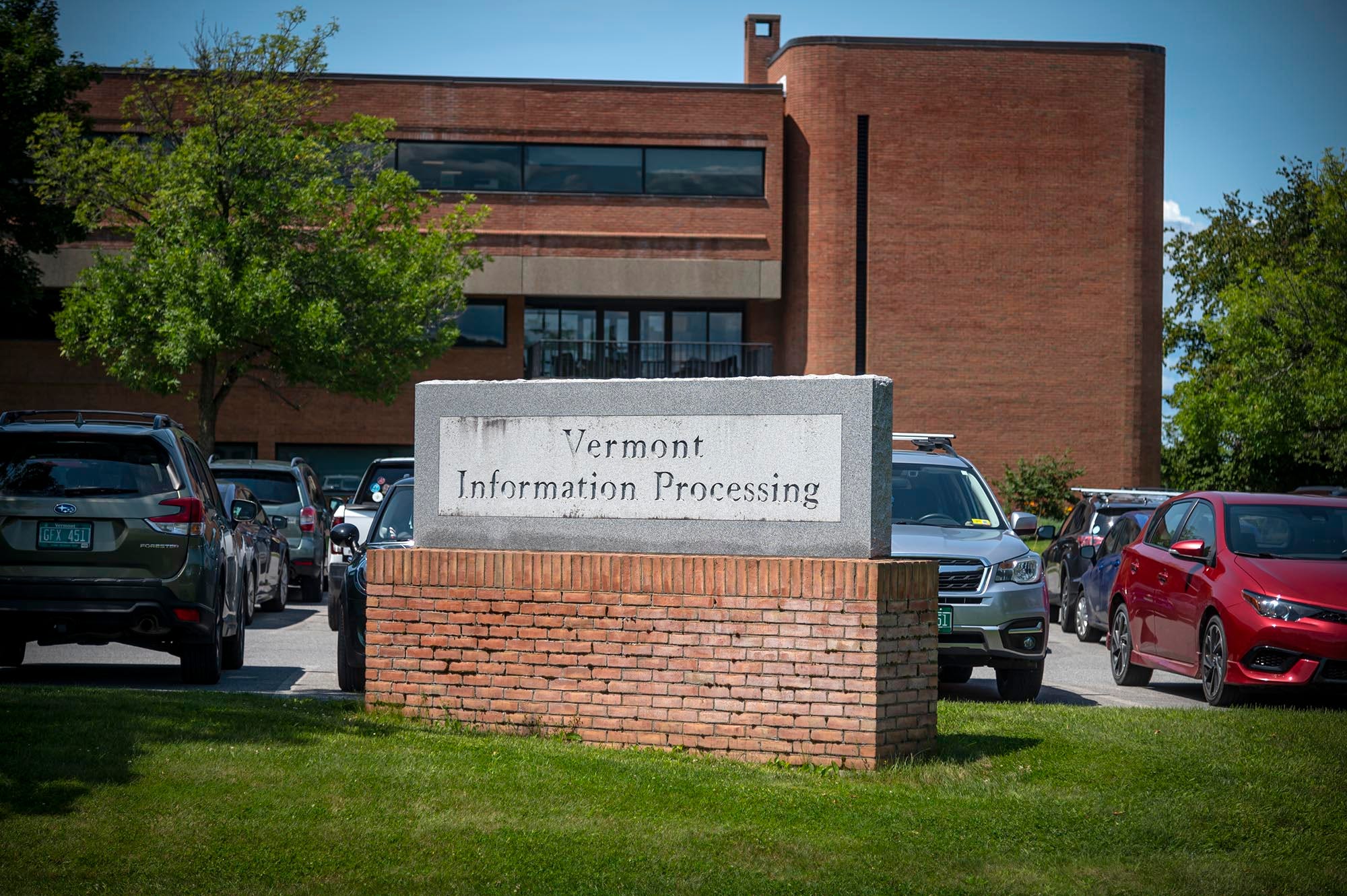
Vermont Information Processing, Inc. v. NLRB, 24-1360, (DC Circuit)
The D.C. Circuit has upheld the NLRB’s finding that Vermont Information Processing, Inc. (VIP) illegally fired software engineer Christopher Bendel for helping create and circulate a salary-sharing spreadsheet among coworkers — a protected activity under the NLRA. But the court vacated the Board’s rulings on three other employees, finding the Board had exceeded the scope of the General Counsel’s complaint.
Bendel’s Firing
Applying the Wright Line burden-shifting framework, the court found substantial evidence that Bendel’s termination was driven by his role in the spreadsheet. VIP fired him within roughly ninety minutes of management discovering it, and there had been no prior plans to let him go. The court rejected VIP’s arguments that it acted for legitimate reasons — including that Bendel had used company resources improperly or had disseminated misleading information — noting that the Board reasonably found these explanations pretextual, particularly given VIP’s shifting justifications over time.
The Three Other Employees
The General Counsel’s complaint charged VIP with firing Gordon Dragoon, Kaleb Noble, and Kestrel Swift for creating and disseminating the spreadsheet. The ALJ found they were discharged for their instant messages about the spreadsheet and Bendel’s firing — conduct the court found closely enough connected to the charged activity to be permissible. But the Board went further, framing the protected conduct as communications about “workplace conditions” generally. The court held that expansion violated VIP’s due process rights: the company had no notice that broader workplace-condition discussions might be at issue, and it was prejudiced by being unable to tailor its defense accordingly. The three employees’ cases were remanded.
Remedies
The court upheld the reinstatement order for Bendel, rejecting VIP’s argument that reinstatement was improper because he had found other work. On the Thryv make-whole remedy — which requires employers to compensate discharged workers for all direct or foreseeable pecuniary harms beyond traditional backpay — the majority declined to address VIP’s facial challenge to Thryv’s validity, finding the argument unpreserved. VIP had raised only a case-specific “windfall” argument before the Board, not a broader statutory authority challenge.
Judge Walker dissented on the remedy question, arguing that Thryv exceeds the Board’s authority under Section 10(c) of the NLRA. In his view, Congress authorized only equitable relief — reinstatement and backpay — and the Thryv remedy functions as compensatory damages Congress never granted the Board power to award. Walker also disagreed with the majority’s preservation ruling, contending VIP had adequately put the Board on notice of its objection.
Significant Cases Cited
Wright Line, 251 NLRB 1083 (1980): Established the burden-shifting framework governing discharge cases where an employer claims a legitimate reason — the General Counsel must first show protected activity was a motivating factor, then the burden shifts to the employer to prove it would have acted the same way regardless.
Thryv, Inc., 372 NLRB No. 22 (2022): Board decision establishing that make-whole remedies in all ULP cases must include compensation for all direct or foreseeable pecuniary harms beyond traditional backpay, regardless of interim earnings.
Casino Ready Mix, Inc. v. NLRB, 321 F.3d 1190 (D.C. Cir. 2003): Holds that the Board may find and remedy a violation not specifically alleged in the complaint if the issue is closely connected to the complaint’s subject matter and was fully litigated.
King Soopers, Inc. v. NLRB, 859 F.3d 23 (D.C. Cir. 2017): D.C. Circuit decision approving the Board’s authority to order reimbursement of search-for-work and interim employment expenses as part of make-whole relief.
SEC v. Chenery Corp., 318 U.S. 80 (1943): Foundational administrative law principle requiring that agency orders be judged on the grounds the agency actually relied upon, barring post hoc rationalizations on appeal.
Kroger Texas L.P., 374 NLRB No. 113, 16-CA-273805 (Published Board Decision)
The Board affirmed an ALJ decision finding that Kroger Texas violated Section 8(a)(5) and (1) of the NLRA by unilaterally stopping dues-checkoff deductions and remittances to UFCW Local 455 after its collective-bargaining agreements expired in 2020. The violations covered bargaining units at Houston-area stores and Louisiana stores in the Dallas Division.
The core legal question was whether the Board’s 2022 ruling in Valley Hospital II — which held that dues-checkoff obligations survive contract expiration — applied retroactively to Kroger’s conduct. The ALJ found it did, and the Board agreed, applying Valley Hospital II as controlling precedent. Chairman Murphy and Member Mayer declined to revisit Valley Hospital II, applying it for institutional reasons while expressing some reservations about the remedy.
On the merits, the Board (in footnotes) rejected each of Kroger’s affirmative defenses. On impasse, the Board held that even assuming the parties had reached impasse, Kroger’s right to make unilateral changes would extend only to proposals it had actually made during negotiations — and Kroger never proposed eliminating dues checkoff at the bargaining table. On durational contract language, the Board applied Finley Hospital to hold that general “during the term” language does not constitute a clear and unmistakable waiver of bargaining obligations. On laches, the Board found that Kroger itself had requested the litigation postponement and showed no meaningful prejudice from the delay.
On remedy, the Board ordered Kroger to reimburse the Union for all dues it would have collected, with interest, and barred Kroger from recouping those amounts from employees. Member Prouty emphasized that this approach — holding the wrongdoer responsible for the financial consequences of its unlawful conduct — is well established in Board law. Member Mayer, while applying the remedy for institutional reasons, flagged that requiring an employer to pay for conduct that was lawful under precedent in effect at the time raises equity concerns he would be willing to revisit in an appropriate future case.
Significant Cases Cited
Valley Hospital Medical Center, Inc. d/b/a Valley Hospital Medical Center (Valley Hospital II), 371 NLRB No. 160 (2022): Held that employer obligations to honor dues-checkoff provisions survive contract expiration, overruling Valley Hospital I and applying the rule retroactively to all pending cases.
Lincoln Lutheran of Racine, 362 NLRB 1655 (2015): Held that dues-checkoff arrangements survive contract expiration and that the new rule would not be applied retroactively, given the departure from longstanding precedent.
Finley Hospital, 362 NLRB 915 (2015): Held that general durational language in a contract — such as “during the term of the agreement” — does not constitute a clear and unmistakable waiver of an employer’s notice and bargaining obligations.
Alamo Rent-A-Car, 362 NLRB 1091 (2015): Held that when dues loss results from an employer’s unfair labor practices, the financial responsibility for making the union whole rests on the employer, not the employees.
Taft Broadcasting Co., 163 NLRB 475 (1967): Established that impasse privileges an employer to make unilateral changes only where those changes were reasonably comprehended within the proposals the employer made before impasse was reached.
Atlantic American Fire Protection Company, Inc., 374 NLRB No. 114, 13-CA-309518 (Published Board Decision)
The Board affirmed a sweeping set of unfair labor practice findings against an Elgin, Illinois fire sprinkler contractor whose owner responded to a union election victory by firing nearly his entire workforce and walking away from bargaining — while continuing to operate the business with a skeleton crew.
Employees voted 10-1 for Sprinkler Fitters Local 281 in December 2022. Within days, owner Kenneth Walschot told employees they were fired and the company was closing, withheld Christmas bonuses and holiday food gifts, and skipped a scheduled bargaining session. Despite announcing closure, Respondent continued performing sprinkler fitter work through 2023 and into 2024. The ALJ found violations of Sections 8(a)(1), (3), and (5), and the Board adopted those findings with modifications.
On the Section 8(a)(1) claims, the ALJ found unlawful coercive interrogation when Walschot demanded to know who “started” the organizing campaign and labeled employees “ringleaders.” He dismissed an earlier, more casual inquiry about “union stuff” as insufficiently coercive under the Rossmore House multifactor test, and also dismissed impression-of-surveillance allegations because the employee himself had disclosed his organizing role to Walschot. The Board affirmed both the violations and the dismissals.
On the 8(a)(3) discrimination claims, the ALJ applied the Wright Line burden-shifting framework and found the discharges, bonus withholding, and elimination of holiday food gifts all motivated by anti-union animus. Walschot’s own testimony supplied much of the evidence — he told the ALJ he felt “backstabbed,” described the union drive as a “rebellion” he needed to “put down,” and acknowledged he “set [employees] free” after the vote. The Board adopted these findings without exception.
The Section 8(a)(5) analysis drew a line between the Christmas food gifts (treated as non-bargainable gifts under longstanding Board precedent) and the annual cash bonus (found to be a mandatory subject given its regularity, fixed amount, and employees’ reasonable expectations). The ALJ also found Respondent violated Section 8(a)(5) by terminating nearly all bargaining unit employees without notice or bargaining, refusing to bargain a first contract, withdrawing recognition, and failing to furnish requested information. The Board affirmed all of these findings.
On remedy, the Board adopted the ALJ’s broad cease-and-desist order under Hickmott Foods, citing the proclivity standard. It also ordered reinstatement and Thryv-style make-whole relief for the ten discharged employees, a notice-reading remedy, a 120-day posting period, and structured bargaining sessions of at least 24 hours per calendar month with written progress reports every 15 days. The Board declined to overrule Ex-Cell-O Corp. and impose compensation for lost bargaining opportunity, citing its recent decision in Longmont United Hospital. In a footnote, Chairman Murphy and Member Mayer reserved judgment on whether Thryv‘s novel remedies are permissible under the NLRA, but applied the precedent in the absence of a majority to overrule it.
Significant Cases Cited
Wright Line, 251 NLRB 1083 (1980): Established the two-part burden-shifting framework for determining whether protected activity was a motivating factor in an adverse employment action.
Hickmott Foods, 242 NLRB 1357 (1979): Authorizes a broad cease-and-desist order where an employer’s conduct demonstrates a proclivity to violate the NLRA.
Thryv, Inc., 372 NLRB No. 22 (2022): Expanded the Board’s make-whole remedy to include direct or foreseeable pecuniary harms beyond lost wages, including job-search expenses.
Ex-Cell-O Corp., 185 NLRB 107 (1970): Holds that the Board cannot award compensatory damages to employees for an employer’s refusal to bargain a first contract.
Rossmore House, 269 NLRB 1176 (1984): Sets out the multifactor test for determining whether employer interrogation about union activity unlawfully interferes with Section 7 rights.
United States Postal Service, 374 NLRB No. 116, 09-CA-278765 (Published Board Decision)
The Board affirmed an ALJ’s dismissal of an unfair labor practice complaint against the United States Postal Service, finding that USPS did not violate the NLRA when it placed a probationary clerk on emergency leave and then discharged him.
Antwon Thompson worked at USPS’s Cincinnati processing and distribution center and had filed grievances over the facility’s chronic failure to provide union stewards within the contractually required two-hour window — a routine problem that USPS resolved by paying employees $12.50 per incident. Thompson was placed on emergency leave in May 2021 after a physical confrontation with a manager over a beverage in the work area, then terminated for attendance issues including an unexcused absence and instances of working away from his assigned machine.
The ALJ found that the General Counsel failed to establish that Thompson’s protected activity — requesting stewards and filing grievances — was a motivating factor in either adverse action. The ALJ credited management witnesses over Thompson, noting that Sene’s apparent hostility toward Thompson predated any protected activity, and that requesting stewards and filing grievances was so routine at the facility that it could not plausibly have triggered retaliation.
The Board affirmed but on slightly different grounds. Rather than resolving whether the General Counsel met the initial Wright Line burden, the Board assumed that burden was met and instead found that USPS had successfully demonstrated it would have taken the same actions regardless of Thompson’s protected activity. Emergency leave was consistent with USPS’s zero-tolerance workplace violence policy; the discharge was supported by contemporaneous documentation of absenteeism and misconduct; and USPS had discharged another probationary employee without protected activity for comparable conduct. The Board did note that the ALJ erroneously found Thompson absent on May 14, but concluded that correction did not change the outcome.
Significant Cases Cited
Wright Line, 251 NLRB 1083 (1980): Established the burden-shifting framework for mixed-motive discrimination cases under the NLRA, requiring the General Counsel to show protected activity was a motivating factor before the burden shifts to the employer.
NLRB v. Transportation Management Corp., 462 U.S. 393 (1983): Supreme Court approved the Wright Line framework, confirming the Board’s authority to place the burden on employers to show they would have taken the same action absent protected activity.
Electrolux, 368 NLRB No. 34 (2019): Held that once all of an employer’s stated reasons for a discharge are found pretextual, no legitimate basis remains — distinguished here because Thompson’s attendance issues constituted a non-pretextual reason.
Standard Dry Wall Products, 91 NLRB 544 (1950): Established the Board’s policy of deferring to ALJ credibility determinations unless the clear weight of the evidence compels reversal.
A.P.S. Production/A. Pimental Steel, 326 NLRB 1296 (1998): Recognized the Board’s practice of extending procedural leniency to pro se litigants who do not fully comply with its rules.
Kuraray America, Inc., 374 NLRB No. 119, 16-CA-364229 (Published Board Decision)
The Board granted the General Counsel’s motion for summary judgment in this refusal-to-bargain case, finding that Kuraray America, a specialty chemical manufacturer in La Porte, Texas, violated Section 8(a)(5) and (1) of the NLRA by refusing to recognize and bargain with International Chemical Workers Union Council/UFCW Local 900C following the union’s certification.
The underlying representation proceeding involved a self-determination election — a vote by a previously unrepresented group of laboratory analysts on whether to join an existing bargaining unit of production and maintenance employees already represented by the union. Following the October 2024 election, the Regional Director certified the union as representative of the analyst group as an accretion to that unit.
Kuraray refused to bargain on several grounds, all of which the Board rejected. The company argued the bargaining unit was inappropriate and that its employees lacked a community of interest with the existing unit — but those issues had already been litigated and resolved in the representation proceeding. Under the Board’s standard rule, an employer cannot relitigate representation issues in a subsequent unfair labor practice proceeding absent newly discovered evidence or special circumstances. The company offered neither.
Kuraray also argued it had no duty to bargain while its request for review of the election decision was pending before the Board. The Board rejected that argument, reaffirming that the bargaining obligation attaches upon certification, not after any request for review is resolved.
The Board’s footnotes also dispatched a series of constitutional defenses. Kuraray raised objections based on Board member and ALJ removal protections, Fifth and Seventh Amendment due process claims, and arguments that the Board’s procedures violated the APA and the NLRA itself. The Board found that Kuraray had not shown any harm from the removal protection structure, citing Collins v. Yellen and Calcutt v. FDIC, and noted that the Supreme Court long ago rejected the Seventh Amendment argument in NLRB v. Jones & Laughlin Steel Corp. The remaining constitutional defenses were dismissed as unsupported bare assertions.
On remedy, the General Counsel had requested an extended certification year under Mar-Jac Poultry Co. The Board declined, holding that such relief is unavailable where the underlying election was a self-determination election rather than a standard representation election.
The Board ordered Kuraray to cease and desist and to bargain on request with the union.
Significant Cases Cited
Pittsburgh Plate Glass Co. v. NLRB, 313 U.S. 146 (1941): Established that representation issues cannot be relitigated in a subsequent unfair labor practice proceeding unless new evidence or special circumstances are presented.
NLRB v. Jones & Laughlin Steel Corp., 301 U.S. 1 (1937): Supreme Court upheld the constitutionality of the NLRA and rejected the argument that Board adjudication of labor disputes violates the Seventh Amendment right to a jury trial.
Mar-Jac Poultry Co., 136 NLRB 785 (1962): Established the Board’s authority to extend the certification year as a remedy where an employer’s refusal to bargain has prevented meaningful bargaining during the certification period.
Winkie Mfg. Co., 338 NLRB 787 (2003): Held that an extended certification year under Mar-Jac is not an available remedy where the underlying election was a self-determination election.
Allstate Insurance Co., 234 NLRB 193 (1978): Established that an employer’s duty to bargain attaches upon issuance of the certification