
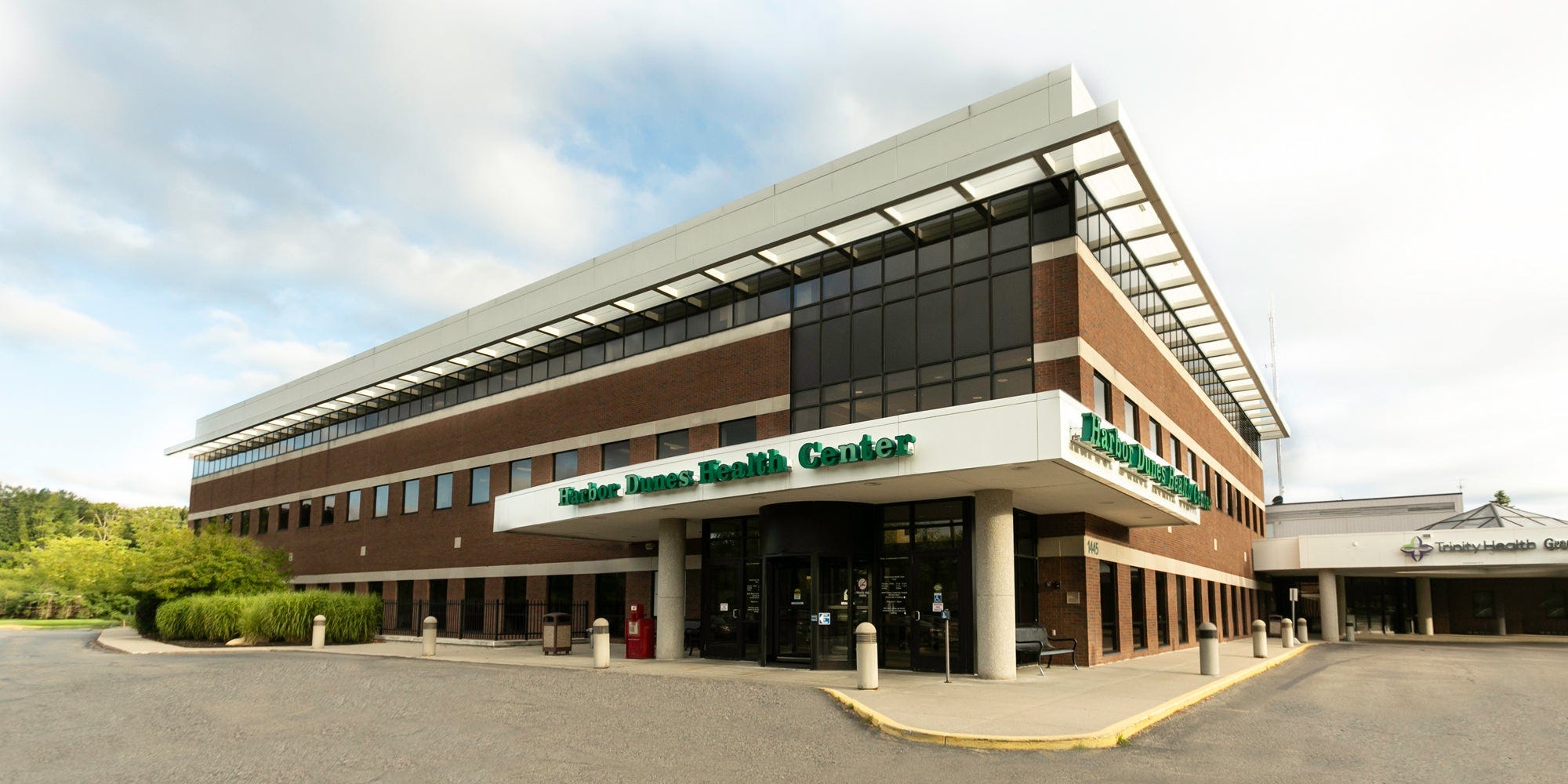
Elizabeth Kerwin v. Trinity Health Grand Haven Hosp., 24-1975 (Sixth Circuit)
Kerwin v. Trinity Health Grand Haven Hospital, decided May 1, 2026, marks the Sixth Circuit’s first opportunity to reconstruct its Section 10(j) injunction framework following the Supreme Court’s 2024 decision in Starbucks Corp. v. McKinney. The court reversed a district court order requiring Trinity Health Grand Haven Hospital to resume bargaining with its union, finding that the NLRB’s Regional Director failed to demonstrate irreparable harm — even though the court agreed she was likely to succeed on the merits.
Background
The dispute arose after Trinity Health acquired a small Michigan hospital in 2022. Following an unsuccessful decertification election in September 2023 — in which employees voted 89-66 to retain the union — a Trinity employee collected signatures on a “disaffection petition” purporting to show majority opposition to the union. Trinity used that petition to withdraw recognition the day before the election results were announced. An ALJ found the petition riddled with defects: 60 of its 94 signatures had been recycled from the earlier decertification petition, three of seven pages lacked any statement of purpose, and at least one employee signed believing it concerned better pay. Trinity was found to have violated NLRA Sections 8(a)(1) and 8(a)(5).
The Merits Question
Writing for the majority, Judge Readler agreed the Director was likely to succeed — but not for the Board’s stated reason. The Board argued that a properly conducted election categorically forecloses any post-election disaffection evidence as a matter of law, citing its own precedent. The court rejected that position, reasoning that under Loper Bright Enterprises v. Raimondo, courts owe no deference to the Board’s NLRA interpretations, and the statute’s text contains no categorical election-supremacy rule. Brooks v. NLRB — the Supreme Court’s New Deal-era decision upholding the Board’s one-year certification rule — was distinguished on grounds that it addressed certification elections, not decertification elections, and rested heavily on now-discarded Chevron-style deference.
The Director prevailed on her backup argument: the disaffection petition was factually insufficient regardless of any categorical rule. Its recycled signatures, missing purpose statements, and hasty verification process meant Trinity lacked “objective evidence” of majority opposition — and that finding was likely to survive the court’s deferential substantial evidence review.
The Irreparable Harm Holding
The court’s central ruling concerns irreparable harm, the “core” of any preliminary injunction. The Director argued — drawing on Ninth Circuit precedent — that courts may infer irreparable harm from the inherent nature of a refusal-to-bargain violation, without independent factual support. The majority flatly rejected that approach post-Starbucks, holding the Board must satisfy the same traditional equitable standards as any other litigant and cannot benefit from special inferences or burden-lightening rules.
Applying that standard, the court found the Director’s evidence wanting. Union meeting attendance data — hovering around 20 members before Trinity’s withdrawal and falling to 8 by March 2024 — was deemed too equivocal; Trinity’s own reading of the numbers was equally plausible. A union president’s affidavit describing employee “frustration and fear” was too vague and anecdotal to demonstrate that union support would erode to the point of defeating the Board’s eventual remedy. The Director’s claimed harm from Trinity’s unilateral policy changes also failed, partly because those changes were potentially remediable through backpay and other Board orders, and partly because Trinity had been providing pay raises since leaving the union — undercutting the notion that employees were worse off. The Director’s four-month delay between issuance of the complaint and filing the petition further undercut the urgency of the claimed harm.
The Dissent
Judge Boggs dissented on the irreparable harm issue, arguing the majority conflated permissive inferences with impermissible mandatory presumptions. In his view, the district court did exactly what Frankl v. HTH Corp. and Henderson v. Bluefield Hospital contemplate: it identified specific predicate facts — declining meeting attendance, chilled union activity, sweeping unilateral policy changes — and inferred from them that the union’s bargaining position would continue to weaken. That is ordinary predictive reasoning, Boggs argued, not a thumb on the scale. He also disputed the majority’s factual analysis, noting that post-withdrawal meeting attendance averaged just two-thirds of pre-withdrawal levels and that the Board’s years-long litigation backlog magnified the harm of any delay. Judge Bush concurred with the majority.
Significant Cases Cited
Starbucks Corp. v. McKinney, 144 S. Ct. 1570 (2024): Supreme Court held that NLRB petitions for Section 10(j) preliminary injunctions must satisfy the traditional four-factor Winter test, rejecting the Sixth Circuit’s prior “reasonable cause” standard.
Loper Bright Enterprises v. Raimondo, 144 S. Ct. 2244 (2024): Supreme Court overruled Chevron deference, requiring courts to exercise independent judgment in interpreting statutes administered by agencies.
Winter v. Natural Resources Defense Council, Inc., 555 U.S. 7 (2008): Established the four-factor test for preliminary injunctions — likelihood of success, irreparable harm, balance of equities, and public interest.
Brooks v. NLRB, 348 U.S. 96 (1954): Upheld the Board’s one-year certification rule requiring employers to honor a union election result for at least one year, notwithstanding informal employee repudiation.
Frankl v. HTH Corp., 650 F.3d 1334 (9th Cir. 2011): Ninth Circuit decision affirming a Section 10(j) injunction and approving permissive inferences of irreparable harm based on factual findings about diminished union support.
Adt, LLC, 374 NLRB No. 104, 09-CA-286214 (Published Board Decision)
The Board affirmed ALJ Andrew Gollin’s December 2022 decision finding ADT, LLC committed multiple violations of Section 8(a)(5) and (1) of the NLRA against IBEW Local 369, which has represented residential and small business installers and service technicians at ADT’s Louisville and Lexington, Kentucky facilities since 1971.
The ALJ found — and the Board adopted — that ADT unlawfully withdrew recognition from the union, ceased deducting and remitting dues both during and after the parties’ 2018–2021 collective bargaining agreement, failed or unreasonably delayed in providing requested bargaining information, and made unilateral changes to wages, overtime, job titles, pay periods, leave accrual, and attendance policy after withdrawing recognition. The ALJ also dismissed allegations that ADT had unlawfully discharged union steward Mark Frazier or constructively discharged steward Marcus Rodriguez; the Board affirmed those dismissals without exception.
Direct Dealing. The Board wrote separately to apply the three-part test from Permanente Medical Group to ADT’s communications about its Tech Force Excellence (TFE) Program. Managers across multiple levels communicated the program directly to unit employees — describing its higher wages, expanded vacation, and performance bonuses — before the union had been given the same information, and did so expressly in tandem with decertification solicitations. The Board found all three elements satisfied: direct communication with represented employees, for the purpose of changing terms or undercutting the union’s bargaining role, to the exclusion of the union. By presenting the TFE Program to employees days before providing it to the union, ADT denied the union any meaningful opportunity to review, discuss, or bargain over it.
Tainted Decertification Petition. Both the ALJ and the Board found the decertification petition — which ADT supervisors prepared, distributed, and monitored — was fatally tainted by ADT’s own unfair labor practices. Under Hearst Corp. and SFO Good-Nite Inn, an employer’s direct participation in a decertification effort creates a conclusive presumption that any resulting petition is insufficient to rebut the union’s presumption of continuing majority status. Because the petition was tainted, ADT’s withdrawal of recognition based on it was also unlawful.
Remedy. The Board adopted the ALJ’s recommendations for a broad cease-and-desist order, a bargaining order requiring ADT to bargain with the union for a reasonable period, and a notice reading by management in the presence of a Board agent. The Board also ordered ADT to make the union whole for lost dues — both during and after the contract — with interest compounded daily, and to process all pending grievances. The majority declined to order nationwide relief or notice mailing, over Member Prouty’s dissent on both points.
Significant Cases Cited
Permanente Medical Group, 332 NLRB 1143 (2000): Established the three-element test for unlawful direct dealing — direct employer communication with represented employees, for the purpose of changing terms or undercutting the union, to the exclusion of the union.
Levitz Furniture Co., 333 NLRB 717 (2001): Held that an employer may withdraw recognition from an incumbent union only upon objective evidence that the union has actually lost majority support.
Hearst Corp., 281 NLRB 764 (1986): Established that an employer may not rely on a decertification petition to withdraw recognition when the employer engaged in unfair labor practices directly related to the decertification effort.
SFO Good-Nite Inn, LLC, 357 NLRB 79 (2011): Applied a conclusive presumption that employer unfair labor practices directly advancing a decertification effort taint the resulting petition, rendering it per se insufficient to rebut the presumption of continuing majority status.
Wright Line, a Division of Wright Line, Inc., 251 NLRB 1083 (1980): Established the burden-shifting framework for assessing discriminatory motivation in adverse employment actions under the NLRA.
NCR Atleos Corporation, 01-RC-374776 (Regional Election Decision)
IBEW Local 2222 petitioned to represent three customer engineers — ATM technicians who work out of their homes in Maine — employed by NCR Atleos Corporation. The employer argued the smallest appropriate unit would be all 20 customer engineers in its Territory 114G, which spans Maine, New Hampshire, and parts of New York and Vermont. Acting Regional Director John D. Doyle, Jr. agreed with the employer and directed an election in the territory-wide unit.
The central question was whether the three Maine-based employees had a “distinct” community of interest from the other 17 customer engineers in Territory 114G. Because the employees work from their homes rather than a fixed facility, the Regional Director applied the multi-facility unit framework from Opici Family Distributing of New York, analyzing seven standard factors: skills and duties, terms and conditions of employment, employee interchange, functional integration, geographic proximity, centralized supervision, and bargaining history.
Skills and duties were identical across all 20 engineers and thus neutral. Terms and conditions were largely uniform, with minor differences attributable to state law and cost-of-living pay zones; the Regional Director found that factor neutral as well. Functional integration was also neutral, as all engineers work independently with no evidence of cross-location coordination. Bargaining history was neutral, with no prior collective bargaining in Territory 114G.
Three factors cut against the petitioned-for unit. On employee interchange, the record showed meaningful cross-border service calls — including 74 occasions where New Hampshire engineers performed work in Maine — with no separate supervision for those assignments. On geographic proximity, the Portland, Maine engineer is closer to several New Hampshire engineers than to the engineer in Hudson, Maine, and the Regional Director invoked Bashas’, Inc. for the principle that state boundaries alone don’t define a coherent bargaining unit. On supervision, a single territory manager oversees all 20 engineers, making the Maine-only unit appear arbitrary. Citing Odwalla, Inc. and K & N Engineering, Inc., the Regional Director concluded that excluding the non-Maine engineers would create a “fractured unit” — one with no rational basis in the employer’s operational or functional structure.
Because IBEW agreed to proceed in an alternate unit if the petitioned-for unit was found inappropriate, a mail ballot election was directed among all 20 Territory 114G customer engineers, with ballots to be mailed May 11, 2026 and counted June 2, 2026. The union was given 10 business days to demonstrate an adequate showing of interest in the enlarged unit.
Significant Cases Cited
Opici Family Distributing of New York, 371 NLRB No. 30 (2021): Established that home-based field employees should be analyzed under the multi-facility unit framework when determining bargaining unit appropriateness.
Bashas’, Inc., 337 NLRB 710 (2002): Held that a county-based store grouping was not an appropriate unit where the proposed unit failed to conform to any administrative grouping and arbitrarily excluded nearby stores.
Odwalla, Inc., 357 NLRB 1608 (2011): Held that where no traditional community-of-interest factor distinguishes petitioned-for employees from a larger group, there is no legitimate basis for excluding the larger group, and the resulting unit would be impermissibly fractured.
K & N Engineering, Inc., 365 NLRB No. 141 (2017): Reaffirmed that a proposed unit is inappropriate when it fails to track any operational or functional lines drawn by the employer.
Alamo Rent-A-Car, 330 NLRB 897 (2000): Found a subset of employer facilities inappropriate absent evidence of distinct administrative grouping, substantial interchange, significant functional integration, or separate supervision.
SecTek, Inc., 01-RC-347432 (Regional Election Decision)
A representation petition filed by United Federation LEOS-PBA seeking to displace incumbent union SPFPA at a security contractor’s New Hampshire facilities turned on a narrow question: did a collective-bargaining agreement expire at midnight beginning October 1, 2024, or midnight ending it?
The contract’s Scope of Agreement Article stated it would remain “in force and effect until 2400 hours on October 1, 2024.” SPFPA argued the contract expired at the close of September 30, meaning the petition—filed August 2—landed inside the 60-day insulated period when no rival petition may be filed. LEOS-PBA countered that “2400 hours on October 1” unambiguously designated the midnight concluding that date, placing the petition squarely within the preceding 30-day open period.
Acting Regional Director John D. Doyle, Jr. sided with LEOS-PBA. Applying the Board’s general rule from Hemisphere Steel Products and Williams Laundry—that an agreement effective “until” a given date does not include that date—the Regional Director nonetheless found that the “2400 hours” language constituted a “specific expression to the contrary” displacing the default rule. Citing guidance from the National Institute of Standards and Technology, he explained that while “midnight” is inherently ambiguous (it marks a boundary between days rather than a point within one), “2400” is a conventional designation for the end of a named day, just as “0000” denotes its start. The successor agreement negotiated by SPFPA itself used “2359 hours”—further confirming that the parties understood the difference.
Doyle also invoked the principle from Baltimore Transfer Company that where more than one construction is possible, the Board chooses the reading that avoids “suspension, loss, or extinguishment” of employees’ Section 7 rights—here, the right to change their bargaining representative. The burden of proving contract bar falls on the party asserting it (Road & Rail Services), and SPFPA failed to carry that burden.
An election by mail ballot was directed, with ballots to be counted June 9, 2026.
Significant Cases Cited
Appalachian Shale Products, 121 NLRB 1160 (1958): Established the contract bar doctrine as a balance between labor relations stability and employees’ free choice of representatives, and set out the requirements a contract must meet to bar a rival petition.
Leonard Wholesale Meats, Inc., 136 NLRB 1000 (1962): Defined the 30-day open period (beginning 90 days and ending 60 days before contract expiration) during which a rival representation petition may be timely filed.
Hemisphere Steel Products, Inc., 131 NLRB 56 (1961): Established the default rule that a contract effective “until” a given date does not include that date absent a specific expression to the contrary.
The Baltimore Transfer Company of Baltimore City, Inc., 94 NLRB 1680 (1951): Held that where multiple contract interpretations are plausible, the Board construes the agreement to avoid extinguishing employees’ statutory rights.
Road & Rail Services, Inc., 344 NLRB 388 (2005): Confirmed that the burden of proving a contract operates as a bar to a rival petition rests on the party asserting the bar.
Traffic Management, LLC, 27-RC-381622 (Regional Election Decision)
Region 27 Regional Director Matthew Lomax has directed an election among traffic control employees at a Colorado contractor, rejecting the union’s proposed statewide unit in favor of one tied to the employer’s two existing branches.
The employer, Traffic Management, LLC, provides traffic control services for utility construction projects. Laborers Local 720 sought to represent all 107 of the employer’s Colorado employees — a unit defined by state boundaries, consistent with the union’s jurisdictional reach and the geographic scope of the incorporated Master Labor Agreements. The employer argued the unit should instead be defined by reference to its two Colorado branches, in Denver and Greeley, from which all employees are dispatched.
The Regional Director agreed with the employer on unit scope. Applying the standard from Wheeling Island Gaming and P.J. Dick Contracting, the Director emphasized that the question is not what unit is most appropriate, but whether the petitioned-for unit is appropriate at all. The 8(f) agreement between the parties contained no geographic limitation; the statewide scope derived from the Master Labor Agreements — instruments that tracked the union’s own jurisdictional boundaries, which the Board has long held irrelevant to unit determinations under Building Constructors Employer Association and CCI Construction Co.
The Director found that the record did not support a statewide unit. The employer had performed no work in 31 of Colorado’s 64 counties, and evidence of work outside a 30-mile radius of either branch was limited. Drawing on Oklahoma Installation Co., the Director declined to include territory where the employer had not worked and had no plans to work, finding that a statewide unit risked conferring representative status over employees not yet employed and depriving them of the right to choose their own representative. The parties’ bargaining history, while a relevant factor per Barron Heating & Air Conditioning, was not controlling; at most, it showed the employer had agreed the union would represent its employees in traffic control work — not that it had consented to a statewide unit scope.
Turning to the employer’s proposed alternative, the Director found it appropriate. Virtually all employees report to and are dispatched from either the Denver or Greeley branch, regardless of where in Colorado their work is performed. The unit was defined to include all full-time and regular part-time traffic control employees dispatched from those two branches.
The Director also found a multifacility unit appropriate under Exemplar, Inc., noting that employees at both branches share identical skills, duties, and working conditions; management and supervision are fully centralized; and the record showed no employee preference for per-branch representation.
An election was directed for May 14–15, 2026.
Significant Cases Cited
P.J. Dick Contracting, Inc., 290 NLRB 150 (1988): Established that bargaining unit analysis begins with whether the petitioned-for unit is appropriate, and that 8(f) bargaining history is a relevant — though not conclusive — factor in that determination.
Oklahoma Installation Co., 305 NLRB 812 (1991): The Board held that a unit should not include geographic areas where an employer has performed no work and has no plans to do so, as such claims are speculative.
Exemplar, Inc., 363 NLRB 1500 (2016): Set out the multifactor test for determining whether a multifacility bargaining unit is appropriate, including employee skills, functional integration, geographic proximity, and centralized control.
Barron Heating & Air Conditioning, 343 NLRB 450 (2004): Confirmed that while 8(f) bargaining history is a factor in unit determinations, it is not dispositive, and a broader unit may be appropriate where sufficient evidence supports it.
Building Constructors Employer Association, 147 NLRB 222 (1964): Established that a union’s territorial jurisdiction is not controlling in determining what constitutes an appropriate bargaining unit.
Universal Protection Service, LP D/B/a Allied Universal Security Services, 21-RC-378704 (Regional Election Decision)
Acting Regional Director David Selder dismissed a representation petition filed by Teamsters Local 542 seeking to represent “Escort Protection Agents” employed by Allied Universal Security Services at a confidential technology client’s San Diego facility. The sole issue was whether those employees qualify as statutory guards under Section 9(b)(3) of the NLRA — a classification that would bar their representation by the Teamsters, a union that admits non-guard employees.
The Agents’ duties centered on transporting the client’s field design engineers to public and private testing sites, but their responsibilities extended well beyond driving. They were required to maintain constant vigilance over their surroundings, prevent unauthorized persons from approaching the van, ensure that no photos were taken of vehicles or equipment, remain with the van whenever prototype devices were inside, and report security incidents to management. They held California guard licenses, received training on conflict de-escalation and body language, and signed nondisclosure agreements. They wore no uniforms and carried no weapons — deliberately, to avoid drawing attention to the client’s covert testing operations.
Selder applied the framework from The Boeing Company (1999), which holds that guard status attaches when security responsibilities are more than a minor or incidental part of an employee’s overall duties, and that reporting infractions — while insufficient alone — satisfies the enforcement requirement when coupled with other significant security responsibilities. He found the Agents’ monitoring, threat-avoidance, and public-engagement functions were their primary role, not an adjunct to driving.
The decision distinguished the Agents from the non-guard couriers in Pony Express Courier (1993) and Purolator Courier Corp. (Purolator II, 1990) on several grounds: Allied Universal holds itself out as a security company rather than a delivery service; the Agents receive substantive security training; the client’s property is of high intrinsic value dependent on confidentiality; and the Agents proactively engage with the public to neutralize threats rather than passively delivering goods. The decision drew closer analogies to Wright Memorial Hospital (1980) — where ambulance drivers who performed security rounds and reported irregularities to supervisors were found to be guards — and A.W. Schlesinger Geriatric Center (1983), where maintenance workers without uniforms or weapons who patrolled and reported incidents qualified as guards.
Because the Petitioner is a labor organization that admits non-guard employees to membership, Section 9(b)(3) bars its certification to represent a guard unit. The petition was dismissed.
Significant Cases Cited
The Boeing Company, 328 NLRB 128 (1999): Established that guard status turns on whether security responsibilities are more than minor or incidental, and that reporting alone is insufficient without other significant security duties.
Pony Express Courier Corp., 310 NLRB 102 (1993): Held that delivery couriers transporting low-value goods with minimal security training were not Section 9(b)(3) guards.
Purolator Courier Corp. (Purolator II), 300 NLRB 812 (1990): Found that couriers exercising only commonsense security precautions comparable to ordinary truck drivers were not guards.
Wright Memorial Hospital, 255 NLRB 1319 (1980): Found ambulance drivers who conducted security rounds and reported irregularities to supervisors were guards, as observation and reporting constituted an essential enforcement step.
Brink’s Inc., 226 NLRB 1182 (1976): Established that the statutory guard definition extends to employees protecting property of an employer’s customers, not solely the employer’s own property.