
Aqua-Chem Inc., 374 NLRB No. 102, 10-CA-345660 (Published Board Decision)
The Board affirmed an ALJ’s bench decision finding that a Knoxville, Tennessee employer violated Section 8(a)(1) of the NLRA by removing union organizing signs from a public right-of-way adjacent to its facility. The Board adopted the ALJ’s recommended order, modified to add a specific remedy requiring the employer to return the confiscated signs or reimburse the union for their cost.
The ALJ’s Analysis
ALJ Keltner Locke, in a bench decision issued June 16, 2025, found that Aqua-Chem removed signs placed by UA Local 102 and the Tennessee Pipe Trades Association on public right-of-way on May 28, 2024. The employer’s own position statement admitted the removal. The ALJ credited the testimony of the employer’s general counsel that she investigated whether the signs were on company property — and found they were not — but concluded the removal occurred before or regardless of that determination. The ALJ reasoned that a union retains an ownership interest in materials placed on public property, and that by removing the signs, the employer interfered with employees’ right to receive union communications during nonworking time. Relying on Troy Grove and Muncy Corp., the ALJ held the removal violated Section 8(a)(1).
The ALJ dismissed the remaining allegations. On the May 27 sign removal, the ALJ found the General Counsel failed to carry her burden of proof, crediting testimony that the employer’s facility was closed on Memorial Day and that no evidence linked any supervisor or agent to that removal. On the allegation that the employer attempted to enlist the City of Knoxville to remove union materials, the ALJ found the employer’s letter to the city’s public service director did not request any action — it merely disclaimed responsibility for the signs — and dismissed the allegation, invoking First Amendment petition principles. The ALJ also dismissed the allegation that the employer’s May 30 letter to the union promulgated an unlawful rule against logo use, finding the letter did not prohibit logo use generally and was directed at union officials rather than employees.
The Board’s Decision
The Board affirmed all of the ALJ’s rulings without additional analysis. In a footnote, the Board addressed the employer’s constitutional challenge — that Board members and ALJs are unconstitutionally insulated from presidential removal — on two independent grounds: (1) the employer waived the defense by raising it in its answer but failing to litigate it at hearing or in post-hearing briefs, citing United Government Security Officers of America International and Wisconsin Bell; and (2) the employer failed to demonstrate any harm resulting from the removal protections, citing Collins v. Yellen and related circuit authority. The Board also rejected the employer’s request to hold the case in abeyance pending Supreme Court resolution of the removal-protection issue.
Significant Cases Cited
Troy Grove, 371 NLRB No. 132 (2022): Employer removal of union organizing materials from public property violates Section 8(a)(1).
Muncy Corp., 211 NLRB 263 (1974): Established that employer interference with union communications directed at employees during nonworking time constitutes an unfair labor practice.
Collins v. Yellen, 594 U.S. 220 (2021): Supreme Court held that a party challenging agency removal protections must demonstrate actual harm resulting from the unconstitutional restriction to obtain relief.
United Government Security Officers of America International, 367 NLRB No. 5 (2020): Board held that an affirmative defense raised in an answer but not litigated at hearing is waived.
Wisconsin Bell, Inc. d/b/a SBC Midwest, 346 NLRB 62 (2005): Board held that an affirmative defense pleaded in an answer but not raised at hearing or in post-hearing briefs is deemed waived.
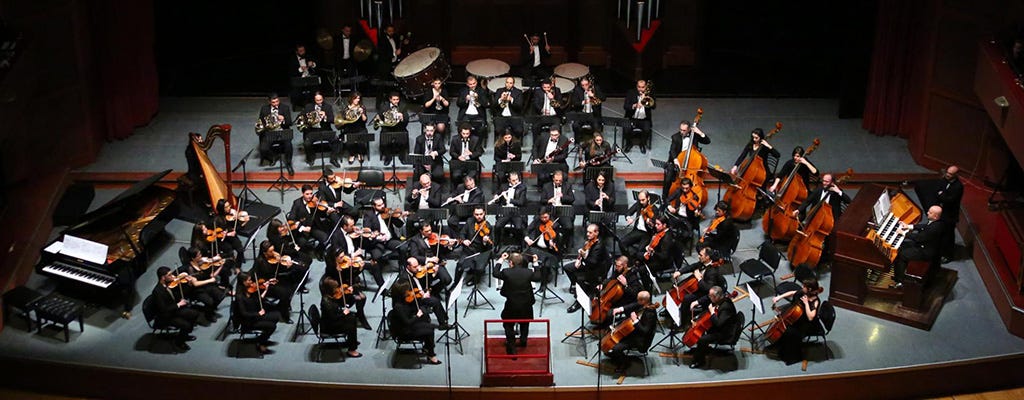
Garland Symphony Orchestra Association, Las Colinas Symphony Orchestra Association, and Symphony Arlington, 374 NLRB No. 103, 16-CA-264468 (Published Board Decision)
Three Dallas-Fort Worth area symphony orchestras operating as a single employer committed multiple unfair labor practices when they unilaterally modified their collective bargaining agreement mid-term and subsequently withdrew recognition from the musicians’ union, the Board held.
Mid-Term Modifications
The central legal question before the Board was whether Section 8(d)’s prohibition on mid-term modifications applied to the parties’ agreement, which the Respondent characterized as a contract of indefinite duration. The Respondent argued that Section 8(d)’s fixed-period contract language exempted indefinite-term agreements from the prohibition on unilateral modifications. The Board rejected that reading as contrary to both the plain text of the statute and the Supreme Court’s guidance in NLRB v. Lion Oil Co. that Section 8(d) serves a dual purpose — substituting collective bargaining for economic warfare and protecting employees’ rights to engage in concerted activity. Reading Section 8(d) to permit unilateral mid-term modification of an indefinite agreement, the Board concluded, would undermine both purposes. The Board further held that even assuming the Respondent could have lawfully modified the agreement after bargaining to impasse, no valid impasse existed: the Respondent had insisted to impasse over the exigent-circumstances clause (itself an unlawful subject given the clause would grant management virtually unlimited unilateral control), over the players committee structure (a non-mandatory subject), and despite the Union’s stated willingness to continue bargaining the day before implementation.
The Board affirmed violations for the wage reduction and the insertion of an overbroad exigent-circumstances clause. It reversed the ALJ, however, on the players committee allegation. Because the composition and selection procedures of the players committee are non-mandatory subjects of bargaining, the Supreme Court’s holding in Allied Chemical & Alkali Workers v. Pittsburgh Plate Glass Co. — that a “modification” under Section 8(d) is a prohibited unfair labor practice only when it changes a mandatory subject — precluded a Section 8(d) violation. The Board thus reversed the ALJ’s finding of a violation on that count.
Direct Dealing
The Board also reversed the ALJ’s direct-dealing finding. The ALJ had found a violation based on the Respondent’s issuance of individual contracts at below-contractual wage rates, but that theory was never alleged in the complaint or litigated by the parties. Under Pergament United Sales, an unalleged violation may be found only if it is closely connected to the complaint allegation and fully and fairly litigated. Neither condition was met here — the conduct involved different communications, different dates, different individuals, and different subject matter than what the complaint alleged, and no party briefed the issue.
Withdrawal of Recognition
The Board affirmed the unlawful withdrawal of recognition, applying Levitz Furniture‘s standard requiring proof by a preponderance of evidence that the union had actually lost majority support. Anecdotal oral complaints from musicians, without a written petition or other objective evidence, were insufficient to meet that burden.
The Board’s remedy includes make-whole relief under Thryv, Inc. for direct and foreseeable pecuniary harms, an affirmative bargaining order, rescission of unlawful contract modifications, pension fund contributions, and a notice-reading remedy.
Significant Cases Cited
Levitz Furniture Co. of the Pacific, 333 NLRB 717 (2001): Established that an employer may lawfully withdraw recognition only upon proof by a preponderance of evidence that the union has actually lost majority support.
Allied Chemical & Alkali Workers, Local Union No. 1 v. Pittsburgh Plate Glass Co., 404 U.S. 157 (1971): Held that a Section 8(d) “modification” constitutes an unfair labor practice only when it changes a mandatory, rather than permissive, subject of bargaining.
NLRB v. Lion Oil Co., 352 U.S. 282 (1957): Instructed that Section 8(d) serves a dual purpose — substituting collective bargaining for economic warfare and protecting employees’ concerted activity rights — and should be construed accordingly.
Pergament United Sales, 296 NLRB 333 (1989): Permits the Board to find an unalleged violation only where the issue is closely connected to the complaint’s subject matter and has been fully and fairly litigated.
Thryv, Inc., 372 NLRB No. 22 (2022): Expanded the Board’s make-whole remedy to encompass all direct and foreseeable pecuniary harms flowing from an unfair labor practice, beyond lost wages and benefits.
South Sound Inpatient Physicians, PLLC and Joint Employer PeaceHealth, 374 NLRB No. 101, 19-RC-338479 (Published Board Decision)
The Board reversed a Regional Director’s finding that PeaceHealth, an acute-care hospital system in Washington State, was a joint employer of hospitalists formally employed by South Sound Inpatient Physicians, PLLC (Sound). The Union of American Physicians and Dentists had petitioned to represent a unit of approximately 29 physicians, nurse practitioners, and physician assistants working at two PeaceHealth hospitals, asserting joint-employer status.
The Board applied the standard set forth in Section 103.40 of its Rules and Regulations, which requires a putative joint employer to actually possess and exercise substantial direct and immediate control over one or more essential terms and conditions of employment. The Regional Director had found such control across four areas — hiring, supervision, wages, and benefits — but the Board disagreed on each.
On hiring, the Board held that PeaceHealth’s participation in a single interview and its role in credentialing hospitalists fell short of actually determining which employees would be hired. Credentialing requirements, the Board noted, amount to minimal hiring standards rather than control over individual hiring decisions.
On supervision, the Board found that PeaceHealth’s requirements — charting practices, training completion, committee participation, and patient-load management — amounted to telling employees what work to perform, not how to perform it, a distinction that Section 103.40 treats as dispositive. The Board also emphasized that Sound’s own onsite personnel directly supervised the hospitalists’ day-to-day work.
On wages, the Board rejected the Regional Director’s reliance on evidence that Sound withheld raises pending renewal of its contracts with PeaceHealth and that Sound passed along quality-metric bonuses funded by PeaceHealth. The Board found that this reflected Sound’s business decisions made in light of its contract’s financial terms — a feature common to any service-contracting relationship — not PeaceHealth’s actual determination of wage rates.
On benefits, the Board found that PeaceHealth merely required Sound to maintain malpractice insurance for the hospitalists, with no evidence that PeaceHealth selected the plan, carrier, or coverage level. The individual employment contracts between Sound and the hospitalists expressly left the amount of coverage to Sound’s discretion.
The Board reversed the joint-employer finding and remanded the matter to the Regional Director for further appropriate action.
Significant Cases Cited
Cognizant Technology Solutions U.S. Corp. and Google LLC, 372 NLRB No. 108 (2023): Found joint-employer control over benefits where Google specifically mandated the type and level of benefits Cognizant had to provide to its employees.
Browning-Ferris Industries of California, Inc. v. NLRB, 911 F.3d 1195 (D.C. Cir. 2018): Held that routine contractual cost caps are too close to ordinary company-to-company contracting to establish joint-employer status.
Flagstaff Medical Center, 357 NLRB 659 (2011): Established that a putative joint employer’s mere participation in interviews is insufficient to show direct and immediate control over hiring.
AM Property Holding Corp., 350 NLRB 998 (2007): Reinforced that interview participation alone does not satisfy the direct-and-immediate-control standard for hiring.
G. Wes Ltd., 309 NLRB 225 (1995): Cited for the proposition that minimal involvement in hiring decisions does not constitute joint-employer control.
City of Hope National Medical Center, 21-RC-335061 (Regional Election Decision)
SEIU United Healthcare Workers-West sought to add seventeen unrepresented radiation therapists at City of Hope’s Duarte, California acute care hospital to an existing wall-to-wall service unit that already includes a handful of radiation therapists at two affiliated outpatient clinics in Upland and Corona. The union sought the addition through a combined Sonotone/Armour-Globe self-determination election. Acting Regional Director David Selder dismissed the petition on dual grounds: the Board’s Health Care Rule bars the proposed unit, and the union failed to establish a sufficient community of interest in any event.
The Health Care Rule Problem
The Board’s Health Care Rule, 29 CFR § 103.30, limits acute care hospitals to eight defined bargaining units. The existing Duarte service unit is already nonconforming — it combines nonprofessionals, technical employees, and a small number of professionals. Adding the Duarte radiation therapists would deepen that nonconformity and invite further piecemeal organizing, precisely the unit proliferation Congress directed the Board to prevent. Under Crittenton Hospital, when nonconforming units already exist, new petitions must still conform as closely as practicable to the Rule’s prescribed units. The Regional Director rejected the union’s implicit argument that preexisting nonconformity excuses further departures.
The decision acknowledges that St. Vincent Charity Medical Center held that Armour-Globe self-determination elections do not automatically violate the Health Care Rule, because they expand an existing unit rather than create a new one. But St. Vincent still requires a showing of community of interest — a hurdle the petition could not clear.
Community of Interest
Applying the multi-factor standard from United Operations, the Regional Director found the community of interest evidence insufficient. The radiation therapists at Duarte and those at Upland/Corona share similar credentials, report to the same senior managers, and perform the same basic function of delivering radiation therapy. Those similarities, however, were outweighed by meaningful differences. Duarte is a full-service hospital handling high-complexity cases, inpatients, anesthesia, and clinical trials; Upland and Corona are outpatient clinics treating routine cancers with standard hours. Day-to-day supervision runs through separate lead therapists at each site. Interchange is infrequent and largely one-directional — Duarte therapists occasionally cover at the clinics, but the reverse is rare and difficult given differing skill sets. The record was also largely silent on the broader service unit’s composition, making it impossible to assess the Duarte therapists’ community of interest with the unit as a whole.
Common upper management and similar job duties alone were insufficient. As the Regional Director noted, citing United Operations, common supervision does not mandate unit inclusion where there is no meaningful interchange, contact, or functional integration.
The decision closes by noting that the union retains the option of pursuing a conforming unit of professional employees at the Duarte facility under the Health Care Rule.
Significant Cases Cited
St. Vincent Charity Medical Center, 357 NLRB 854 (2011): Held that Armour-Globe self-determination elections do not violate the Health Care Rule because they expand existing units rather than create new ones, but still require a showing of community of interest between the voting group and the existing unit.
United Operations, Inc., 338 NLRB 123 (2002): Established the multi-factor community of interest test used to evaluate whether employees should be placed in a single bargaining unit, and held that common supervision alone does not mandate inclusion absent interchange, contact, or functional integration.
Crittenton Hospital, 328 NLRB 879 (1999): Clarified that where nonconforming units already exist at an acute care hospital, any additional petitioned-for units must conform as closely as practicable to the eight units prescribed by the Board’s Health Care Rule.
Warner-Lambert Co., 298 NLRB 993 (1990): Articulated the standard for Armour-Globe elections, requiring that the petitioned-for voting group share a community of interest with unit employees and constitute an identifiable, distinct segment of the workforce.