
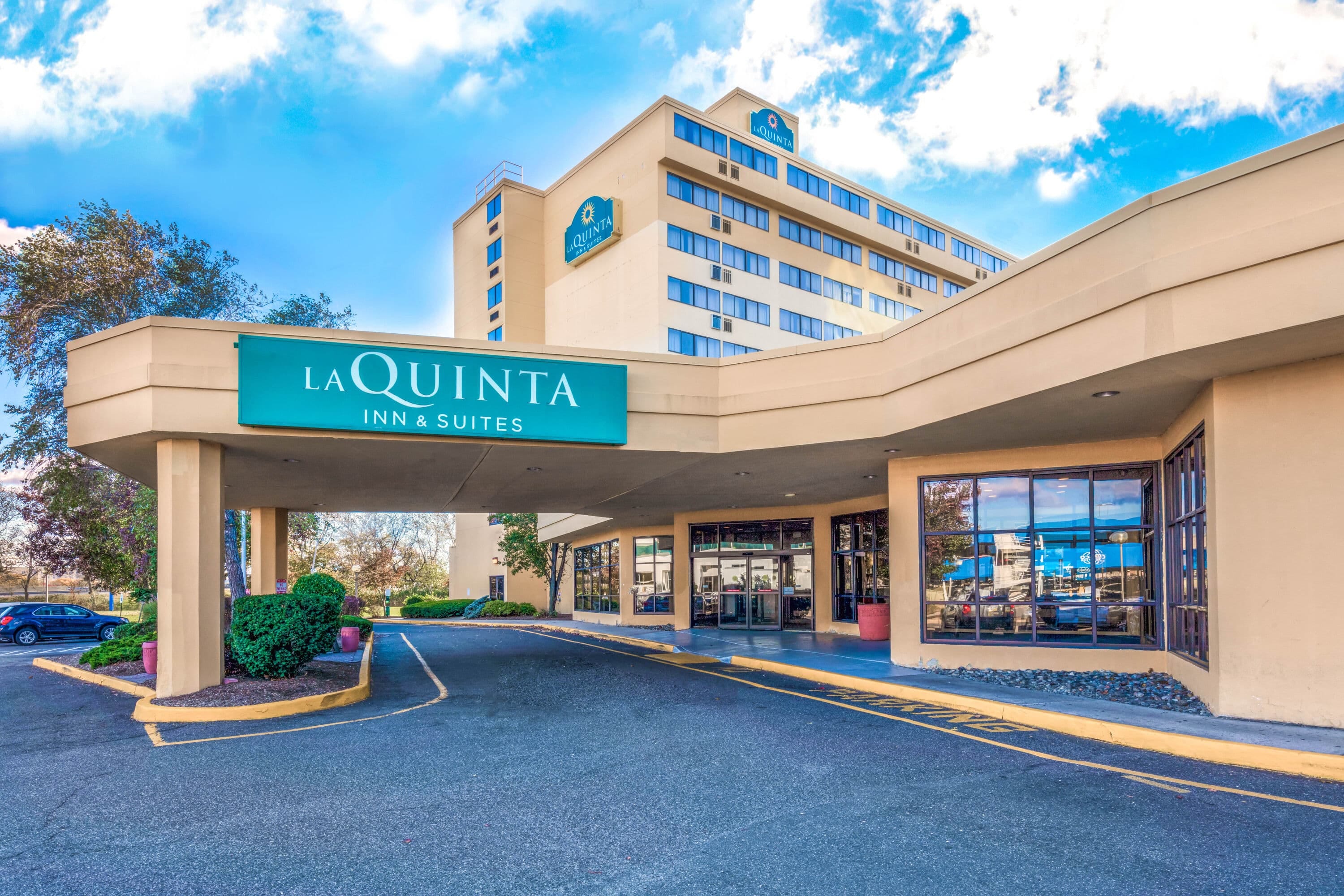
SAAS Hotels NJ LLC D/B/a La Quinta Inn & Suites Fairfield and Rollo Hospitality LLC D/B/a Ramada By, 374 NLRB No. 99, 22-CA-315658 (Published Board Decision)
The Board entered a partial default judgment against one of two respondents — Rollo Hospitality LLC — after neither company answered a consolidated complaint alleging violations of Sections 8(a)(1), (3), and (5) of the NLRA. The case arose from charges that the two hotel operators, alleged to be alter egos, unlawfully abandoned their collective-bargaining obligations after Rollo was established in 2023 as a purported successor to SAAS.
Service and the Alter Ego Question
The Board declined to enter default against SAAS, finding that service had been made only on a co-owner of Rollo with no apparent connection to SAAS — not on any owner or agent of SAAS itself. Under Board Rules, complaints must be served on all parties. Although the Board has previously held that service on one alter ego constitutes service on the other, the Board distinguished those precedents, noting that SAAS had never admitted or been adjudicated an alter ego, and that the alter ego finding here rested solely on default. The motion as to SAAS was denied without prejudice.
As to Rollo, the Board deemed all uncontested complaint allegations admitted as true. It found Rollo to be an alter ego of SAAS, established in March 2023 as a disguised continuance of SAAS for the purpose of evading NLRA obligations.
Violations
The Board found that Rollo violated Section 8(a)(1) by prohibiting employees from discussing wages, telling employees they were no longer represented by Hotel and Gaming Trades Council, AFL-CIO, and threatening job loss if they continued to support the union. It violated Section 8(a)(3) and (1) by discharging five employees — Larissa Tosi, Kim Cochran, Milagros Payano, Jose Bernal, and Marleny Guerra — because of their union activity. It violated Section 8(a)(5) and (1) by refusing to recognize or bargain with the union, unilaterally changing multiple terms and conditions of employment upon the contract’s expiration, and refusing to furnish relevant information. The Board did carve out one information request — documents concerning any ownership interest in hotels other than the two respondents — finding that such information is not presumptively relevant to the union’s representational duties.
Remedy
The Board ordered reinstatement and full make-whole relief for the five discharged employees, including Thryv-standard compensation for direct and foreseeable pecuniary harms. Chairman Murphy and Member Mayer again noted, consistent with prior decisions, that they apply Thryv only in the absence of a majority to overrule it and remain open to reconsideration. The Board also ordered Rollo to rescind all unilateral contract changes, restore prior terms, remit withheld union dues, and furnish the outstanding information requests.
Significant Cases Cited
Thryv, Inc., 372 NLRB No. 22 (2022): Established an expanded make-whole remedy requiring respondents to compensate employees for all direct and foreseeable pecuniary harms flowing from unlawful conduct, beyond traditional backpay.
Disneyland Park, 350 NLRB 1256 (2007): Held that when requested information is not presumptively relevant to a union’s representational duties, the General Counsel must present affirmative evidence of relevance or circumstances making relevance apparent.
F.W. Woolworth Co., 90 NLRB 289 (1950): Established the standard method for computing backpay in quarterly periods.
Somerville Construction Co., 338 NLRB 1178 (2003): Held that service on one alter ego is sufficient to constitute service on the other where alter ego status has been conceded or established.
AdvoServ of New Jersey, Inc., 363 NLRB 1324 (2016): Established the Board’s practice of ordering respondents to compensate employees for adverse tax consequences of receiving lump-sum backpay awards.
Beleaf Medical, LLC, 374 NLRB No. 100, 14-RC-325871 (Published Board Decision)
This case presented the Board with a novel question: whether post-harvest cannabis workers at a Missouri cannabis company fall within the agricultural laborer exemption under Section 2(3) of the NLRA — and thus outside the Act’s protections entirely.
The United Food & Commercial Workers Local 655 petitioned to represent packaging, lab/kitchen, and fulfillment employees at BeLeaf Medical’s Cherokee Street facility in St. Louis. BeLeaf contested the inclusion of its 13 Post-Harvest employees, arguing they qualified as agricultural laborers exempt from the NLRA. Because Congress has since 1947 directed the Board to apply the FLSA Section 3(f) definition of “agriculture” in this context, the Regional Director analyzed BeLeaf’s workforce under that standard.
Applying a totality-of-circumstances, classification-by-classification analysis, the Regional Director concluded that none of the Post-Harvest classifications — Technicians, Leads, Trim Leads, or METRC Specialists — qualified for the agricultural exemption. The analysis turned on whether their work constituted “secondary” agricultural activity “incident to or in conjunction with” farming operations. Key findings cut against BeLeaf: the Post-Harvest department operates as a functionally separate unit with no employee interchange with the Cultivation or Harvest departments; the trimming, curing, and mechanized processing of harvested cannabis constituted a transformation from raw plant material into finished consumer products more analogous to manufacturing than to traditional farming; packaging cannabis into precisely measured retail units was a “preparation for sale” rather than a “preparation for market”; and Post-Harvest Technicians spend roughly 50 percent of their time on packaging and an additional 5 percent on prerolling — both squarely nonagricultural activities substantial enough to defeat the exemption even if other tasks were borderline. The METRC Specialists, spending 70–90 percent of their time on computer-based regulatory compliance work, were found to be furthest from any agricultural function.
The Board unanimously denied review, finding no substantial issues warranting it. Member Mayer wrote separately to emphasize that the agricultural/nonagricultural line remains inherently fact-specific and that the Board should apply the case-by-case inquiry with particular care in emerging industries like cannabis, whose novel operational processes may not map cleanly onto established doctrine.
Significant Cases Cited
Farmers Reservoir & Irrigation Co. v. McComb, 337 U.S. 755 (1949): Established the “two distinct branches” framework for the FLSA Section 3(f) definition of agriculture — primary meaning and the broader secondary meaning covering practices incident to farming.
Mitchell v. Budd, 350 U.S. 473 (1956): Held that workers engaged in transformative “bulking” of harvested tobacco were not exempt agricultural laborers under the FLSA.
Maneja v. Waialua Agricultural Co., 349 U.S. 254 (1954): Found, based on all the facts, that employees milling harvested sugar cane were covered by the FLSA because the process transformed the product from its raw natural state into something more akin to manufacturing.
Holly Farms Corp. v. NLRB, 517 U.S. 392 (1996): Confirmed that the line between secondary agricultural activity and nonagricultural activity is not susceptible to precise definition.
Produce Magic, 311 NLRB 1277 (1993): Established that where employees perform both agricultural and nonagricultural work, the proper focus is whether the nonagricultural work is “substantial” enough to bring the employees within the Act’s coverage.
Strive Well-Being, Inc., JD(SF)-07-26, 21-CA-318148 (ALJ Decision)
An ALJ found that a Los Angeles wellness company violated the NLRA during a 2023 organizing campaign at its transit ambassador program, recommending the election — which the union lost 65-30 — be set aside.
Much of the decision turned on credibility. The ALJ largely discredited the General Counsel’s primary witness, a union supporter who insisted that garbled AI-transcription output accurately captured management’s statements and repeatedly defied the ALJ’s instructions during the hearing. A second General Counsel witness was fully credited, as was most of management’s testimony — except on the specific issues of benefit promises and job-loss threats.
On the merits, the ALJ sustained three categories of violations. First, management repeatedly told employees that Metro could cancel the pilot ambassador program if the union won, costing everyone their jobs — predictions the ALJ found lacked any objective basis under Gissel Packing Co. June 6 emails sent three days before the election reinforced the same message. Second, management unlawfully promised wellness benefits — massage chairs and food trucks — to employees who voted against the union. Third, asking employees at a group meeting to raise their hands for or against the union constituted unlawful polling and interrogation.
Several allegations were dismissed. Statements that employees would lose direct access to management if they unionized were evaluated under Tri-Cast, Inc. — still controlling at the time, though since overruled prospectively by Siren Retail Corp. (2024) — and deemed lawful campaign speech. Emails reminding employees of a contractual wage increase were lawful under Amazon.com Services LLC (2026) because they described an existing benefit and imposed no conditions. Two attendance policies were dismissed because evidence showed they were developed months before the employer learned of the union petition. An email criticizing the union organizer by name was protected employer speech under Section 8(c).
Significant Cases Cited
Gissel Packing Co., 395 U.S. 575 (1969): Employer predictions about the effects of unionization are lawful only if grounded in objective fact and framed as beliefs about consequences beyond the employer’s control.
NLRB v. Exchange Parts Co., 375 U.S. 405 (1964): An employer violates Section 8(a)(1) by promising or granting new benefits during a union campaign to discourage union support.
Tri-Cast, Inc., 274 NLRB 377 (1985): Employer statements that direct employee-management relations would change under a union constitute lawful campaign speech. (Prospectively overruled by Siren Retail Corp., 2024.)
Stericycle, Inc., 372 NLRB No. 113 (2023): A facially neutral workplace rule is presumptively unlawful if employees could reasonably interpret it to restrict Section 7 activity, unless the employer shows a legitimate business interest not achievable by a narrower rule.
Amazon.com Services LLC, 374 NLRB No. 38 (2026): An employer may lawfully remind employees of existing benefits during an organizing campaign, so long as it does not suggest those benefits are contingent on rejecting the union.
RJ Staab Stone Company of Florida LLC, JD-22-26, 12-CA-334616 (ALJ Decision)
An ALJ has found that a small Florida stone fabrication company violated the NLRA by discharging an employee, delaying his final paycheck, and slashing his hourly rate in retaliation for protected concerted and union activity.
The case centers on Ronald Hemenway, a general laborer at RJ Staab Stone Company who began discussing wage shortages with coworkers in early January 2024, intervened when management moved to fire a colleague over pay disputes, helped organize a union meeting with the International Union of Bricklayers and Allied Craftworkers Local 8 Southeast, and ultimately texted the company owner that he would file a complaint with the Florida Department of Labor over unpaid wages. Within moments of that text, he was fired. His final paycheck arrived late, omitted reimbursable expenses and hours worked, and reflected a retroactive cut from $17 to $12 per hour — the state minimum wage.
Applying the Wright Line burden-shifting framework, ALJ Kimberly Sorg-Graves found that General Counsel established all three required elements: protected activity, employer knowledge, and animus sufficient to show a causal connection to the discharge. The ALJ credited the testimony of Hemenway and the union representative over the Staabs’ broad, conclusory denials, noting that the employer’s accounts shifted under questioning, lacked specific factual support, and were undercut by documentary evidence including a police report referencing “union matters” and text messages showing the owner fired Hemenway immediately after the Department of Labor threat. The Respondent’s claimed justifications — insubordination and responsibility for bringing back the fired coworker — were deemed pretextual, in part because Hemenway continued working without incident for eleven days after the coworker incident before being discharged.
The credibility findings were also colored by the Respondent’s near-wholesale failure to comply with a subpoena, producing only documents it deemed beneficial to its defense while offering implausible explanations for noncompliance. The ALJ drew adverse inferences accordingly.
The remedy follows standard Board formulas: reinstatement, backpay under F.W. Woolworth, interest per New Horizons compounded daily per Kentucky River Medical Center, expanded make-whole relief for foreseeable pecuniary harms under Thryv, tax gross-up under AdvoServ, and W-2 filing under Cascades Containerboard.
Significant Cases Cited
Wright Line, a Division of Wright Line, Inc., 251 NLRB 1083 (1980): Establishes the burden-shifting framework for mixed-motive discharge cases, requiring General Counsel to show protected activity was a motivating factor before the burden shifts to the employer to prove it would have acted the same absent that activity.
Tschiggfrie Properties, Ltd., 368 NLRB No. 120 (2019): Articulates the three-element prima facie standard under Wright Line — protected activity, employer knowledge, and animus with causal connection.
Thryv, Inc., 372 NLRB No. 22 (2022): Expands the Board’s make-whole remedy to include direct or foreseeable pecuniary harms beyond lost wages, such as job-search and interim employment expenses.
Triana Industries, Inc., 245 NLRB 1258 (1979): Holds that employee discussions about wages are core protected activity under the NLRA because wages are a vital term and condition of employment.
Electrolux Home Products, 368 NLRB No. 34 (2019): Permits an inference of unlawful motivation from the pretextual nature of an employer’s stated justification where surrounding circumstances reinforce that inference.
SOLERA HOLDINGS, INC. And Its Subsidiary IDENTIFIX, LLC, a Single Employer, JD-23-26, 16-CA-311941 (ALJ Decision)
An Administrative Law Judge has ruled that Solera Holdings, LLC and its subsidiary Identifix, LLC — acting as joint employers — violated Section 8(a)(1) of the NLRA by discharging a sales employee and by maintaining multiple overbroad work rules.
The Discharge
The employee, Julius Strickland, was terminated on January 5, 2023, after forwarding a text message from a former colleague to eight coworkers warning of an imminent 25 percent global layoff at Solera. The message turned out to be false, but Strickland had received it from a source he reasonably trusted and had no basis to believe was inaccurate. Respondents conceded the termination was based on the forwarded message and argued it was not protected concerted activity — and that even if it were, it was maliciously false.
ALJ Geoffrey Carter rejected both arguments. Applying Fresh & Easy Neighborhood Market, he found that forwarding the message was concerted activity because, at minimum, it was a preliminary communication seeking to induce group action about potential job security — a finding reinforced by coworkers who subsequently asked managers directly about layoffs. On the malicious-falsity defense, the ALJ applied Valley Hospital Medical Center and found Strickland acted in good faith, crediting evidence of his trust in the source. The ALJ also noted circumstantial evidence of animus: Respondents decided to terminate Strickland within roughly 20 minutes of learning about the message and never contacted him to hear his account.
Respondents’ alternate theory — that the termination was also unlawful because it was based on specific unlawful code provisions — failed on the merits. The ALJ found the record did not support that Respondents relied on any specific code provision; they used “code of conduct” only in a general sense.
The Work Rules
The ALJ applied the Stericycle framework — assessing rules from the perspective of an economically dependent employee contemplating protected activity — and found seven separate violations. Rules upheld as unlawful included: an outside-employment provision that could be read to require prior approval for union or concerted activities; a blanket no-solicitation rule containing no exceptions for nonwork time or areas; an investigation confidentiality provision prohibiting parties from discussing matters with other employees; a confidential information clause in the Employee Proprietary Information Agreement that covered compensation and personnel data without exception; nondisparagement and nonsolicitation clauses in the Non-Competition and Non-Solicitation Agreement; and a parallel confidentiality clause in the Termination Certification.
One provision survived — the bulletin board portion of the no-solicitation rule — because employees have no statutory right to use employer-owned equipment for Section 7 purposes absent evidence that it is their only reasonable communication channel. The confidential information definition in the NCNSA also survived because, unlike the EPIA, it imposed no affirmative directive on employees not to disclose.
Respondents raised a Section 10(b) timeliness defense to all work rule allegations. The ALJ sustained the defense for rules outside the code of conduct as to Strickland’s original February 2023 charges, but found the three code of conduct rules closely related to the original charge under the Redd-I framework; the remaining rules were saved by a timely May 2024 amended charge.
Respondents’ constitutional challenge to the agency’s adjudicative structure was denied, with the ALJ noting that ruling would require halting agency operations and that federal courts remain available to address the issue.
The remedy includes reinstatement, make-whole backpay calculated under F.W. Woolworth, expanded pecuniary relief under Thryv, and rescission of all unlawful work rule provisions.
Significant Cases Cited
Stericycle, Inc., 372 NLRB No. 113 (2023): Established the current standard for evaluating work rules — whether a rule has a reasonable tendency to chill Section 7 rights from the perspective of an economically dependent employee — and displaced the prior Boeing categorical framework.
Fresh & Easy Neighborhood Market, 361 NLRB 151 (2014): Defined “concerted activity” under an objective standard, holding that preliminary communications seeking to induce group action are protected even before overt group activity occurs.
Redd-I, Inc., 290 NLRB 1115 (1988): Set the three-part test for determining whether an untimely complaint allegation is “closely related” to a timely filed charge for purposes of the Section 10(b) limitations period.
Valley Hospital Medical Center, 351 NLRB 1250 (2007): Held that an employee who relays information received from another employee in good faith, reasonably believing it to be true, does not lose NLRA protection merely because the information proves inaccurate.
Thryv, Inc., 372 NLRB No. 22 (2022): Expanded the Board’s make-whole remedy to include direct or foreseeable pecuniary harms beyond traditional backpay, including search-for-work and interim employment expenses.
Townsend Controls and Electric LLC, JD(SF)-08-26, 19-CA-315801 (ALJ Decision)
ALJ Mara-Louise Anzalone found that a Washington State electrical subcontractor violated Section 8(a)(1) of the NLRA by discharging a union journeyman for raising safety complaints on a construction jobsite, while dismissing a companion Section 8(a)(3) allegation for lack of evidence that decision-makers knew of the employee’s union-related plans.
Joel Leahy, an IBEW Local 191 journeyman, spent 12 days on a food processing facility expansion before being fired on April 8, 2023, ostensibly for physically assaulting a laborer from another contractor following a dispute over “trade stacking”—multiple trades working simultaneously in a confined space. He was discharged minutes after invoking Weingarten rights during an investigatory meeting.
The ALJ found Leahy’s safety complaints protected and concerted under Section 7, applying the “logical outgrowth” doctrine: though Leahy often confronted management alone, his conduct flowed from prior group safety discussions. His combative style and use of profanity did not forfeit statutory protection.
On the core liability question, the ALJ applied NLRB v. Burnup & Sims rather than Wright Line, reasoning that the alleged misconduct—a physical altercation and later combativeness at the discharge meeting—was inseparable from his ongoing protected activity. Under Burnup & Sims, good-faith belief in the misconduct is no defense; the assault must be proven. The ALJ found it was not: Leahy credibly denied physical contact, a coworker corroborated him, none of the opposing witnesses testified, and management’s own accounts were irreconcilable—most notably, testimony that the discharge decision was based on a report summarizing a meeting that had not yet taken place. Alternatively, the ALJ found Wright Line would yield the same result, citing the timing of the discharge, Respondent’s shifting rationales, a facially inadequate investigation, and the failure of the named decision-maker to testify.
The Section 8(a)(3) allegation failed because the only union activity at issue—Leahy’s statement to his foreman that he planned to contact Local 191—was met with the foreman’s open support, negating any inference that he relayed it to management. Without proof of knowledge by the decision-makers, the prima facie case collapsed.
Remedy includes reinstatement, backpay, and full make-whole relief under Thryv, Inc.
Significant Cases Cited
NLRB v. Burnup & Sims, 379 U.S. 21 (1964): Discharging an employee for alleged misconduct during protected activity violates Section 8(a)(1) unless the employer proves the misconduct actually occurred.
Wright Line, 251 NLRB 1083 (1980): Established the burden-shifting framework for mixed-motive discharge cases.
Meyers Industries, Inc., 281 NLRB 882 (1986): Individual employee conduct qualifies as concerted activity when it stems from or logically grows out of prior group activity.
Shamrock Foods Co., 337 NLRB 915 (2002): Applied Burnup & Sims where alleged misconduct and protected activity were inseparable, holding Wright Line inapplicable.
Thryv, Inc., 372 NLRB No. 22 (2022): Expanded make-whole relief to cover all direct and foreseeable pecuniary harms flowing from an unfair labor practice.
Pennsylvania American Water Company, 06-RC-382228 (Regional Election Decision)
A Regional Director in NLRB Region 6 has directed an election among production, maintenance, and clerical employees at Pennsylvania American Water Company’s Pittsburgh District, rejecting arguments that the petitioning independent union — Pennsylvania American Water Independent Union — lacked sufficient legal status to proceed.
The sole question before Regional Director Nancy Wilson was whether the Petitioner qualified as a “labor organization” under Section 2(5) of the NLRA, which broadly covers any organization in which employees participate that exists, at least in part, to deal with employers over wages, hours, grievances, or working conditions.
The Petitioner was formed in 2025 by a retired former union official and a local attorney after a current employee, Matthew Bails, approached them seeking to displace the incumbent Steelworkers affiliate. The organization had drafted a constitution and bylaws, filed for an IRS Employer Identification Number, and sought non-profit status — but had no dues revenue, no employee members, and had held no meetings with unit employees. Its officers were not employees of the company.
The Employer and the Intervenor (the Steelworkers local) argued this was insufficient: the Petitioner’s officers were not employees, no employees had actually joined, and the Petitioner’s attorney had a conflict of interest given his simultaneous representation of unit employees in a separate civil lawsuit seeking to invalidate the existing collective bargaining agreement. The Employer also floated an “alter ego” theory.
The Regional Director rejected all of these arguments. Under Coinmach Laundry Corp., East Dayton Tool & Die Company, and related Board precedent, an incipient union need not have actually represented employees or dealt with an employer to qualify — it is the intent of the organization that controls. Yale New Haven Hospital and Butler Manufacturing Company establish that structural formalities like a constitution, bylaws, or formal meetings are not prerequisites. The required 30% showing of interest constituted sufficient evidence of employee participation. As for the conflict-of-interest and alter ego arguments, the Regional Director found them legally irrelevant to the labor organization inquiry, noting the Employer cited no authority to support them.
A manual election is scheduled for May 13–14, 2026, with employees choosing between the Petitioner, the incumbent Steelworkers local, or neither.
Significant Cases Cited
Coinmach Laundry Corp., 337 NLRB 1286 (2002): An incipient union that has not yet represented employees may still qualify as a labor organization if formed for that purpose, and labor organization status does not require proof of actual dealing with an employer.
Electromation, Inc., 309 NLRB 990 (1992): Established that the statutory definition of “labor organization” under Section 2(5) of the NLRA is to be interpreted broadly.
Yale New Haven Hospital, 309 NLRB 363 (1992): Structural formalities — including a constitution, bylaws, meetings, or Department of Labor filings — are not prerequisites to labor organization status.
Edward A. Utlaut Memorial Hospital, 249 NLRB 1153 (1980): The intent of an organization is the critical factor in determining labor organization status, regardless of the stage of its development or activities not yet performed.
Comet Rice Mills, 195 NLRB 671 (1972): An organization that never represented employees still qualifies as a statutory labor organization if its efforts clearly envisaged employee participation and it existed for a statutory purpose, even if that purpose never came to fruition.