
St. John's College, 374 NLRB No. 72, 28-RM-337949 (Published Board Decision)
The Board reversed a Regional Director’s dismissal of an employer-filed representation petition (RM petition), clarifying that the timeliness framework established in Cemex Construction Materials Pacific, LLC applies only to unfair labor practice proceedings — not to representation proceedings.
The dispute arose after the Communications Workers of America presented a recognition demand to St. John’s College in December 2023. The College filed an RM petition in March 2024, more than two weeks after that demand. The Regional Director dismissed the petition as untimely under Cemex, which requires employers to file RM petitions “promptly” — normally within two weeks of a union’s recognition demand — to shield themselves from potential Section 8(a)(5) liability.
The Board found this was an error. Under Cemex, an employer that fails to file promptly may lose a potential defense to an unfair labor practice charge, but the Cemex timeliness rule does not independently authorize dismissal of an otherwise procedurally compliant RM petition. The Board drew a sharp line between representation proceedings, which are governed by Section 102.61(b) of the Board’s Rules and Regulations, and ULP proceedings, where Cemex defenses are properly litigated. It also invoked the long-standing principle from Times Square Stores Corp. that unfair labor practice issues cannot be litigated in representation proceedings. Whether an employer filed “promptly” or whether “unforeseen circumstances” excuse a later filing are, accordingly, questions reserved for ULP cases.
The Board remanded the petition to the Regional Director for processing under standard representation case procedures.
Significant Cases Cited
Cemex Construction Materials Pacific, LLC, 372 NLRB No. 130 (2023): Established a framework under which an employer violates Section 8(a)(5) by refusing to recognize a union with majority support, but may avoid liability by promptly filing an RM petition — normally within two weeks of a recognition demand.
Times Square Stores Corp., 79 NLRB 361 (1948): Established the principle that unfair labor practice issues may not be litigated in representation proceedings.
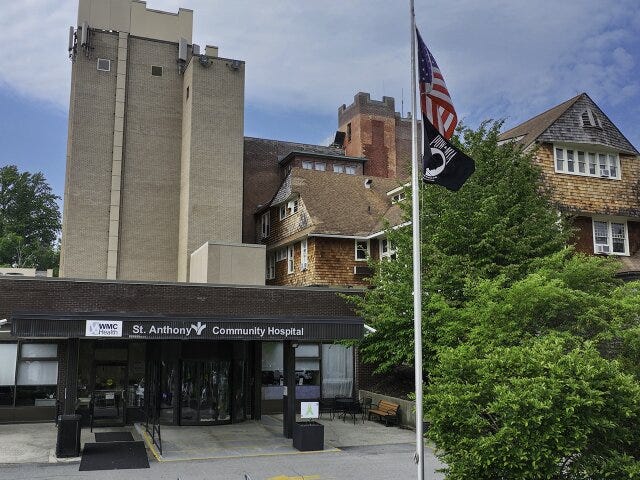
St. Anthony Community Hospital, 374 NLRB No. 77, 02-CA-278511 (Published Board Decision)
St. Anthony Community Hospital, a New York acute care facility, discharged radiology technician Andrea Roe in May 2021 — shortly after she led a successful union organizing campaign and attended the virtual ballot count — citing a HIPAA violation. The General Counsel alleged the discharge was pretextual and motivated by union animus. ALJ Benjamin Green agreed, finding the HIPAA rationale a pretext and ordering reinstatement and full make-whole relief. The Board majority (Members Murphy and Mayer, with Member Prouty dissenting in part) affirmed the ALJ’s finding of an unlawful Section 8(a)(1) interrogation but reversed the Section 8(a)(3) discriminatory discharge finding.
Where the Board and ALJ diverged
The central split concerned whether the hospital met its burden under Wright Line of proving it would have discharged Roe absent her union activity. The ALJ concluded it had not, citing the hospital’s failure to contact the ordering physician or other medical staff who might have explained Roe’s April 15 chart access, the exclusion of Roe’s supervisor Robert Yates (who had corroborated her explanations) from the May 7 decision-making call, inconsistent external statements about the nature of the HIPAA breach, and the hospital’s post-discharge assurances to other technicians that accessing patients’ charts without performing imaging was acceptable. The ALJ found these facts collectively demonstrated pretext and discriminatory motive.
The Board majority disagreed on the Wright Line rebuttal, finding the hospital had a legitimate and reasonable basis for its discharge decision. It credited the triggering report from Christine Faline — an employee of the hospital’s parent company who had no knowledge of the union campaign — as a good-faith, partially corroborated basis for investigation. The audit confirmed Roe had accessed the patient’s ICU records with no imaging performed that day, and Roe herself could not recall why she had done so or provide any doctor’s name to corroborate her explanation. The majority held that an employer need not prove the misconduct actually occurred — only that it held a reasonable belief the employee committed it. It further found the hospital’s prior HIPAA discipline record, including a 2019 discharge for combined unauthorized access and disclosure, supported the conclusion that Roe would have been discharged regardless of her union activity.
On the Section 8(a)(1) interrogation, the Board affirmed the ALJ’s finding that supervisor Yates unlawfully interrogated employee Jeanne Saeli by asking her to identify the “ringleader” of the organizing campaign, applying the totality-of-circumstances standard from Rossmore House.
Member Prouty dissented from the discharge reversal, agreeing with the ALJ that the hospital’s investigation was so incomplete — particularly its failure to contact the ordering physician despite telling Roe it would — that the Wright Line defense could not be sustained in the face of demonstrated antiunion animus.
Remedy: The Board adopted the ALJ’s recommended Order as modified, deleting the reinstatement, backpay, and related make-whole remedies applicable to the discharge, and retaining only the notice-posting remedy for the Section 8(a)(1) interrogation violation.
Significant Cases Cited
Wright Line, 251 NLRB 1083 (1980): Establishes the burden-shifting framework for mixed-motive discharge cases, requiring the General Counsel to show protected activity was a motivating factor and then shifting the burden to the employer to prove it would have taken the same action absent the protected conduct.
Rossmore House, 269 NLRB 1176 (1984): Sets the totality-of-circumstances test for determining whether employer questioning of employees constitutes unlawful interrogation under Section 8(a)(1).
DTR Industries, 350 NLRB 1132 (2007): Holds that an employer need not prove an employee actually committed misconduct to satisfy its Wright Line burden — only that it had a reasonable belief the employee did so and acted on that belief.
Intertape Polymer Corp., 372 NLRB No. 133 (2023): Summarizes the elements of the General Counsel’s prima facie case under Wright Line and the types of circumstantial evidence that may establish discriminatory motive, including timing, shifting reasons, and investigative failures.
Wendt Corp., 369 NLRB No. 135 (2020): Clarifies that to meet the Wright Line rebuttal burden, an employer must prove it would have disciplined the employee absent protected activity, not merely that it could have identified legitimate grounds for discipline.
Forepeak Steel, LLC, 374 NLRB No. 80, 04-CA-340084 (Published Board Decision)
The Board affirmed, with modifications, an ALJ’s decision finding that Forepeak Steel, a New Jersey structural steel contractor, violated Section 8(a)(5) and (1) of the NLRA by laying off its five ironworker unit employees in April 2024 without notice to or bargaining with the recently certified Iron Workers union, and by closing the business in July 2025 without affording the union an opportunity to bargain over the effects of that closure.
The Board addressed three issues on exception from the General Counsel. First, the Board granted the General Counsel’s exception correcting a technical error: the ALJ had inadvertently dismissed a decision-bargaining allegation regarding the closure that was never actually alleged in the complaint. Because the complaint alleged only an effects-bargaining violation with respect to the closure — not a decision-bargaining violation — the ALJ’s dismissal of the unalleged decision-bargaining count was corrected accordingly.
Second, and more consequentially for the remedy, the Board modified the ALJ’s order to include full make-whole relief for the five laid-off employees covering the period from their April 2024 layoff through the July 2025 closure of the business. The ALJ had applied only the limited Transmarine Navigation Corp. effects-bargaining remedy. The Board agreed that Transmarine governs the period after the business closed, but held that standard make-whole relief — not the more limited Transmarine formula — applies for the period between the unlawful layoff and the closure, because that violation concerned the failure to bargain over the layoff decision itself. The remedy also incorporates Thryv, Inc. make-whole relief for direct and foreseeable pecuniary harms beyond lost wages, including search-for-work expenses, though Members Murphy and Mayer noted their openness to reconsidering Thryv in a future case.
Third, the Board declined to reach the General Counsel’s exception regarding the onset of the employer’s financial difficulties, finding it would not affect the outcome given the absence of exceptions to the underlying violation findings.
The ALJ’s underlying legal analysis — that layoff decisions are mandatory subjects of bargaining under NLRB v. Katz, that the employer’s pre-union past practice of discretionary layoffs provided no defense under Wendt Corp., and that purely economic business closure decisions need not be bargained over under First National Maintenance Corp. while effects bargaining remains mandatory — was adopted without modification.
Significant Cases Cited
Transmarine Navigation Corp., 170 NLRB 389 (1968): Establishes the limited make-whole remedy for effects-bargaining violations, under which backpay runs from a fixed point until the parties bargain to agreement, impasse, or union default.
First National Maintenance Corp. v. NLRB, 452 U.S. 666 (1981): Holds that an employer’s decision to close a business entirely for economic reasons is not a mandatory subject of bargaining, though bargaining over the effects of that decision remains required.
NLRB v. Katz, 369 U.S. 736 (1962): Establishes that an employer violates the NLRA by making unilateral changes to employees’ terms and conditions of employment without providing the union notice and an opportunity to bargain.
Wendt Corp., 372 NLRB No. 135 (2023): Reaffirms that an employer cannot defend a unilateral change by invoking a pre-union past practice developed before the union was certified and before the duty to bargain arose.
Thryv, Inc., 372 NLRB No. 22 (2022): Expands the Board’s make-whole remedy to include compensation for direct and foreseeable pecuniary harms beyond lost wages, such as search-for-work and interim employment expenses.
BJ's Wholesale Club, Inc., 374 NLRB No. 79, 29-CA-317035 (Published Board Decision)
BJ’s Wholesale Club defeated a union organizing drive among meat and deli employees at its Brooklyn location by a 14–7 vote in April 2023. The union filed post-election objections and the General Counsel issued a complaint alleging pre-election misconduct. ALJ Michael Silverstein issued his decision in August 2024; the Board adopted it with modifications in March 2026.
The ALJ dismissed allegations that BJ’s violated Section 8(a)(1) by holding captive-audience meetings and by sending a letter warning that unionization would erode its open-door policy, applying Babcock & Wilcox Co. and Tri-Cast, Inc. respectively. The Board affirmed both dismissals but noted that the Board had since overruled both precedents in Amazon.com Services LLC and Siren Retail Corp. d/b/a Starbucks — holding captive-audience meetings unlawful and requiring open-door-policy statements to be grounded in objective fact — though each new rule was applied prospectively only, leaving the dismissals intact.
The ALJ found that club manager Andre Batts had unlawfully interrogated two employees about their union sympathies during closed-door individual meetings, violating Section 8(a)(1) under the totality-of-circumstances test from Rossmore House. However, the ALJ declined to set aside the election, finding the interrogations de minimis because neither employee disseminated the conversations to other voters and the margin of defeat was seven votes. A separate election-day threat by a fresh manager was similarly found credible but too isolated to affect the election. The Board affirmed all of these findings.
The Board also rejected BJ’s argument — raised for the first time on exceptions — that the Board should replace its objective interrogation standard with the subjective test from Counterman v. Colorado, a criminal-law decision, finding the argument both untimely and substantively inapplicable under Apple, Inc. The Board issued a Certification of Results and required bilingual notice posting given the Spanish-speaking workforce.
Significant Cases Cited
Rossmore House, 269 NLRB 1176 (1984): Established the totality-of-circumstances test for evaluating whether employer interrogation of employees about union sympathies violates the NLRA.
Babcock & Wilcox Co., 77 NLRB 577 (1948): Held that employers may compel employees to attend anti-union speeches during working hours; overruled prospectively by Amazon.com Services LLC (2024).
Tri-Cast, Inc., 274 NLRB 377 (1985): Held that employer statements predicting a change in the direct employee-management relationship upon unionization do not violate the NLRA; overruled prospectively by Siren Retail Corp. d/b/a Starbucks (2024).
Amazon.com Services LLC, 373 NLRB No. 136 (2024): Overruled Babcock & Wilcox to hold that compelling attendance at captive-audience meetings under threat of discipline interferes with Section 7 rights, with prospective effect only.
Siren Retail Corp. d/b/a Starbucks, 373 NLRB No. 135 (2024): Overruled Tri-Cast to require that employer statements about unionization’s effect on the employee-management relationship be grounded in objective fact, with prospective effect only.
Paragon Systems Inc., 374 NLRB No. 73, 21-RD-343514 (Published Board Decision)
The Board declined to reconsider a 1984 precedent that bars mixed guard-nonguard unions from intervening in representation elections involving security guard units, affirming a Regional Director’s denial of a motion to intervene filed by United Trades & Transportation Workers Union Local 323.
Background
Local 323 — an admitted mixed guard-nonguard union — sought to intervene in a decertification proceeding involving a unit of guards employed by Paragon Systems. The Acting Regional Director denied the motion under University of Chicago, which held that Section 9(b)(3) of the NLRA bars mixed guard-nonguard unions not only from certification but from participating in Board election processes altogether. The Board granted review to consider whether to overrule that precedent but ultimately declined to do so, leaving the denial intact.
The Majority. Members Murphy and Mayer issued a brief decision declining to reconsider University of Chicago without elaborating on their reasoning. The stay previously entered was lifted.
The Dissent
Member Prouty wrote at length in dissent, arguing that University of Chicago should be overruled and that the Board should return to the pre-1984 framework established in William Burns Detective Agency and Bally’s Park Place.
Prouty’s central argument was textual: Section 9(b)(3) expressly prohibits only Board certification of a mixed guard-nonguard union, not participation in Board election processes. The University of Chicago majority itself acknowledged this, characterizing the question as one of statutory construction — whether to read the provision broadly or narrowly — rather than one of statutory command. Prouty argued the Board should construe Section 9(b)(3) narrowly, consistent with its plain language, rather than extending the prohibition beyond what Congress wrote.
Prouty also grounded his dissent in NLRA policy. Section 7 guarantees employees — including guards — the right to bargain through “representatives of their own choosing.” By prohibiting noncertifiable unions from appearing on the ballot, University of Chicago forecloses employees from expressing a preference for a union that may in fact be their preferred representative. Prouty characterized this as an unjustified infringement on employee free choice, made worse because the limitation lacks a statutory basis. He noted the harm applies equally whether the precluded union is an incumbent or a nonincumbent, making even the partial exception briefly recognized in Wackenhut Corp. — which permitted only incumbent mixed unions to intervene — insufficient.
Prouty further argued that the legislative history of Section 9(b)(3) does not support the University of Chicago outcome, citing the dissent in that case and subsequent Board decisions that questioned its rationale. He contended that certifying only the “arithmetical results” of an election in which a noncertifiable union prevails — the procedure used under Burns and Bally’s — is entirely consistent with the statutory scheme and promotes stable labor relations by honoring employee free choice without granting a certification the statute prohibits.
The Board’s decision leaves University of Chicago intact, and Local 323’s motion to intervene was denied. The case is remanded to the Regional Director for further proceedings.
Significant Cases Cited
University of Chicago, 272 NLRB 873 (1984): Held that Section 9(b)(3) bars mixed guard-nonguard unions not only from certification but from intervening or participating in Board representation elections involving guard units.
William Burns Detective Agency, 138 NLRB 449 (1962): Held that nothing in Section 9(b)(3) prohibits mixed guard-nonguard unions from participating in guard-unit elections and that the Board may certify arithmetical results when such a union wins.
Bally’s Park Place, Inc., 257 NLRB 777 (1981): Reaffirmed the Burns framework and overruled Wackenhut, permitting nonincumbent mixed guard-nonguard unions to intervene in guard-unit elections.
Wackenhut Corp., 223 NLRB 83 (1976): Permitted only incumbent mixed guard-nonguard unions to appear on the ballot as intervenors, a position later overruled by Bally’s.
Loomis Armored US, Inc., 364 NLRB 144 (2016): Examined the legislative history of Section 9(b)(3) and questioned whether that history supports the broad preclusion rule adopted in University of Chicago.