
Midwest Division-Rmc, LLC v. NLRB, 24-1680, (Eighth Circuit)
This caseaddressed two distinct disputes at Research Medical Center in Kansas City, Missouri, arising from separate unfair labor practice charges filed by two unions.
The SEIU Decertification Dispute
The central legal question was whether an employer automatically violates NLRA Sections 8(a)(1) and (5) by withdrawing recognition of a union after employees vote to decertify — but before the Board formally certifies the election results. The Board, relying on W.A. Krueger Co., had held that an employer must continue recognizing the union until certification issues, making any pre-certification withdrawal a per se violation. The ALJ agreed.
The Eighth Circuit reversed. Drawing on the Board’s own subsequent decision in Johnson Controls, Inc., the court found that Krueger had been undermined, if not overruled. In Johnson Controls, the Board itself said that an employer who withdraws recognition after a decertification vote but refrains from unilateral action “makes changes at its peril” — the same “act at your peril” standard applied to employers in the initial certification context under Mike O’Connor Chevrolet. The court found no basis in the NLRA for treating employee choice differently depending on whether a union wins or loses an election.
Aligning with the Fifth Circuit’s analysis in Arkema, Inc. and Dow Chemical Co. v. NLRB, the Eighth Circuit held that Midwest “acted at its peril” by withdrawing recognition before certification — but because the Board ultimately certified the decertification results and overruled SEIU’s objections, no NLRA violation occurred. The court declined to enforce the Board’s order on the SEIU claims and directed dismissal of the related complaint.
The NNOC Grievance Representative Dispute
The second dispute concerned whether Midwest violated the NLRA by excluding a second union representative — NNOC Labor Representative Lisa Perry — from a Step 1 grievance meeting. Midwest argued the CBA permitted only one union representative. Both the ALJ and the Board found a violation.
The Eighth Circuit enforced the Board’s order. Applying de novo review to the CBA’s language, the court found the agreement was at best silent on the number of union representatives permitted. Under Section 7 of the NLRA, employees retain the right to freely select their grievance representatives absent a clear contractual waiver. The court also noted that because the grievance was filed on behalf of a group, Broeker could plausibly have attended as a grievant-witness, leaving Perry to serve as the union representative — meaning Midwest’s exclusion of Perry lacked even a textual foundation.
The court granted enforcement of the Board’s order as to NNOC, reversed as to SEIU, and remanded with instructions to dismiss the SEIU-related portions of the complaint.
Significant Cases Cited
W.A. Krueger Co., 325 NLRB 1225 (1990): Board held that an employer violates the NLRA by withdrawing recognition of a union after a decertification vote but before the Board certifies the election results.
Mike O’Connor Chevrolet, 209 NLRB 701 (1974): Board established the “act at your peril” standard, holding that employers who make unilateral changes while election objections are pending must bargain retroactively if the union is ultimately certified.
Johnson Controls, Inc., 368 NLRB No. 20 (2019): Board held that an employer who withdraws recognition after a decertification vote but refrains from unilateral action makes any subsequent changes at its peril, effectively undermining the Krueger rule.
NLRB v. Arkema, Inc., 710 F.3d 308 (5th Cir. 2013): Fifth Circuit denied enforcement of a Board order, holding that an employer does not automatically violate the NLRA by acting on decertification election results before they are formally certified.
Dow Chemical Co. v. NLRB, 660 F.2d 637 (5th Cir. 1981): Fifth Circuit rejected the Krueger/Presbyterian Hospital rule, holding there is no basis in law or justice for applying different standards to initial certification and decertification elections.
Jones Lang LaSalle Americas, Inc., 374 NLRB No. 62, 20-CA-328308 (Published Board Decision)
The Board issued a brief supplemental decision in Jones Lang LaSalle Americas, Inc., resolving a remedial question it had set aside from its March 2024 ruling. In that earlier decision, the Board had found the employer violated Section 8(a)(5) and (1) of the NLRA by refusing to bargain with the union following certification — a so-called “test-of-certification” case — and ordered bargaining. The Board had severed for later consideration whether to overrule Ex-Cell-O Corp., the 1970 precedent holding that employers who refuse to bargain while challenging a union’s certification face no monetary make-whole remedy for the delay.
The General Counsel had urged the Board to abandon Ex-Cell-O and instead require employers to compensate employees for the lost opportunity to bargain collectively at the time and in the manner the NLRA contemplates. The Board declined, citing its February 2026 decision in Longmont United Hospital, which had just reaffirmed Ex-Cell-O‘s remedial framework.
Member Prouty dissented on the remedy, arguing the Board should overrule Ex-Cell-O and make affected employees whole for any provable, reasonably quantifiable economic harm caused by the unlawful refusal to bargain — consistent with his dissent in Longmont United Hospital.
Significant Cases Cited
Ex-Cell-O Corp., 185 NLRB 107 (1970): Established that the Board will not impose monetary make-whole remedies against employers who refuse to bargain while challenging a union’s certification in test-of-certification cases.
Longmont United Hospital, 374 NLRB No. 52 (2026): Reaffirmed the Ex-Cell-O remedial framework, declining to expand make-whole relief in test-of-certification refusal-to-bargain cases.
Jones Lang LaSalle Americas, Inc., 373 NLRB No. 37 (2024): The underlying Board decision finding an 8(a)(5) violation and ordering the employer to bargain with the union, subsequently enforced by the D.C. Circuit.
Blue School, 374 NLRB No. 63, 02-CA-294227 (Published Board Decision)
Same basic thing as the prior case.
Young Brothers, LLC, 20-RC-378244 (Regional Election Decision)
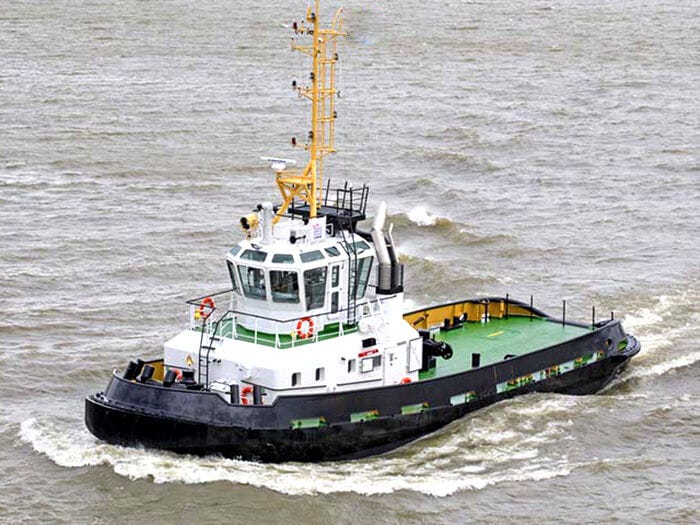
International Longshore and Warehouse Union, Local 142 petitioned to represent approximately ten tugboat captains employed by Young Brothers, LLC, a Hawaii inter-island cargo shipping company. The employer argued the captains are statutory supervisors under Section 2(11) of the NLRA, which would exclude them from coverage and require dismissal of the petition. The sole issue litigated was supervisory status.
The Acting Regional Director found the employer failed to prove, by a preponderance of the evidence, that the captains hold any of the Section 2(11) supervisory indicia — hire, transfer, suspend, lay off, recall, promote, discharge, assign, reward, discipline, responsibly direct, or adjust grievances — with independent judgment.
On discipline, the employer presented testimony that captains could issue oral and written warnings, but the evidence was conflicting: the two management witnesses described different progressive discipline systems, most disciplinary exhibits involved captains who did not testify, and the one documented written warning involved conflicting evidence about whether it was self-initiated or directed by the port captain. Per Matson Terminals v. NLRB, conflicting testimony is resolved in favor of those occupying the alleged supervisory role — here, the captains themselves — who indicated they acted at management’s direction.
On responsible direction, the employer relied on the captains’ safety authority, issuance of standing orders, and discretion to “short sail” with reduced crews. The Acting Regional Director found these insufficient: safety and equipment responsibilities alone do not confer supervisory status, accountability for crew failures was established only by conclusory testimony without concrete examples, and the captains’ own testimony indicated short-sail decisions required consultation with crew and approval from management.
On assignment, the employer pointed to captains’ discretion over lay-day scheduling, watch assignments, and temporary crew transfers. The Acting Regional Director found the testimony vague and conflicting, and noted that the employer’s MobileOps system largely directs daily crew tasks automatically, reducing any claim of independent judgment.
On hiring, promotion, reward, and grievance adjustment, the decision found only paper authority or insufficient evidence in each category. Captains’ evaluations played some role in promotions but the employer failed to show promotion decisions were made based solely on captain input without further management review.
The Acting Regional Director also noted secondary indicia of supervisory status — captains’ attendance at management meetings, input into the SMS Manual, and the absence of any other supervisor aboard the vessel — but held these cannot substitute for a showing of at least one primary Section 2(11) indicum. The decision directed a mail-ballot election, finding that the captains’ varying schedules and geographic dispersion across the Hawaiian islands made a manual election impractical.
Significant Cases Cited
Oakwood Healthcare, Inc., 348 NLRB 686 (2006): Established the Board’s definitions for the Section 2(11) supervisory indicia, including the standard for “independent judgment.”
Brusco Tug & Barge, 359 NLRB 486 (2013): Defined “assign” and “responsibly direct” in the maritime context, requiring that a purported supervisor be held accountable for a crew’s performance failures.
Veolia Transportation, 363 NLRB 1879 (2016): Held that disciplinary authority confers supervisory status only where it leads to personnel action without independent investigation by higher management, and that verbal reprimands or reportorial warnings are insufficient.
Cook Inlet Tug & Barge, 362 NLRB 1153 (2015): Found that vague or hypothetical testimony about captains directing crew tasks based on individual strengths is insufficient to establish supervisory assignment authority.
San Diego Gas & Electric, 325 NLRB 1143 (1998): Set forth the conditions under which mail-ballot elections are appropriate, including where eligible voters are geographically scattered or have significantly varying work schedules.
Windstream Florida, LLC D/B/a Kinetic, 12-RD-375660 (Regional Election Decision)
Region 12 Regional Director David Cohen directed a mail ballot election in this decertification proceeding involving approximately 148 telecommunications field employees spread across 15 reporting sites in north central Florida. The sole dispute was whether the election should be conducted manually or by mail.
The employer and the individual petitioner favored a manual election, proposing three polling locations with satellite-site employees traveling up to 84.9 miles to reach the nearest poll. The union favored mail balloting, citing concerns that distance and traffic could suppress participation. The Regional Director noted at the outset that election mechanics — including the choice between manual and mail voting — are not litigable issues at a representation hearing under NLRB rules and relevant precedent, including Halliburton Services and Manchester Knitted Fashions. Accordingly, the parties were limited to submitting factual representations rather than witness testimony.
Applying the framework from San Diego Gas & Electric, the Regional Director found that a mail ballot was appropriate because unit employees are “scattered” across nine counties due to the nature of their field work. The decision rejected the employer’s argument that employees’ regular job-related travel made a manual election practicable, finding that fact unpersuasive given the logistical burdens a manual election would impose. The Regional Director also dismissed concerns about infrequently checked post office boxes, noting that the employer — not the union — would supply the voter list with accurate addresses, and would be required to post and electronically distribute notices at all 15 sites. Administrative efficiency also weighed in favor of mail balloting: a manual election would have required three of the five Tampa-based NLRB agents to travel extensively.
Significant Cases Cited
San Diego Gas & Electric, 325 NLRB 1143 (1998): Established that Regional Directors have broad discretion over election mechanics and identified “scattered” workforce as a factor favoring mail ballot elections.
Nouveau Elevator Industries, 326 NLRB 470 (1998): Held that a Regional Director’s election mechanics determinations will not be overturned absent a clear abuse of discretion.
Halliburton Services, 265 NLRB 1154 (1982): Established that election mechanics, including voting method, are not litigable issues at representation hearings.
Manchester Knitted Fashions, 108 NLRB 1366 (1954): Early precedent affirming that parties cannot litigate election details such as manual versus mail voting.
London’s Farm Dairy, Inc., 323 NLRB 1057 (1997): Recognized the Board’s longstanding authority to conduct mail ballot elections when circumstances warrant.