
Case Handling Guidance, GC 26-03, (GC Memo)
General Counsel Crystal S. Carey issued Memorandum GC 26-03 on February 27, 2026, providing updated operational guidance to regional offices on unfair labor practice case handling. The memo covers four main areas.
Prior Guidance Remains in Effect. Carey confirmed that all guidance issued by former Acting General Counsel Cowen remains operative. This includes the rescission of several prior GC memoranda and the continued implementation of the agency-wide docketing protocol. Importantly, the Office will no longer seek Board reconsideration of decisions in Ex-Cell-O Corp., Care One at New Milford, and Caesars Entertainment — cases involving remedial make-whole relief, successorship obligations, and employee use of employer email systems, respectively. The agency is actively withdrawing related allegations and arguments currently pending before ALJs and the Board.
Settlement Practices Narrowed. The memo directs regions to approve settlements and grant withdrawal requests when parties agree on lawful terms, regardless of the underlying allegations. Enhanced remedies — such as notice readings, apology letters, or nationwide postings — should no longer be routinely sought. Going forward, such remedies are reserved for egregious or recidivist conduct only, and the agency is actively rescinding pending requests for enhanced remedies.
Rules Cases Refocused. The memo instructs regions to pursue only those workplace rules that present clear, facial violations of the NLRA — such as explicit prohibitions on wage discussions — rather than broadly challenging vague rules without evidence of enforcement or actual employee impact. Cases involving unenforced rules without demonstrated harm should be settled or dismissed. Regions must also consider an employer’s industry context and any legitimate business justifications when evaluating challenged rules.
Evidence Request Procedures Tightened. Charging parties must be prepared to submit supporting evidence within two weeks of filing. Requests for evidence to charged parties (EAJA letters) may only be sent once the board agent determines a prima facie case exists. Such letters must be concise and targeted — for instance, if only a single rule is at issue, only that rule should be requested rather than an entire handbook. The memo also cautions that Section 10(j) injunctive relief inquiries should only be initiated when circumstances genuinely warrant it.
Significant Cases Cited
Ex-Cell-O Corp., 185 NLRB 107 (1970): The Board declined to award compensatory bargaining order remedies for first-contract violations, a ruling the agency will no longer seek to overturn.
Care One at New Milford, 369 NLRB No. 109 (2020): The Board addressed successorship obligations and remedies in the context of a change in employer, a precedent the agency will no longer seek to revisit.
Caesars Entertainment, 368 NLRB No. 143 (2019): The Board held that employees generally have no statutory right to use employer email systems for NLRA-protected activity, a ruling the agency will no longer seek to overturn.
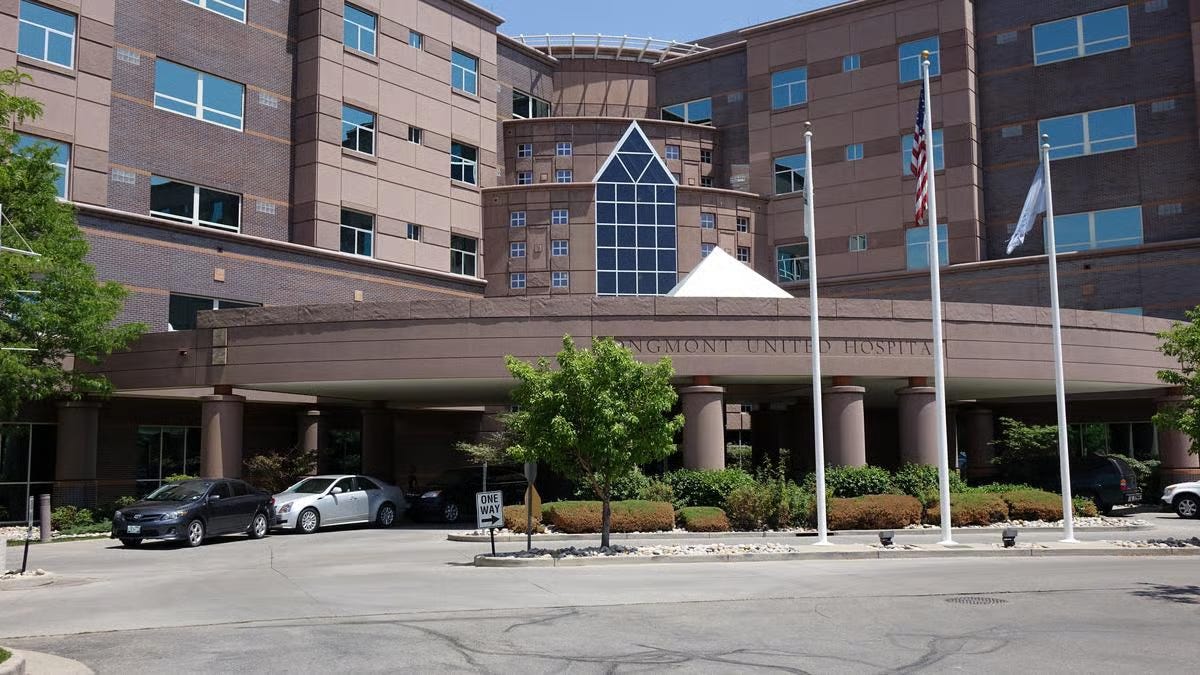
Longmont United Hospital, 374 NLRB No. 52, 27-CA-296153 (Published Board Decision)
The Board issued this supplemental decision to resolve a single remaining question from its 2022 ruling that Longmont United Hospital violated the NLRA by refusing to recognize and bargain with National Nurses Organizing Committee/National Nurses United: should the Board overrule Ex-Cell-O Corp. and require employers to pay compensatory damages for bargaining delays caused by “testing certification”?
The two-member majority declined to overrule Ex-Cell-O Corp., reaffirming its 56-year-old holding that the Board lacks authority to impose make-whole damages in test-of-certification cases. The majority offered three primary justifications. First, because an employer can only obtain judicial review of a Board certification by refusing to bargain, imposing compensatory damages for doing so would unconstitutionally burden the right to seek judicial review. Second, Section 8(d) of the NLRA bars the Board from compelling the parties to reach any agreement, and awarding damages in lieu of an agreement would achieve the same forbidden result indirectly. Third, such a remedy would be entirely speculative and would actively undermine future bargaining by entangling litigation over past damages with ongoing first-contract negotiations.
Member Prouty dissented, arguing that Ex-Cell-O Corp. was wrongly decided and that the Board’s Section 10(c) mandate to take affirmative action to effectuate the NLRA’s policies both permits and requires stronger remedies. Prouty proposed a two-track remedial framework. The first track would impose non-monetary remedies — union access to bulletin boards and employer facilities, ongoing employee contact information, a bargaining schedule with progress reports, and enhanced notice posting and reading requirements — to rebuild union standing eroded by lengthy delays. The second track would allow the General Counsel to prove at a compliance hearing that employees suffered quantifiable economic harm attributable to the bargaining delay, with the employer bearing the burden to rebut or mitigate. Prouty emphasized that employers who successfully challenge a certification would face no liability, limiting the remedy to employers whose refusals are ultimately found unlawful.
Significant Cases Cited
Ex-Cell-O Corp., 185 NLRB 107 (1970): Established the Board’s longstanding rule that it lacks authority to award compensatory damages to employees and unions for an employer’s refusal to bargain while testing a union’s certification.
H.K. Porter Co. v. NLRB, 397 U.S. 99 (1970): Supreme Court held that Section 8(d) of the NLRA prohibits the Board from compelling parties to agree to any specific contract term, limiting the Board’s remedial authority in bargaining disputes.
American Federation of Labor v. NLRB, 308 U.S. 401 (1940): Supreme Court held that Congress deliberately excluded Board certifications from direct judicial review, meaning an employer must refuse to bargain to obtain court review of a certification.
In re Sewell, 690 F.2d 403 (4th Cir. 1982): Held that imposing liability on an employer for taking the steps necessary to seek appellate review of a Board order presents an unconstitutional interference with the right to judicial review.
King Soopers, Inc., 364 NLRB 1153 (2016): Board decision modifying its standard make-whole remedy framework, cited in the dissent for the proposition that the Board has authority and obligation to provide meaningful remedial relief for NLRA violations.
Solution One Industries, Inc., 374 NLRB No. 50, 09-CA-293349 (Published Board Decision)
A Kentucky warehousing company violated the NLRA by refusing to treat five unresolved union grievances as automatically settled in the union’s favor after missing a contractual deadline to respond to them.
The parties’ contract required the company to answer Step 3 grievances within five working days of a Step 3 meeting, and required any deadline extension to be made in writing and signed by both sides. After a March 3, 2022 meeting, the company missed the March 10 deadline. It argued that comments made during the meeting — that it needed time to locate certain documents — constituted an informal extension request, and that a follow-up email sent on March 14 constituted a sufficient answer.
The Board rejected both arguments. Applying the “sound arguable basis” test from Bath Iron Works Corp., the Board found the company’s contract interpretation had no colorable support: the written-extension requirement was unambiguous, the March 14 email didn’t actually answer any grievance, and there was no past practice of informal extensions. The Board also rejected the argument that the conduct was merely a contract breach rather than an unfair labor practice, citing Transportation Services of St. John, Inc. for the principle that modifying a mandatory subject of bargaining mid-contract violates the NLRA without requiring proof of full contract repudiation. The company’s prior identical violation in Solution One Industries I further supported that its position was one of general application, not an isolated dispute.
The Board ordered the company to treat all five grievances as settled on the union’s terms.
Significant Cases Cited
Bath Iron Works Corp., 345 NLRB 499 (2005): Established that an employer does not commit an unlawful midterm contract modification if its contract interpretation has at least a colorable basis.
Transportation Services of St. John, Inc., 369 NLRB No. 15 (2020): Held that modifying a mandatory subject of bargaining mid-contract violates Section 8(a)(5) of the NLRA without requiring proof of full contract repudiation.
Solution One Industries I, 372 NLRB No. 141 (2023): A prior Board decision finding the same employer had unlawfully modified the same grievance deadline provision by relying on an unwritten extension.
Knollwood Country Club, 365 NLRB 404 (2017): Established that when evaluating a contractual defense, the Board considers both contract language and extrinsic evidence such as past practice and bargaining history.
Oak Cliff-Golman Baking Co., 207 NLRB 1063 (1973): Established that Section 8(a)(5) and 8(d) of the NLRA prohibit an employer from modifying a collective-bargaining agreement’s terms during its life without union consent.
Entergy Louisiana, LLC, 15-RC-372529 (Regional Election Decision)
IBEW Local 2286 has been certified as the collective-bargaining representative of production technicians at Entergy Louisiana following a Region 15 decision sustaining challenges to three ballots cast by employees hired after the stipulated eligibility date.
The election was originally scheduled for October 7, 2025, but was postponed when the NLRB experienced a lapse in appropriated funding. After operations resumed, the Regional Director rescheduled the election for December 9, 2025, expressly preserving all other terms of the Stipulated Election Agreement — including the August 29, 2025 payroll eligibility date. Three employees hired on October 13, 2025 cast ballots, which were challenged by the Board on the grounds that they did not appear on the voter list.
The employer argued that the government shutdown constituted extenuating circumstances warranting a change to the eligibility date, and that the rescheduling order effectively voided the original agreement. The Regional Director rejected both arguments. Citing long-standing Board precedent treating stipulated election agreements as binding contracts, Regional Director M. Kathleen McKinney held that absent special circumstances — such as party conduct causing the delay — there was no basis to depart from the agreed-upon eligibility date. The two-month gap between the original and rescheduled election dates was found insufficient to justify updating the voter list. The decision also noted that allowing the employer to expand the electorate through post-petition hiring would give it undue influence over election outcomes, undermining the purpose of a fixed eligibility date.
With the three challenged ballots excluded, the revised tally stood at 9 votes for the union and 8 against, out of 17 eligible voters, and IBEW Local 2286 was certified as the exclusive bargaining representative.
Significant Cases Cited
T & L Leasing, 318 NLRB 324 (1995): The Board treats stipulated election agreements as binding contracts that will be enforced when their terms are clear and unambiguous, absent special circumstances or conflicts with Board policy.
Tekweld Solutions, Inc., 361 NLRB 201 (2014): A Regional Director does not abuse discretion by refusing to update a stipulated eligibility date even where significant time has elapsed between the eligibility date and the election.
Jam Productions, Ltd. v. NLRB, 893 F.3d 1037 (7th Cir. 2018): A Regional Director did not abuse discretion in declining to move a stipulated eligibility date despite a seven-month election delay caused by a union unfair labor practice charge.
Interlake Steamship Co., 178 NLRB 128 (1969): Updating an eligibility list may be warranted where party conduct caused an election delay, distinguishing cases where the delay results from external factors.
Hartz Mountain Corporation, 260 NLRB 323 (1982): In a second election held after the original was nullified due to the winning union’s disclaimer of interest, updating the eligibility list was appropriate given the nature of the intervening event.
St. HOPE Public Schools, 20-RD-378706 (Regional Election Decision)
A NLRB hearing officer has directed a decertification election at St. HOPE Public Schools, a Sacramento charter school operator, after finding that the NLRB — not California’s Public Employee Relations Board (PERB) — has jurisdiction over the employer.
The central question was whether St. HOPE qualifies as a “political subdivision” under Section 2(2) of the NLRA, which would exempt it from NLRB jurisdiction. Acting Regional Director Daniel Owens applied the two-part test from NLRB v. Natural Gas Utility District of Hawkins County, under which an entity is a political subdivision only if it was (1) created directly by the state, or (2) administered by individuals responsible to public officials or the general electorate.
On the first prong, the hearing officer found that St. HOPE was founded around 2002 by private individual Kevin Johnson and his foundation — predating any state charter. The subsequent issuance of a charter by the Sacramento City Unified School District (SCUSD) did not transform a privately created entity into one “directly created” by the state, consistent with the Board’s prior charter school decisions in Chicago Mathematics & Science Academy, Pennsylvania Virtual Charter School, and Hyde Leadership Charter School-Brooklyn.
On the second prong, the hearing officer found that SCUSD lacks meaningful appointment and removal authority over St. HOPE’s Board of Directors. The bylaws vest appointment and removal power in existing board members and a private nominating committee controlled by Johnson. SCUSD holds the right to appoint and remove only a single seat on a board of seven to fifteen directors. Relying on Regional Medical Center at Memphis, the hearing officer held that public officials must control a majority of board seats for the second prong to be satisfied. The union’s argument that the MOU’s broad “corrective action” language implicitly granted SCUSD removal power was rejected; the hearing officer noted that charter revocation authority — even if it functionally pressured a board member’s resignation — does not convert a private entity into a public one.
Significant Cases Cited
NLRB v. Natural Gas Utility District of Hawkins County, 402 U.S. 600 (1971): Established the two-prong test for determining whether an entity is a “political subdivision” exempt from NLRB jurisdiction under the NLRA.
Chicago Mathematics & Science Academy Charter School, Inc., 359 NLRB 455 (2012): Applied the Hawkins County test to charter schools, finding that private creation prior to charter issuance and lack of public appointment authority precluded political subdivision status.
Pennsylvania Virtual Charter School, 364 NLRB 1118 (2016): Held that a charter school was subject to NLRB jurisdiction and that a chartering authority’s power to revoke a charter does not convert a private employer into a state entity.
Hyde Leadership Charter School-Brooklyn, 364 NLRB 1137 (2016): Confirmed that the order in which a charter is issued versus a school is incorporated is not dispositive of whether the state “directly created” the entity.
Regional Medical Center at Memphis, 343 NLRB 346 (2004): Established that public officials must constitute a majority of an entity’s governing board for it to be deemed “administered by” individuals responsible to public officials under the second Hawkins County prong.